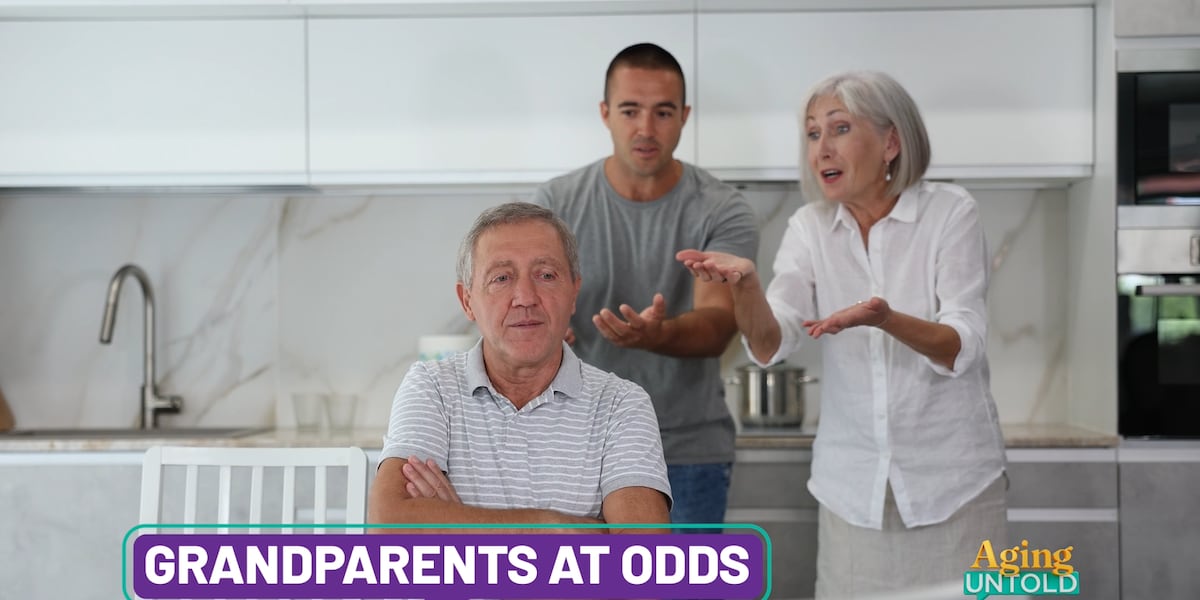
(Aging Untold) — Not every set of grandparents will naturally get along. Different backgrounds, beliefs or old conflicts can create tension, especially during holidays, birthdays and major family events.
There are ways that families can manage those relationships while keeping the child’s well-being at the center.
Keep the child’s well-being first
“That’s the key right there. Keep the child’s well-being at the center,” gerontologist “Sam” Cradduck said. “You can keep your opinions to yourself long enough to get through a birthday party, or a wedding or an event or a holiday.”
Cradduck said children learn from how adults behave around them.
“The only way they’re going to see good role modeling is for you not to go into battle, even if it’s your divorced spouse,” Cradduck said. “You just don’t have to get into family issues right there in front of them.”
Aging well coach Katherine Ambrose said this is about everyone, including the children.
“Let’s have some peace. Let’s have some grace. Let’s be mature adults. Have some emotional intelligence for heaven’s sake and get along,” Ambrose said.
Set ground rules for tough topics
Grandparents do not have to get along to be good grandparents, aging expert Amy O’Rourke said. If certain conversations create tension, she said, families can agree on topics that are allowed and topics that are not.
“Let’s keep food recipes on the table. Let’s keep birthday parties on the table. But religion, politics, anything that escalates, just keep it off the table,” O’Rourke said. “So set up some ground rules that make it work for everybody.”
Show children what respect looks like
Children notice when adults are not getting along, Dr. Rhea Rogers, a board-certified physician, said.
“They know what’s going on and they know that you’re not getting along. They hear the comments,” Rogers said. “One of the greatest gifts that you can give them is to show them what respect looks like when you get along with someone that you don’t agree with.”
Cradduck said differing belief systems can exist side by side.
“Maybe if you would just open up your mind a little bit and listen to somebody else’s belief systems, you might grow to respect that person a little bit more,” she said.
Split holidays and weekends if needed
If conflict continues after families have tried to resolve it, O’Rourke said, separate arrangements can help.
“If it’s just not working, make arrangements that holidays or weekends are separate,” O’Rourke said. “If you’ve done everything you can and it’s not getting any better, then just say OK this weekend’s going to be open for this set, this weekend’s going to be open for another set.”
Grandparents can create smaller, more intimate celebrations if large holiday gatherings feel too big, O’Rourke said. She gave the example of a grandparent telling grandchildren that Christmas with them will be in July.
Ambrose said she would not wait until July to celebrate with family.
“I would just rather get along with everybody and blend our families together,” she said. “When it really counts, when we’re doing deathbed vigils and things like that, we have to support each other.”
Keep the parents’ marriage separate
Cradduck added that grandparents’ disagreements should not affect their children’s marriages.
“Don’t cause your children’s marriage to have issues because you don’t get along with their parents or with who they married,” Cradduck said.
Include others and let families build traditions
Ambrose encouraged families to combine gatherings when possible and include widows and others who may be left out of holiday meals.
“Be inclusive and let’s bring families together,” she said.
Cradduck said to let your children develop their own traditions.
“Allow your children to develop their traditions with their kids,” Cradduck said. “If those traditions are to follow yours, great. That’s fine, let them come on over and let them be part of that, but if they choose to stay away and to have traditions and time with just their children, go over and see them. Don’t exclude yourself because they want to do something different than you always did.”
Cradduck said not to make your angst someone else’s issue.
Key takeaways  Grandparents who don’t get along can create tension at birthdays, holidays and major family events.(Aging Untold)Grandparents don’t have to agree on politics or parenting, but the grandchild should never become the battleground. Focus on shared love for the child rather than being right. Establish clear ground rules that leave sensitive topics at the door. Keep disagreements between grandparents separate from the grandchild’s parents’ marriage. Split holidays when keeping the peace matters most.
Copyright 2026 Gray Media Group, Inc. All Rights Reserved.