US, Israel, and Hormuz
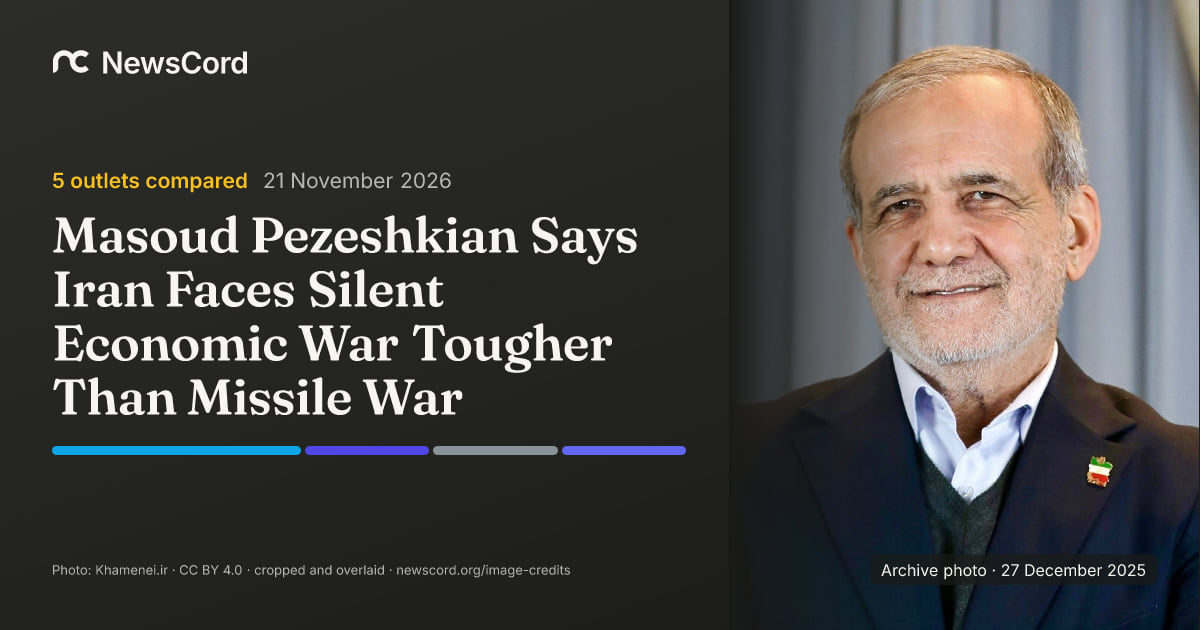
Iran’s President Masoud Pezeshkian said Saturday the country is engaged in a “silent” economic war waged by the United States, and he argued the enemy failed in attempts to cause famine or domestic goods shortages.
Iranian interior ministry spokesman Ali Zeinivand said Saturday US naval blockades, land, and aerial restrictions failed to halt trade transactions.
What some reports left out
US naval and restriction efforts failed to halt transactions
Not found in 4 outletsView outletsHide outletsMehr News AgencyA NewsBreakingthenews.netTehran Times
The US and Israel launched a war against Iran on Feb. 28, Tehran responded by attacking Israel and US military facilities in Arab countries.
Washington and Tehran signed a framework agreement in June and began negotiations, which later stalled amid disagreements over how to ensure safe and free navigation through the Strait of Hormuz.
The war on Iran added to market uncertainty as the strait of Hormuz is closed, and it linked the waterway to a significant share of the world’s oil and liquefied natural gas supplies.
Markets, electricity, and risk
Global markets suffered another sharp decline on Friday, and US stocks recorded their steepest weekly losses in more than 18 months. Brent crude settled at $92.57 a barrel, up 0.64%, while US West Texas Intermediate rose 0.93% to $83.98, and high energy prices made it harder for the US Federal Reserve and other central banks to control inflation. Tehran Times said Pezeshkian reaffirmed his administration’s commitment to supporting the productive sector, emphasizing a more reliable supply of electricity and natural gas, and it said he stressed that industrial and production units should be the last sectors to face energy restrictions.
Fighting between the parties has flared intermittently since July amid continuing efforts to end the war, and it framed the economic pressure as part of a broader conflict that includes negotiations over safe and free navigation through the Strait of Hormuz. Mehr News Agency said the war on Iran added to market uncertainty as the strait of Hormuz is closed, and it linked the waterway to a significant share of the world’s oil and liquefied natural gas supplies.