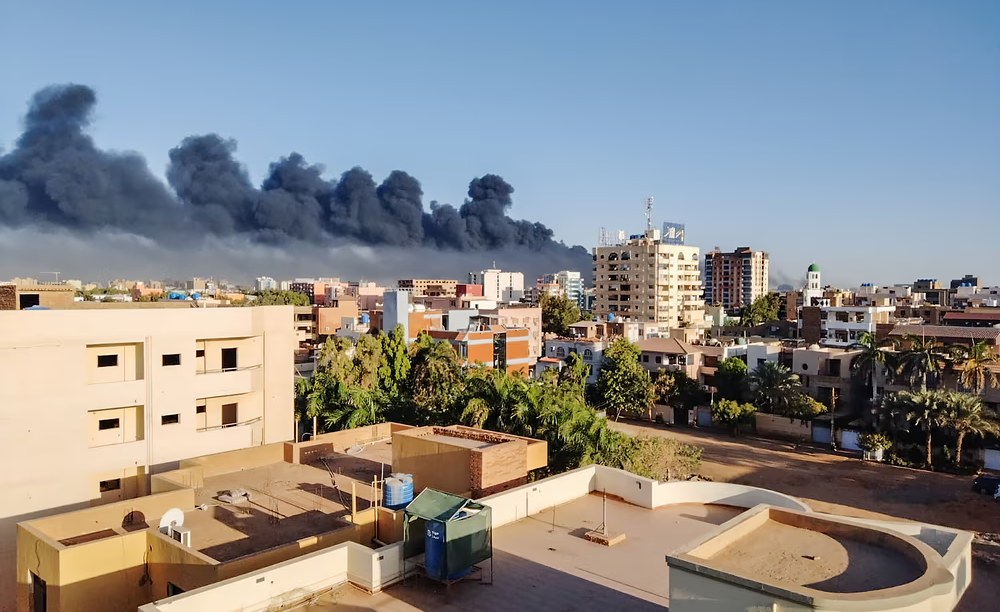
Addis Abeba — The United Nations and the United States have condemned Sunday’s drone attacks in Sudan’s capital, Khartoum, which damaged a civilian neighborhood and UN premises, as Sudan renewed allegations that drones used in attacks across its territory were launched from Ethiopia.
U.S. Senior Advisor for Arab and African Affairs Massad Boulos amplified a statement by the UN Office for the Coordination of Humanitarian Affairs (OCHA) in Sudan on 23 November 2026, warning that civilians and humanitarian workers continue to bear the brunt of the conflict, now in its fourth year.
“Drone attacks, reportedly launched by the RSF, in Khartoum today resulted in major damage to a civilian neighborhood and to UN premises, yet again compromising the safety of civilians and humanitarian personnel,” Boulos said, echoing remarks by UN Resident and Humanitarian Coordinator Denise Brown.
Keep up with the latest headlines on WhatsApp | LinkedIn
Brown said the attacks, which occurred early on 22 November, further endangered civilians and humanitarian personnel, adding that the use of foreign-supplied drones had become a recurring feature of the conflict.
“Nearly every day, strikes like these, using foreign-supplied drones, are killing civilians across Sudan and impeding humanitarian work,” she said.
She called for an end to the flow of weapons, particularly drones, into Sudan and urged the warring parties to agree swiftly to a humanitarian truce that could lead to a durable cessation of hostilities and sustained humanitarian access.
According to Sudan Tribune, at least four people were killed in the attacks across Khartoum, including a 10-year-old child in Jebel Aulia, south of the capital. Several others were reportedly wounded.
Witnesses told the outlet that Sudanese air defenses intercepted a swarm of drones in the early hours of Sunday, which appeared to be targeting Khartoum International Airport and a military facility in Omdurman. Sever local media also reported interceptions in the Arkawit neighborhood, including one drone carrying unexploded explosives.
The strikes damaged residential property and UN premises while personnel were inside. The incident marked the first reported attack on a UN compound in Khartoum since the Sudanese army recaptured the capital in May 2025.
The UN statement attributed the attacks to the Rapid Support Forces (RSF), saying they were “reportedly launched by the RSF.” The paramilitary group has been fighting Sudan’s national army since April 2023.
Meanwhile, Sudanese military sources told local and international media that the drones originated from Ethiopia, specifically from Bahir Dar airport. The allegations have not been independently verified, and Ethiopia has previously denied claims that its territory is being used to facilitate RSF military operations.
The latest accusations come amid escalating diplomatic tensions between Addis Abeba and Khartoum over Sudan’s claims that Ethiopian territory has been used as a launching ground for drone attacks during the conflict.
In early November, Sudan’s army-aligned Transitional Sovereignty Council said it had documented 70 drone attacks involving 187 one-way attack drones launched from Ethiopian territory between mid-February and late October 2026. The report identified alleged launch locations including Asosa airport in Benishangul-Gumuz, the Kurmuk-Gizen border area and Bahir Dar air base in the Amhara region.
The alleged attacks resulted in 484 civilian casualties, including people killed and wounded, while 176 Sudanese soldiers were killed and approximately 200 others wounded. October reportedly saw an escalation, with 28 attacks involving 97 drones recorded during the month.
Among the incidents cited was a 9 October attack on displaced families in Wad el-Mahi, Blue Nile State, which Sudan said killed 30 civilians, including 26 women and four children, and wounded approximately 100 others.
Sudan has also taken its accusations to the international arena. In a letter circulated at the UN Security Council in early November, Khartoum accused Ethiopia of allowing armed drones to be launched from its territory to strike locations across several Sudanese states, including Khartoum, Gezira, Sennar, North Kordofan, Gedaref and Blue Nile. Sudan described the alleged attacks as violations of its sovereignty and territorial integrity.

Sign up for free AllAfrica Newsletters
Get the latest in African news delivered straight to your inbox
Success!
Almost finished…
We need to confirm your email address.
To complete the process, please follow the instructions in the email we just sent you.
Error!
There was a problem processing your submission. Please try again later.
The allegations have emerged alongside an intensifying drone campaign against infrastructure in army-controlled areas of Sudan. In late October, attacks attributed to the RSF struck electricity facilities, including the Al-Markhiyat substation near Omdurman and the Um Dabakir thermal power plant, disrupting electricity supplies and affecting water services across several states.
The conflict, which erupted in April 2023 following a power struggle between the Sudanese Armed Forces (SAF) and the RSF, has increasingly involved the use of armed drones by both sides. It has displaced millions and plunged large parts of the country into severe humanitarian and food insecurity crises. AS