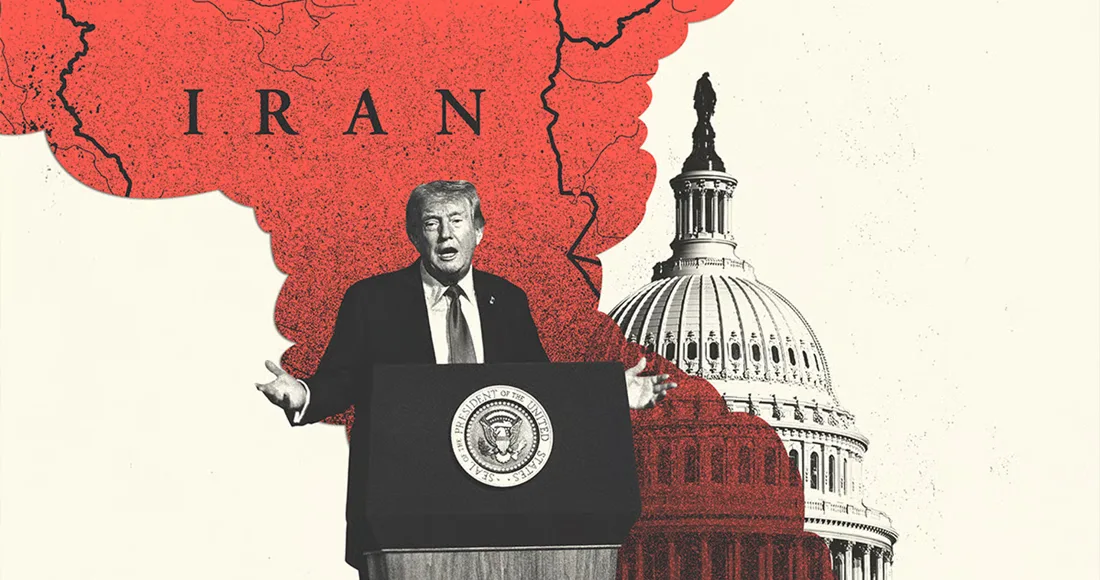
Washington DC. Democrats are strategizing to force US President Donald Trump to end the war against Iran by December. However, concerns are also being expressed that this move by them could lead to a government shutdown and further escalate the rising prices of food and fuel.
The Democratic Party had promised to end this conflict before the midterm elections held this month. The party’s anti-war stance, amidst growing public outcry against the war, greatly helped them achieve a landslide victory in the elections.
After securing a majority in both the Senate and the House of Representatives by winning several areas where Republicans had a strong hold, many lawmakers have announced that they will refuse to pass a new budget for the war as soon as they take leadership of both houses on January 3.
However, some leaders within the party are preparing to use their constitutional power of ‘power of the purse’ to stop US military action even before the new Congress takes office. They are targeting the December 11 deadline, by which date Congress is compelled to pass crucial bills to provide budget to some federal agencies.
Key developments so far:
What do Democratic Senators say about ending the war?
Democrats have made repeated attempts through various proposals to stop the ongoing US-Israel war against Iran, but they have not been successful.
In a joint statement released last week, House Representatives Yasmin Ansari and Ro Khanna urged Democratic lawmakers to use the budget passage deadline as a weapon to ensure that ‘not a single penny’ of taxpayers’ money is spent to prolong this war.

They were referring to the continuing funding package that Congress must discuss and pass by December 11. This budget is considered necessary to continue the operations of government agencies, including defense.
Lawmakers have demanded that ‘Congress must reject any budget proposal that does not explicitly prohibit spending funds for offensive military action in Iran.’
If the package is not passed, the budget for federal agencies will be halted, and a government shutdown could occur from December 12.
In an open letter addressed to their colleagues, they wrote, ‘The American people have made their vote clear in the November 3 elections: they want an immediate end to Donald Trump’s irresponsible war against Iran. Passing such a budget would be contrary to the demands of the American people who want an immediate end to the war.’
In a video released alongside, Khanna recalled that Congress had previously forced an end to the Vietnam War using this same strategy.
Senator Chris Van Hollen, who is in the running for Senate Majority Leader in the new Congress, also stated in a statement released last week that any bill passed must ‘include a provision that prohibits the Trump administration from spending funds to continue the war against Iran.’
Senators Tammy Duckworth, Michael Bennet, and Independent Senator Bernie Sanders also signed this statement.
Did lawmakers force an end to the Vietnam War?
They indirectly ended the war by stopping US financial aid.
The war, which lasted from 1955 to 1972, was fought between communist North Vietnam and South Vietnam. The US initially sent only military advisors and aid, supporting South Vietnam.
In 1964, the US Navy team stationed in the ‘Gulf of Tonkin’ claimed to have been directly attacked by North Vietnam. Following this, Congress passed a resolution giving President Lyndon B. Johnson the authority to send troops without declaring war. The US deployed over half a million troops and began intense bombing.
However, as the war dragged on, morale among US troops plummeted due to heavy human casualties, and the war became increasingly unpopular. Public support further declined after details emerged of atrocities committed by US troops, including rape and massacre.
In 1973, Congress rescinded the ‘Gulf of Tonkin’ resolution and ordered the withdrawal of US troops.
President Richard Nixon’s administration began transferring US military responsibilities to the South Vietnamese army, but bombing continued.

In June 1973, Congress passed the ‘Case-Church Amendment’, which completely prohibited the use of congressionally approved federal funds, directly or indirectly, for the war. With more than two-thirds of lawmakers in both houses voting in favor, Nixon could not overturn it with a presidential veto.
Lawmakers also passed the ‘War Powers Resolution’, which stipulated that the President must obtain mandatory approval from Congress before declaring war, except in emergencies. Nixon vetoed this, but in November 1973, Congress overrode his veto.
With the cessation of US financial aid, the government of South Vietnam in Saigon finally collapsed in April 1975.
Are all Democrats ready to stop government funding?
Democrats were outraged when the Trump administration started the war against Iran without using the war-declaration authority vested in Congress by the constitution.
However, not all Democrats agree on shutting down the government to end the war.
Democratic Representative Rosa DeLauro, who is set to lead the powerful ‘House Appropriations Committee’ in the new Congress, stated in an interview with CBS News before the election that she would support the move to ‘cut funding’ for the war.
However, she has not expressed support for shutting down the government.
She said she is prepared to approve a short-term budget extension rather than a full-year budget.
Speaking to reporters on Wednesday, she said, ‘I think the American people want to see us end the war. But I also believe the American people do not believe that shutting down the government will stop the war.’
Democratic leader Hakeem Jeffries, who is likely to become Speaker of the House in January, and Senate Minority Leader Chuck Schumer have not yet made any clear statements on this issue.
Can the President use the veto power?
Yes, because Republicans will control Congress for the next six weeks. Democrats do not have the two-thirds majority required to override a presidential veto in either the current or the upcoming Congress.

A two-thirds majority in the 100-member Senate requires 67 votes. Even with a 56-44 majority in the new Congress, Democrats will be short by 11 votes.
Similarly, a two-thirds majority in the 435-member House of Representatives requires 290 votes, but Democrats have secured only 257 seats in the upcoming Congress.
In recent months, although lacking a majority, Democrats had brought more than 15 war powers-related proposals to a vote in both houses, but they did not pass.
Last September, in an attempt to stop Trump, seven Republican lawmakers in the House voted in favor of the Democrats, and the proposal passed by a vote of 220-204.
However, last week, Senate Republicans blocked the proposal by a vote of 51-48.
Republicans argue that America ‘must finish this job,’ despite acknowledging the heavy financial burden of the war.