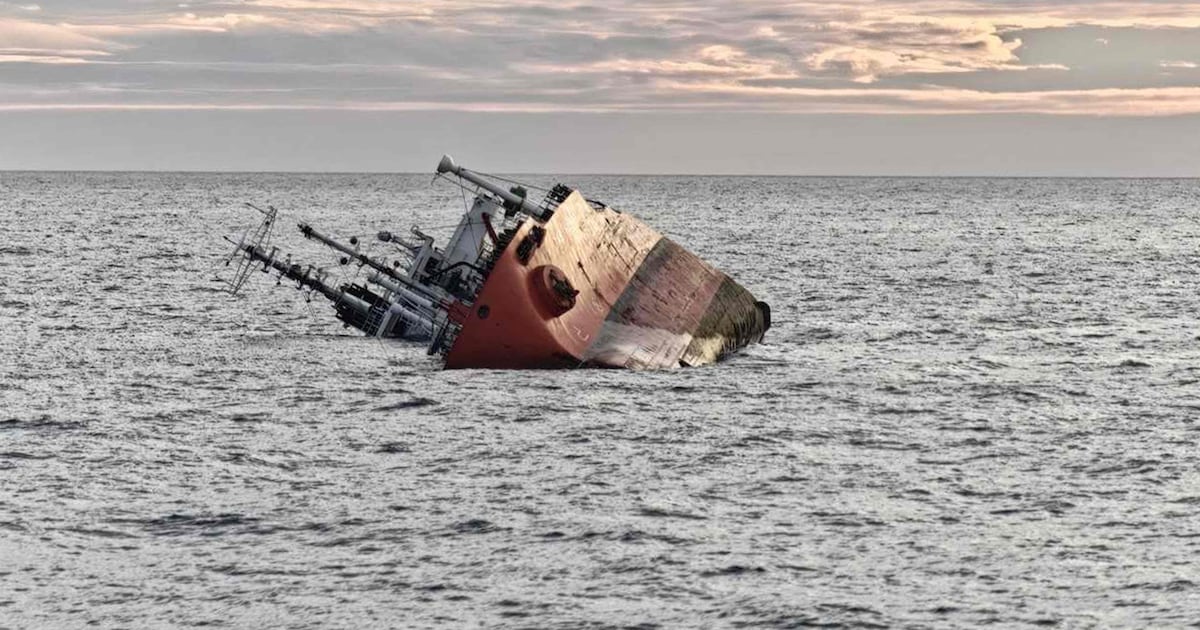
The UN warned the Security Council on Monday that escalating drone attacks on commercial ships in the Black Sea were threatening food exports, as the war between Russia and Ukraine increasingly increasingly spreads beyond territorial waters.
Rosemary DiCarlo, the UN undersecretary general for political and peacebuilding affairs, told the Security Council that the attacks were putting seafarers at risk and threatening food supplies to countries dependent on Ukrainian exports.
“In the Black Sea, drone attacks continue to threaten civilian navigation. The consequences extend far beyond the region, disrupting grain exports and other foodstuffs to countries in need,” she said.
“From June to October 2026, OHCHR recorded reports of 164 attacks on commercial vessels in the Odesa and Mykolaiv regions of Ukraine, as well as in the Black Sea. Of those, OHCHR has so far verified 15 attacks in which at least 21 vessel workers were killed and 43 injured.”
Ms DiCarlo expressed particular concern that the attacks were spreading beyond Ukrainian and Russian territorial waters, raising the risk of wider regional escalation.
“We are alarmed by attacks increasingly spilling beyond the territorial waters of Ukraine and the Russian Federation, particularly in Bulgaria’s exclusive economic zone and Romania’s Black Sea Coast,” she said. “Civilian navigation and port infrastructure must be protected.”
Libya strike
The briefing came as Ukraine’s President Volodymyr Zelenskyy said Ukrainian maritime drones had sunk a Russian navy corvette moored at a port in Libya in a surprise assault the previous day.
Seven drones were used in the operation, he said in a post on social media. The ship, the Merkury, was one of Russia’s newest vessels, commissioned a year after Moscow launched its full-scale invasion in 2022.
The government in eastern Libya sent a letter to UN Secretary General Antonio Guterres and the Security Council calling for an international investigation into the potential use of western Libya to prepare and launch the attack.
Ms DiCarlo said Ukraine had also confirmed attacks on Russian vessels in the Baltic and Mediterranean seas, and warned that the conflict was increasingly affecting neighbouring countries, citing incidents involving Russian missiles and drones in Poland and Moldova.
Finland said on Monday it had summoned Russia’s ambassador over a suspected airspace violation by a Russian helicopter and a Ukrainian drone strike on a Russian cargo ship in the Gulf of Finland in recent days.
Civilian toll
Ms DiCarlo said the UN had verified at least 17,994 civilian deaths in Ukraine since February 2022, including 877 children, while another 57,854 civilians had been injured.
Ukraine’s representative said that since the council last met on Ukraine on November 9, Russian attacks on his country’s cities “have not stopped, even for a single day”.
He said recent strikes had damaged the Dutch, Austrian and Swedish embassies in Kyiv, while drone debris had landed on the grounds of the Brazilian embassy.
He also accused Moscow of systematically attacking Ukraine’s energy infrastructure throughout November, forcing three thermal power plants to shut down and leaving more than 850,000 people without electricity.
Russia and the US
Russia’s deputy UN ambassador, Anna Evstigneeva, accused Kyiv of escalating attacks on commercial shipping and energy infrastructure, saying Moscow was not responsible for the widening conflict at sea.
“We are not the ones who opened Pandora’s Box,” she told the council.
She said Mr Zelenskyy had ordered systematic strikes on Russian energy and export infrastructure last June, including vessels carrying civilian cargo in the Black Sea.
Citing Russia’s Defence Ministry, she said Ukraine had attacked more than 200 commercial vessels in the Mediterranean, Caspian and Baltic seas this year, killing two seafarers and wounding 12.
She also accused western countries of ignoring attacks on Russian ports and ships, saying they had failed to “bat an eye” at what she described as the “dangerous trend of the expansion of terrorist activity to the Baltic region”.
The US called on both sides to stop attacks on commercial shipping, ports and energy infrastructure.
“The best way to protect food supply chains on the Black Sea is for the war to end,” representative Dan Negrea told Council members. “President Trump is committed to bringing an end to the Russia-Ukraine war and the tremendous suffering it is causing.”
He pointed to recent US-facilitated negotiations in Abu Dhabi, where Russian and Ukrainian delegations met for the first time since February.
“Serious discussion away from public spotlight has helped negotiators narrow gaps and explore potential solutions,” he said.