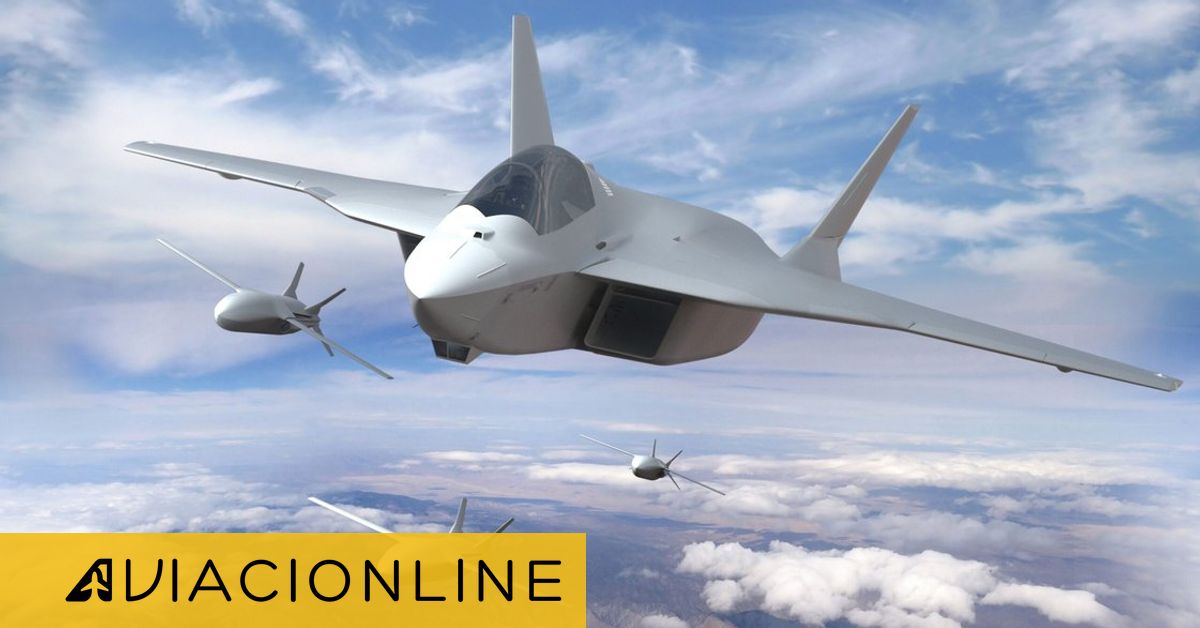
The Airbus works council (Betriebsrat) in Manching has called on the German government to authorise the development of a new sixth-generation fighter without further delay, following the collapse of the New Generation Fighter (NGF), the central crewed component of the Future Combat Air System (FCAS) programme. The workers’ representation argues that Germany must launch a project of its own to avoid losing the industrial and technological capabilities accumulated over decades of combat aircraft development.
The demand was raised on 23 November during a workers’ assembly at the Airbus Defence and Space facilities in Manching. According to a works council statement, the goal is for the Bundeswehr to be able to field the new aircraft before 2040, which would require the prototype to make its first flight in 2032. Its chairman, Thomas Pretzl, argued that the schedule is technically achievable, provided political leaders take an immediate decision.
The proposal also sets out a position on international cooperation. The works council expressly rejected Germany joining the Global Combat Air Programme (GCAP), an initiative led by the United Kingdom, Italy and Japan. Instead, it advocates quickly concluding a national contract that would allow development to begin and leave open the possibility of bringing in other countries and manufacturers at a later stage.
What is the Airbus works council in Manching demanding from the German government?
It is demanding that it authorise without delay the development of a new sixth-generation fighter following the collapse of the New Generation Fighter, the central component of the FCAS programme.
What schedule does it propose for the new fighter?
It proposes that the prototype make its first flight in 2032 and that the Bundeswehr be able to field the aircraft before 2040.
Which international cooperation option does the works council reject?
It expressly rejects Germany joining the Global Combat Air Programme, led by the United Kingdom, Italy and Japan.
What alternative does it propose instead?
It proposes quickly concluding a national contract to begin development and leaving open the possibility of bringing in other countries and manufacturers later.
What does Christian Moser propose regarding the Eurofighter?
He proposes continuing to modernise the Eurofighter to keep engineering teams active and develop technologies that can serve as a foundation for the future combat aircraft.
When does the German government expect to decide on the fighter’s future?
According to Boris Pistorius, the government expects to take a decision during the first quarter of 2027.
“We should not repeat the political mistakes made during the fighter’s development with France,” Pretzl warned, referring to the disputes between Dassault Aviation and Airbus Defence and Space over leadership, the allocation of responsibilities and control of NGF technologies.
German industry seeks to avoid another failure
The demand comes as Friedrich Merz’s government is still weighing how to reorganise its participation in the development of a future air combat system. As we reported previously, one of the alternatives considered by Berlin involves a partnership between Airbus and Saab, with Spain and Sweden taking part. Internal documents from the German Ministry of Defence reviewed by POLITICO indicated that this option could offer better industrial terms than joining GCAP, where responsibilities among the three founding partners are already allocated.
Alemania mira a Saab para desarrollar su próximo caza de sexta generación tras romper con Francia
Negotiations with the members of the British-Italian-Japanese programme are not running smoothly either. Italy initially proposed that Germany join as an observer, a condition Berlin considers insufficient given its ambitions for full participation and a significant industrial share.
Italy sets conditions for Germany to join the GCAP programme
The underlying concern goes beyond the choice of an international partner. The failure of the NGF laid bare the risk that Germany could lose its ability to design and develop combat fighters autonomously. The German aerospace industry had already raised this warning in 2025, when the Bundesverband der Deutschen Luft- und Raumfahrtindustrie (BDLI) questioned Dassault’s leadership demands and warned about the erosion of Germany’s technological share within FCAS.
Against that backdrop, the Team Gen 6 initiative presented by Airbus at ILA Berlin 2026 sought to bring together German and Spanish companies to preserve the industrial capabilities built up under the original programme and lay the groundwork for an alternative. However, forming an industrial group is still not the same as approving a development programme, nor does it guarantee funding.
The Eurofighter as a bridge to the new fighter
While the future project is being defined, German lawmaker Christian Moser (CSU), who publicly backed the Manching workers’ demand, proposed continuing to modernise the Eurofighter. The initiative would keep engineering teams active and develop new technologies for the Luftwaffe, particularly in areas such as the cockpit and mission systems.
The proposal aims to ensure that this work does not become a set of isolated efforts but can serve as a technological foundation for the future combat aircraft. That way, Germany would avoid a prolonged interruption of its development activities while it defines its next programme.
Defence Minister Boris Pistorius had said earlier that the government expects to take a decision on the fighter’s future during the first quarter of 2027. However, the works council argues that waiting until then could deepen industrial uncertainty and open the door to further purchases of US F-35s.
For the Manching workers, a greater reliance on foreign platforms would compromise the future of German military aviation. The debate, therefore, is no longer limited to finding a replacement for the NGF: it is about whether Germany will keep an industry capable of developing its own combat aircraft or will end up depending on technological and industrial decisions taken beyond its borders.