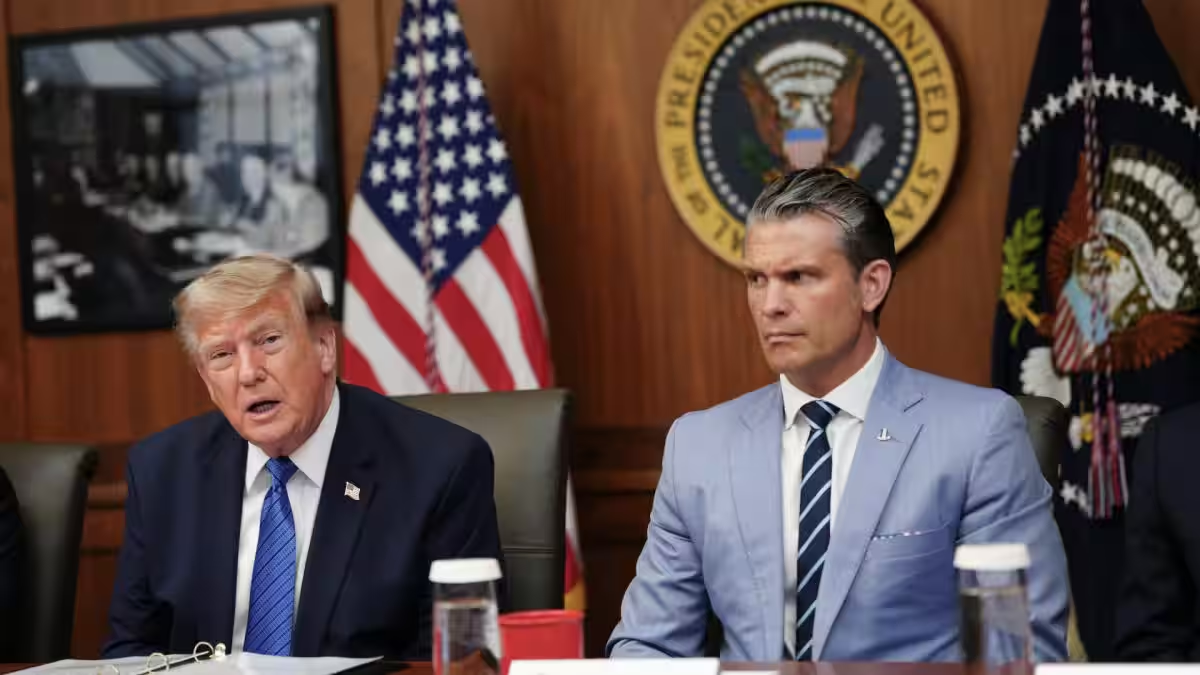
The Trump administration is widening its military campaign against drug trafficking in Latin America, moving beyond deadly strikes on suspected drug boats and seeking joint operations with US allies on their own territory
The Trump administration is widening its military campaign against drug trafficking in Latin America, moving beyond deadly strikes on suspected drug boats and seeking joint operations with US allies on their own territory.
The shift could mark a significant new phase in Washington’s security policy towards the region.
After more than 200 people were killed in over 60 US strikes on boats in the Caribbean and eastern Pacific, the administration now wants to work alongside Latin American militaries against criminal groups on land.
US Defence Secretary Pete Hegseth said last week that Colombia, Ecuador, Guatemala and Honduras were among the countries working with Washington on military operations against criminal organisations. Guatemala, however, has rejected the claim that it agreed to such operations.
Hegseth, speaking during a military exercise in Panama, said the US wanted to bring the same approach used against suspected drug boats to land-based targets.
From boat strikes to ground operations
The US military has long supported Latin American countries with weapons, intelligence, training and other assistance to combat drug trafficking. But direct combat operations alongside local forces would represent a major escalation.
Since Trump returned to the White House in January 2025, his administration has adopted a far more aggressive approach. Washington has designated 20 Latin American criminal groups as foreign terrorist organisations and has expanded military and intelligence cooperation with countries fighting organised crime.
 More from World
The boat strikes have become the most controversial part of the campaign. The US has accused the targeted vessels of carrying drugs and linked their crews to what it calls “narco-terrorist” organisations.
Critics, however, have questioned the evidence made public by Washington and raised serious concerns over the legality of the strikes and the number of deaths.
The proposed land operations could therefore bring even greater scrutiny.
Colombia could become a key test
Colombia is likely to be one of the most important countries for the new strategy.
Hegseth said Colombian President Abelardo de la Espriella had sought greater US military involvement in the fight against armed groups, including the National Liberation Army, or ELN.
The possibility of US forces directly supporting operations against groups such as the ELN would represent a major change from the traditional US role in Colombia, where Washington has generally focused on assistance, intelligence and training.
The security challenge is also complicated by the fact that armed groups operate in areas where civilians live. Military action in such environments carries a higher risk of civilian casualties and could push insurgents to abandon camps and blend into towns and villages.
That could make the campaign harder rather than easier to sustain.
Sovereignty could become the biggest obstacle
The expansion is also likely to test how much military involvement Latin American governments are willing to accept from Washington.
Ecuador has already carried out joint operations with the US. But the country’s experience shows the political sensitivity of the issue. Ecuadorian voters rejected a proposal to allow foreign military bases in a 2025 referendum, even as the government has expanded security cooperation with Washington.
Guatemala has offered another warning. President Bernardo Arévalo has denied agreeing to joint anti-drug military operations and said such an arrangement would require congressional approval.
Mexico, meanwhile, has resisted allowing US forces to conduct military operations against cartels on Mexican soil, despite close security cooperation with Washington.
This highlights the central dilemma for Trump’s strategy: governments may welcome American intelligence, equipment and training, but direct US military action on their territory is a different proposition.
Will military force deliver lasting results?
The administration’s harder approach may satisfy governments and voters demanding tougher action against powerful criminal groups. But analysts warn that military strikes alone may not solve the underlying problem.
Drug trafficking networks and armed groups have repeatedly shown an ability to adapt to military pressure. Destroying camps, for example, could simply force fighters and traffickers into populated areas, making them harder to target and increasing risks for civilians.
There is also a political calculation for Latin American leaders. Many are under pressure to demonstrate that they are fighting crime, but allowing a large US military presence could eventually trigger nationalist opposition.
For Trump, the expansion is about more than counter-narcotics policy. It also reflects his broader effort to reassert US influence across the Western Hemisphere and encourage governments in the region to align more closely with Washington.