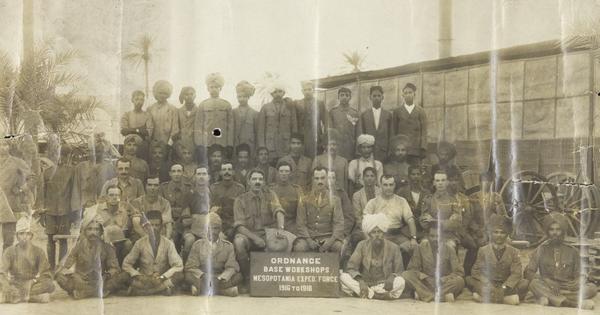
In 1918, a photograph taken in Baghdad captured the officers and soldiers of Dunsterforce, a military unit assembled from across the British Empire during the First World War. The force, organised in the aftermath of the Bolshevik Revolution the previous year and Russia’s withdrawal from the war, was an attempt by the Allied Powers to contain the Ottoman advances in West Asia.
The photograph captures a fleeting moment in this global conflict. By the time it was made, the man behind the lens had travelled almost as far as the war itself, whose battlefields extended from Europe, through Russia and West Asia to Africa and the Pacific.
The photographer was Victor Pereira, a Roman Catholic from the Portuguese colony of Goa, who had established photographic studios in Bombay and the princely state of Gwalior. In trade directories and commercial listings he is consistently identified as P Victor.
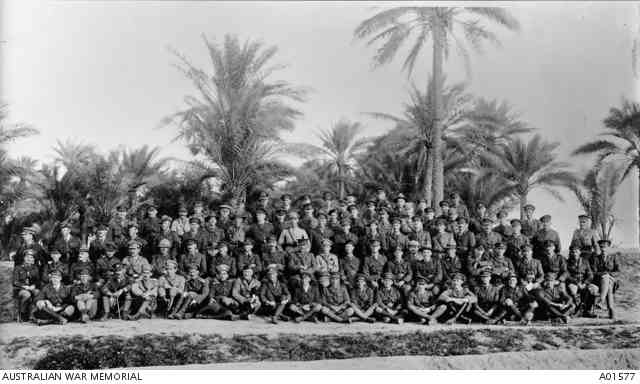 Photographer: P. Victor and Co, c April 1918. Officers of the 5th Party of the Dunsterforce. Credit: Public domain via Australian War Memorial Museum.
By the turn of the twentieth century, Bombay had become the primary destination for Goan migrants in search of mobility and employment. Some arrived as students. Others took on a variety of occupations: as clerks, doctors, lawyers, musicians and domestic workers, among others.
Living in Bombay required them to negotiate competing loyalties. Goans maintained strong ties to their homeland even as they built careers serving the British Raj. Some, such as Victor, established themselves as entrepreneurs in the bustling metropolis.
Trade directories from the period place his studio, P Victor & Co, on Esplanade Road in the Fort district. Surrounded by banks, hotels and insurance companies, he began his studio at a time when studio photography had emerged as an established commercial enterprise in the city.
Bombay began to patronise photography as early as 1840, and the founding of the Photographic Society of Bombay in 1854 brought together a growing community of European and Indian practitioners. By the late 19th century, the city had become home to a network of studios established by photographers such as Lala Deen Dayal, Hurrichund Chintamon and Shapoor N Bhedwar.
It was within this burgeoning world of commercial photography that Victor established his studio. Trade directories from the period place his studio, P Victor & Co, on Esplanade Road in the Fort district, amid the banks, hotels and insurance companies that animated one of Bombay’s principal commercial quarters.
Victor’s successes made him familiar in the world of princely India. His studio has been credited with having photographed the Scindias, the royal family of Gwalior, on several occasions.
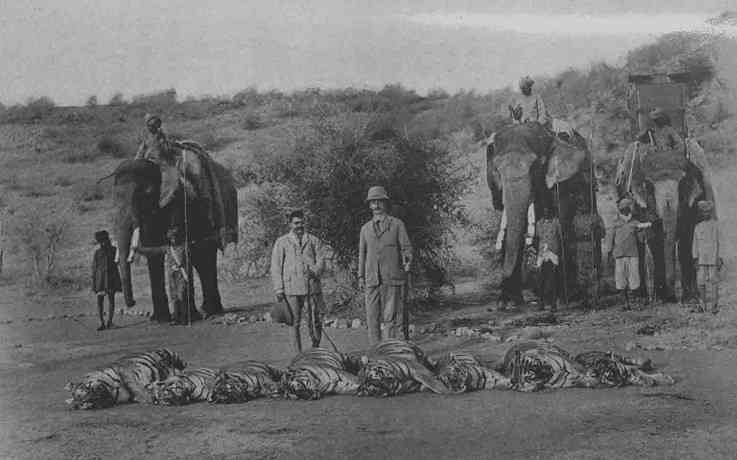 Photographer: P Victor and Co, c 1914. With the Maharaja Scindia of Gwalior, reproduced from Charles Hardinge, ‘On Hill and Plain’, 1933. Credit Public domain.
One such episode is narrated by Lord Hardinge, the Indian Viceroy, in his book On Hill and Plain (1933). After a tiger hunt hosted by Maharaja Madhav Rao Scindia in 1914, Hardinge writes that a photographer from Victor’s studio had to be summoned from Gwalior by soldiers signalling across the distant hills with heliostats.
In the photograph above taken of the hunt, we see the maharaja and Hardinge standing tall, posing behind a neat row of dead tigers. In the background, the hunting party, complete with elephants and mahouts, are carefully positioned on either side of the frame.
Like many hunting photographs of this period, the image carefully staged the tally of tigers they brought down to visually display their power and domination, reflecting princely and imperial ideals of masculinity.
Two years later, in 1916, another photograph of the Scindia family, this time of the maharaja alongside his children George and Mary, was taken by Victor’s studio.
Meanwhile, much of the world had already descended into a conflict that would later be called the First World War. Empires turned to their colonies for men and resources. British India became one of the war’s largest contributors, supplying over 1.3 million soldiers and non-combatants to theatres of war spanning Europe, East Africa and West Asia.
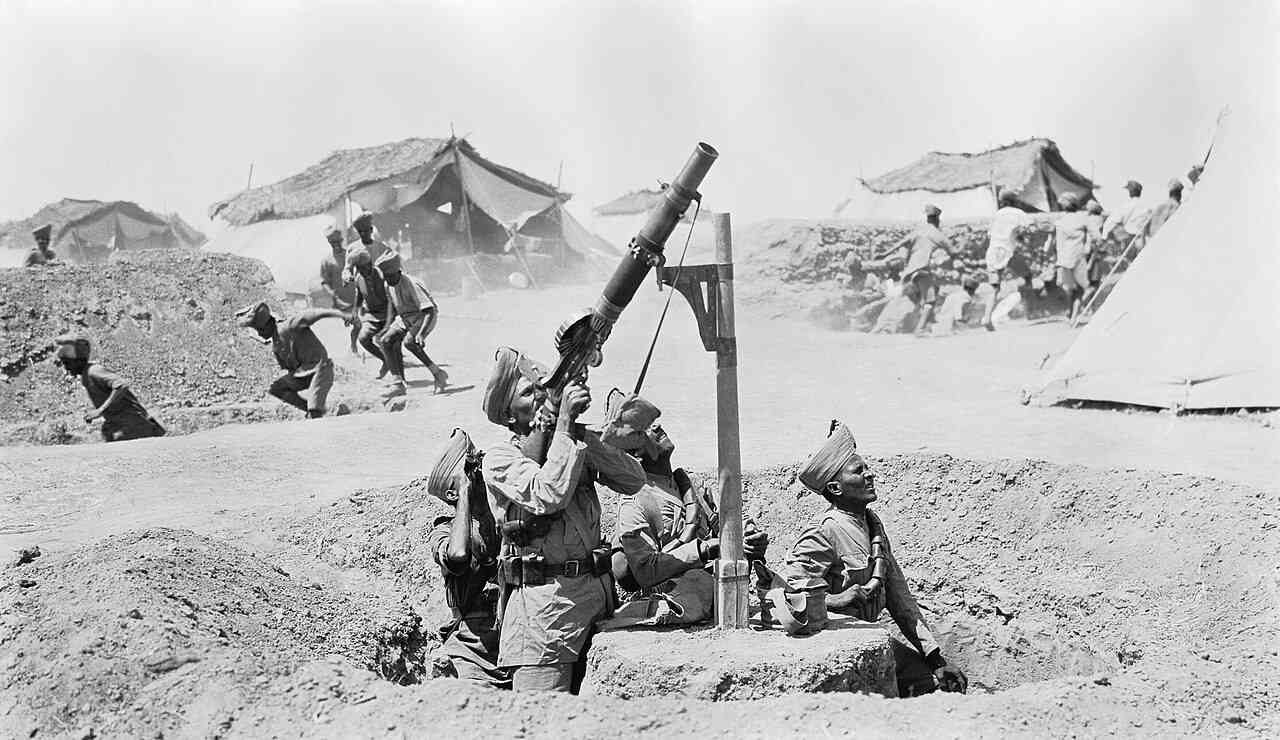 Indian gunner firing at enemy plane while the other sepoys rush to funk pits for safety in Mesopotamia during the First World War. Credit: Ariel Varges, Public domain, via Wikimedia Commons
The First World War was also one of the first conflicts to be extensively documented through photography. Governments and military officials recognised the power that photographs carried as a tool for public information and propaganda. Cameras followed soldiers into trenches, military camps and rubble, producing images capable of generating awe, fear, pride and sympathy among the public.
It was in this context that Victor was commissioned as an official photographer of the Mesopotamian Expeditionary Force, one of Britain’s most ambitious military campaigns in West Asia.
The campaign itself depended heavily on Indian human power and resources. The Mesopotamian theatre was initially fought by Indian Expeditionary Force D, largely composed of Indian soldiers. Tens of thousands of Indian labourers were also recruited to build railway networks that sustained the advance from Basra to Baghdad.
This commission carried Victor through Basra, Kurna, Baghdad and the Shatt al-Arab, which are part of modern-day Iraq. The Mesopotamian campaign drew in a complex network of participants including British officials such as the famous Lawrence of Arabia, the Hashemites of Mecca, Indian soldiers, Ottoman troops and Arab revolutionaries.
The war resulted in the collapse of the Ottoman Empire and added fervour to anti-colonial movements across West Asia. The Arabs who had been assured self-determination upon overthrowing Ottoman control had to reckon with the fact that their region was being carved up into a network of French and British protectorates.
Victor would find himself in the thick of these extraordinary moments of history, witnessing the transformation of Baghdad from Ottoman outpost to the British-mandated Hashemite Kingdom of Iraq.
In the war, he documented both the military campaign and its mundanities. Many of his photos depict urban landscapes, riverbanks and everyday life in Mesopotamia. His images included steamers chugging along the Shatt al-Arab, railway tracks cutting through the desert, and the locals posing for his lens.
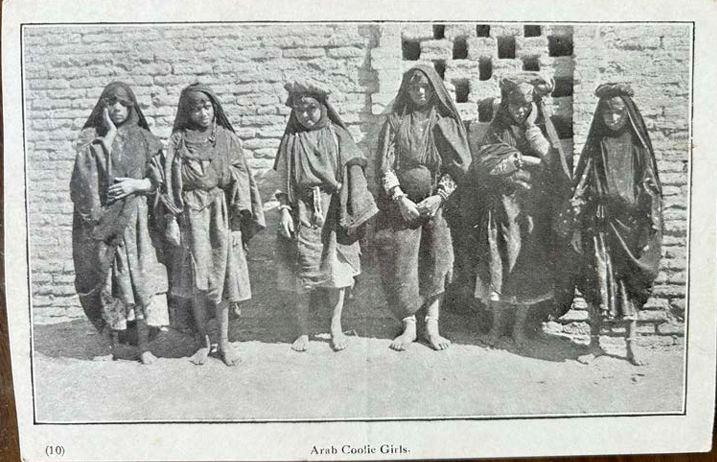 Photographer: P Victor and Co, Arab Girls,. Courtesy: Denzil Sequeira and Mark Sequeira
Many of these pictures were reproduced as postcards bearing the imprint “P Victor & Co., Official Photographers, Mesp Exp Force”. These made their way to faraway lands, carrying images of a distant war for audiences who would never witness it first-hand.
During his time in Mesopotamia, Victor met a fascinating set of individuals. Among them was Harry St John Philby, the British colonial administrator who worked closely with the Arab revolutionaries and would later become an advisor to Ibn Saud, the founder of Saudi Arabia.
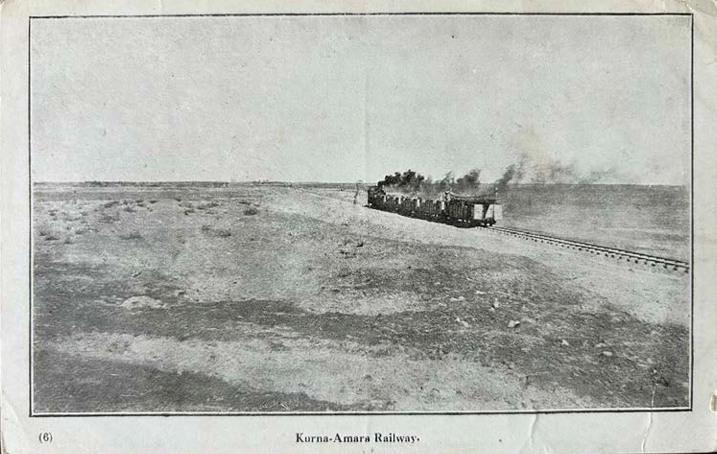 Photographer: P Victor and Co, Kurna-Amara Railway. Courtesy: Denzil Sequeira and Mark Sequeira
Philby recalled spending a morning in Basra in 1917 with Victor: “Spent morning with Victor learning how to develop photographs in a Kodak Developing Tank, and purchased postcard-sized camera and other material.” Philby would assemble one of the most extensive collections of photos of twentieth-century West Asia.
Today, pictures taken by Victor have made their way into military museum collections across Australia, the United Kingdom and beyond, while postcards regularly appear for sale on eBay.
There is no definitive account of Victor’s life. But the scattered traces in the memoirs of colonial officials, captions on postcards, business directories and military records reveal a peripatetic life across multi-ethnic social and political settings during some of the most destructive years of the twentieth century.
Seeing the world from his camera, British India, princely Gwalior and a transforming West Asia, viewers access an interconnected world, bound by commerce, war, and imperial rivalries. His photographs speak to the ambitious oceanic journeys Goans undertook beyond the familiar routes connecting the colony and the colonial centre, while navigating the rapidly changing world order.
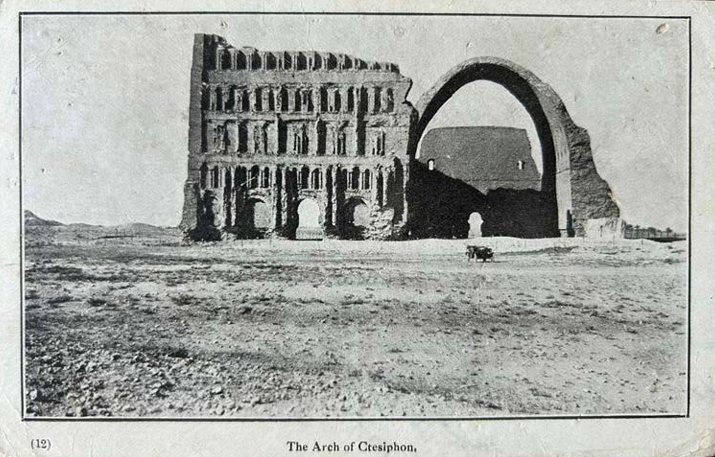 Photographer: P Victor and Co, The Arch of Ctesiphon. Courtesy: Denzil Sequeira and Mark Sequeira
Nishitha Mandava is a PhD researcher in the Department of History at Queen Mary University of London. She also works as an independent researcher and writer.