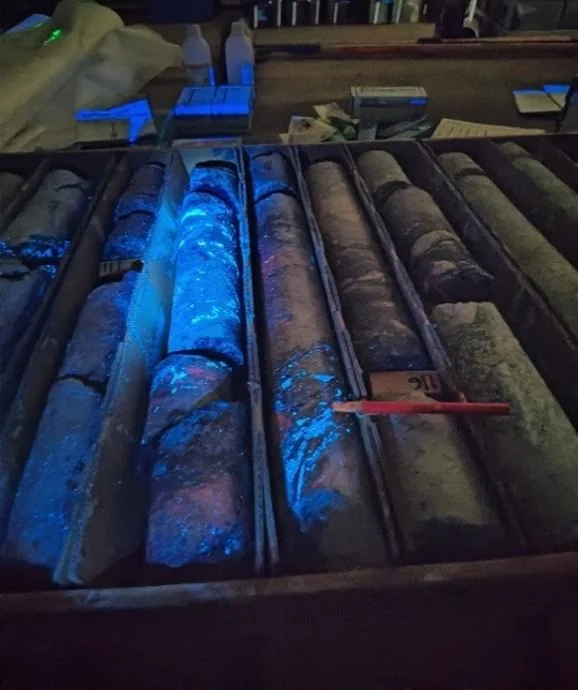
Perpetua Resources’ efforts to explore tungsten deposits at Stibnite will be assisted by the U.S. Army.
The Boise mining company recently announced it has been awarded up to $40 million in funding through the Army’s Defense Ordnance Technology Consortium, an industry group that collaborates with the government to develop military munition supply chains.
The federal funding will be used to study the feasibility of mining tungsten at Stibnite, a process expected to include drilling and engineering work.
Perpetua will match the Army’s funding for the three-year exploration program. The initial 18-month phase is expected to cost $18 million, split equally between the company and the Army.
The remaining $31 million in federal funding may be approved in phases by the Army, based on exploration results and progress on testing, engineering and permitting.
Why does the Army want tungsten?
The Army uses tungsten for military-grade steel production, aerospace components, munitions, and ground vehicle armor. The mineral is also used commercially to make wear-resistant industrial products, like drill bits, machine parts, and cutting tools.
Tungsten has not been commercially mined in the United States since 2015, according to a 2026 U.S. Geological Survey report.
China, the world’s largest tungsten producer, supplied 26% of U.S. tungsten imports from 2021 through 2024, the report said.
It is currently unknown how much tungsten Stibnite could produce, but Perpetua President Jon Cherry noted the area’s past as a major tungsten producer during World War II.
“Historical production and recent exploration results suggest Stibnite has the potential to be one of the world’s highest-grade tungsten sources,” he said.
The latest round of funding brings the total to $126 million awarded to Perpetua by the U.S. Department of Defense since 2022.
Previous funding has supported general permitting and engineering work for the mine and antimony processing studies, including some work in partnership with Idaho National Laboratory.
No paywall. No clickbait. No AI. No corporate owner.
Your support makes Valley Lookout possible.
Make a donation of any size here
Additional environmental review
 Exploratory drilling underway at Stibnite this past summer. Photo: Courtesy Perpetua Resources
The Stibnite mining plan approved by the Payette National Forest in 2025 does not include extracting tungsten, a mineral the federal government considers critical to national security. Mining it would require additional permitting and environmental review.
Tungsten exploration will take place alongside additional gold and antimony exploration planned by Perpetua in the Hangar Flats Pit, one of three open pit mines permitted at Stibnite.
Perpetua hopes the exploration could result in adding up to 1.37 million ounces of gold and 95 million pounds of antimony to the company’s mineral reserves – or more than $6 billion before mining costs, based on recent metals prices.
Recovering the additional gold and antimony could involve underground mining, according to Perpetua. Currently, only open pit mining is planned at Stibnite.
Like tungsten, recovery of the additional gold and antimony would require further permitting and environmental review.
It is too soon to say how many years of mining could be added to the Stibnite mine if exploration currently underway yields favorable results, said Mckinsey Lyon, a Perpetua spokesperson.
The mine, located about 40 air miles east of McCall, is currently expected to produce 4.2 million ounces of gold and nearly 115 million pounds of antimony over the 12 to 15-year life of mining operations. Construction on the mine is currently underway and operations could begin as soon as 2029.
The Stibnite project zone totals 1,740 acres, on which three open-pit mines spanning 473 acres would be excavated. The project zone is about three miles from the Frank Church – River of No Return Wilderness and is the site of historic mining operations dating to 1899.
Opponents of the mine fear it could pollute the East Fork South Fork Salmon River, which flows through the project site, and cause other environmental damage.
A lawsuit challenging the Forest Service’s approval of the mine was dealt a blow in August when a federal judge upheld the approval, though an appeal has been filed, as Valley Lookout reported.
 The Stibnite gold mine in eastern Valley County. Map Courtesy: Perpetua Resources