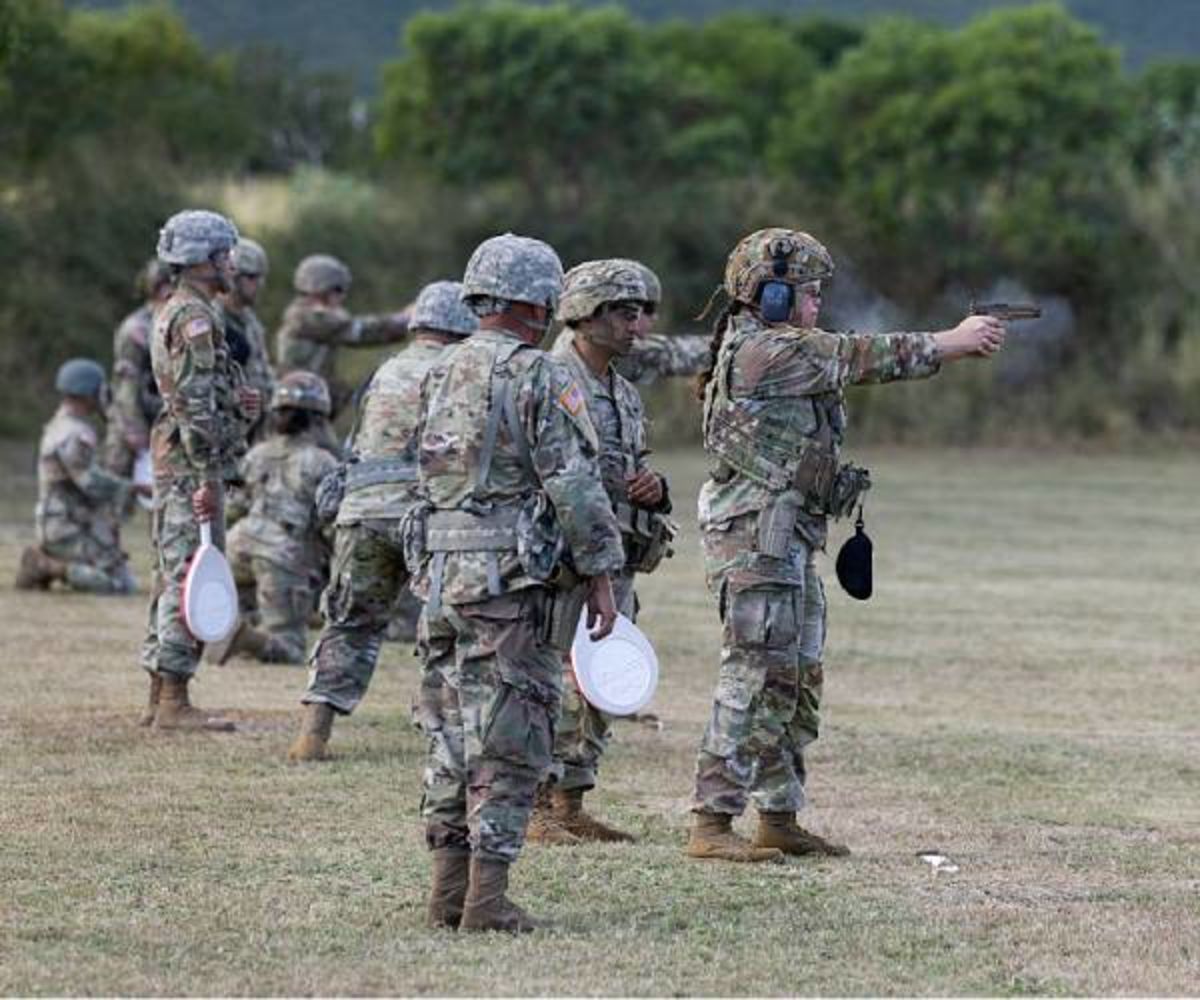

U.S. Army Reserve soldiers take part in a live-fire pistol training exercise Jan. 10 at Camp Santiago in Salinas, Puerto Rico. (AFP via Getty)
The Army Reserve is asking commanders whether military police, medical, and logistics units could be available to U.S. Southern Command within 120 days, according to an internal message reviewed by CBS News, as the Trump administration increases pressure on Cuba.
The message does not name Cuba as a destination or order troops deployed.
U.S. officials told CBS the request is part of contingency planning involving the island. Commands were directed to report the availability of six types of units by Thursday.
The document does not say how many troops might be needed or what mission they would perform.
The inquiry establishes what forces could be available if called on. It does not indicate that President Donald Trump or the Pentagon has approved an operation.
The requested formations are a combat sustainment support battalion, an engineer battalion, an expeditionary sustainment command, a medical brigade, a forward resuscitative and surgical detachment, and a military police brigade.
Together, those units could provide transportation, supplies, engineering, medical care, and security for a range of missions.
Southern Command, which oversees U.S. military activities across Central and South America and the Caribbean, declined to discuss possible troop movements or deployment timelines with CBS, citing operational security.
It said it regularly assesses requirements with other military branches.
The Army Reserve did not respond to CBS before publication. No public timetable or specific military objective has been announced.
The request follows earlier planning involving Cuba. In July, CBS reported that Pentagon officials examined options including an Army-led air assault involving thousands of soldiers from the 101st Airborne Division.
Officials stressed then that reviewing options did not mean a decision to carry one out.
CBS also reported in May that U.S. intelligence officials were assessing how Cuba might respond to possible American military action.
Those assessments came amid growing U.S. concerns about Cuba’s ties with Russia, China, and Iran and an administration campaign targeting the island’s access to fuel.
At the U.N. General Assembly on Tuesday, Trump predicted Cuba’s communist government “will fall” and said, “Communism will never be coming to America, but freedom will be coming to Cuba.”
He said Secretary of State Marco Rubio was “deep into negotiations” with Havana and warned against a foothold for foreign adversaries near the U.S.
Cuban Foreign Minister Bruno Rodriguez said Thursday that no meetings with U.S. officials were scheduled, though Havana remained open to contacts, The Associated Press reported. He accused Washington of imposing an oil blockade and tightening economic restrictions that have worsened conditions for Cubans.
The State Department is also considering tighter travel limits on Cuban officials visiting the U.N. next month, according to U.S. officials and a document obtained by AP. The proposed restrictions have yet to be approved.
Trump said in March that he expected to have “the honor of taking Cuba.” Later that month, he said, “Cuba’s going to be next.”
Cuban officials have said they would resist a U.S. attack.
© 2026 Newsmax. All rights reserved.