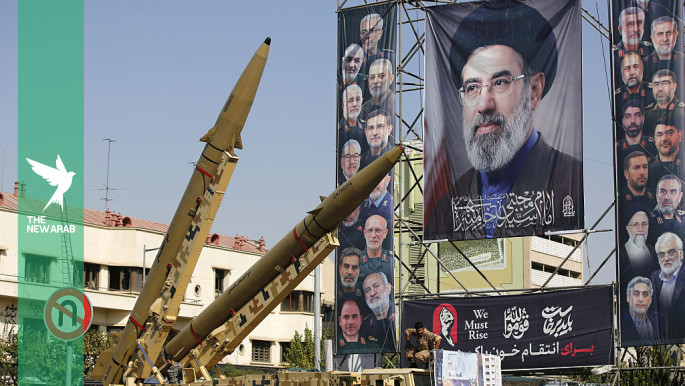
Iran has used extensively used its ballistic missiles to strike US and Israeli targets across the region [Fatemeh Bahrami/Anadolu via Getty Images]
The United States estimates that Iran possesses between 1,500 and 2,500 ballistic missiles, a level characterised as “formidable”, as tit-for-tat strikes between the two continue across the Gulf.
US officials told the Wall Street Journal on Saturday that the estimate was a “low confidence assessment” as it struggles to track the number of missiles Iran has in storage and ready to use.
Israeli officials estimate Iran has over 1,500 ballistic missiles, the outlet reported, with estimates again varying due to similar reporting issues, though officials added that Iran was “rebuilding, rearming” and preparing for another round of confrontation.
The ballistic missiles referred to are thought to be medium-range ballistic missiles (MRBMs) which can strike targets further away from Iran, such as Israel, with the WSJ noting that Iran also has many drones and short-range missiles at its disposal.
Short-range ballistic missiles (SRBMs) are used to attack targets closer to Iran, meaning much of the Gulf, including energy infrastructure and US bases.
The report comes after Iran’s semi-official Tasnim news agency revealed a new underground “missile city” on Tuesday, showcasing a hardened facility housing ballistic and cruise missiles and launch platforms, alongside warnings that any renewed US attack would trigger a response.
Iran is known to have dozens of “missile cities” across the country, many of which remain intact and operational despite heavy US airstrikes.
Because the facilities are hardened, US strikes largely focused on cutting off entrances to the facilities, though it is expected Iran will regain access to them by digging out the entrances.
Western officials told Bloomberg after the footage of the missile city was aired that Iran has at least 1,700 missiles left, with the capacity to make 50 per month.
Iran’s ballistic missiles have proven to be one of the deadliest, most cost-effective methods of fighting the US and Israel, striking key economic and military facilities throughout the region and draining the stockpiles of missile interceptors of countries attempting to fend off attacks.
Both the US and Israel have made degrading and destroying Iran’s ballistic missile programme a core war objective.
Meanwhile, despite continuing negotiations between the US and Iran to end the war, Iran’s IRGC launched six drones against a US air defence radar at the Al-Rifaa helicopter base in Bahrain, the latest attack in a series of tit-for-tat strikes that have also seen US strikes against Iran.
It is not known whether the radar targeted was damaged, though Iran has previously attacked US radar systems in the region to ensure higher degrees of success for its ballistic missile strikes, as radars are used to track and help intercept said missiles.
Bahrain condemned the attack, with the foreign ministry saying it “rejects turning its territory into an arena for settling scores and holds Iran fully responsible for these attacks and their consequences”.