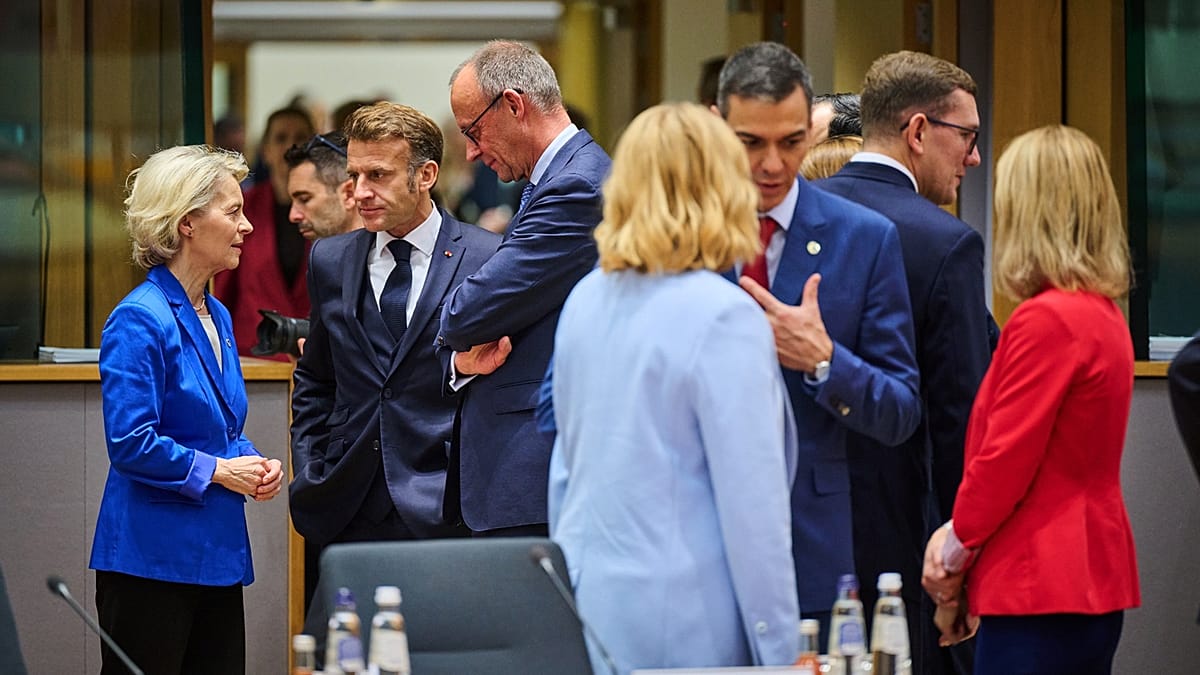
Die 27 Staats- und Regierungschefs der Europäischen Union kommen in Brüssel zusammen, um eine seit Monaten erwartete Entscheidung zu treffen: Wie sollen mindestens 90 Milliarden Euro aufgebracht werden, um den finanziellen Bedarf der Ukraine für 2026 und 2027 zu decken?
Da die USA auf eine schnelle Einigung zwischen der Ukraine und Russland drängen, sehen Diplomaten und Beamte den Gipfel an diesem 18. Dezember als einen wichtigen Moment für die Europäer, um zu beweisen, dass sie immer noch etwas zu sagen haben.
„Hier geht es nicht nur um Zahlen“, sagte die Präsidentin der Europäischen Kommission, Ursula von der Leyen, im Vorfeld des Gipfels. „Es geht auch darum, die Fähigkeit der Ukraine zu stärken, einen wirklichen Frieden zu sichern – einen gerechten, einen dauerhaften, einen, der die Ukraine und damit auch Europa schützt.“
Es gibt zwei Hauptoptionen, um die mindestens 90 Milliarden Euro aufzubringen. Die erste ist der Vorschlag, die stillgelegten Guthaben der russischen Zentralbank in ein zinsloses Reparationsdarlehen an die Ukraine umzuwandeln, das das Land erst dann zurückzahlen müsste, wenn Moskau den durch seinen Krieg verursachten Schaden wiedergutgemacht hat – was äußerst unwahrscheinlich ist.
Die zweite Möglichkeit wäre eine gemeinsame Kreditaufnahme auf den Finanzmärkten, wie die Kommission im Namen aller Mitgliedstaaten während der COVID-19-Pandemie vorgegangen war.
Beide Optionen sind mit erheblichen Vor- und Nachteilen verbunden, die den Staats- und Regierungschefs Kopfzerbrechen bereiten. Es gibt jedoch einen entscheidenden Unterschied: Die gemeinsame Verschuldung müsste einstimmig beschlossen werden, um die EU-Haushaltsregeln zu ändern. Dies ist ein nahezu unmögliches Szenario aufgrund der kompromisslosen Opposition Ungarns . Das Reparationsdarlehen dagegen könnte mit einer qualifizierten Mehrheit genehmigt werden.
Diese Arithmetik hat Belgien ins Rampenlicht gerückt. Im Land lagern russische Vermögenswerte in Höhe von 185 Milliarden Euro und Belgien befürchtet, dass es im Falle eines Reparationskredits Opfer von Vergeltungsmaßnahmen Moskaus werden könnte. Der belgische Premierminister Bart De Wever hat den Vorschlag als „grundlegend falsch“ und mit „vielfältigen Gefahren“ behaftet kritisiert.
Auf dem Gipfeltreffen am Donnerstag werden die Staats- und Regierungschefs daher versuchen, die zahlreichen Bedenken von De Wever zu zerstreuen und die Beteiligung Belgiens an dem Plan sicherzustellen. In den letzten Tagen haben zudem Italien, Bulgarien, Malta und die Tschechische Republik Vorbehalte gegen das Reparationsdarlehen geäußert, und auch Euroclear, die Verwahrstelle für die 185 Milliarden Euro, hat sich kritisch geäußert.
Mühsame und brisante Verhandlungen erwartet
Die Verhandlungen werden langwierig, mühsam und potenziell brisant sein. Belgien hat unter anderem unbefristete Garantien gefordert, um sich gegen jede Eventualität abzusichern. Die anderen Mitgliedstaaten hingegen wollen sich auf eine feste Summe einigen.
„Wir wollen, dass alle Risiken ohne Einschränkung, in vollem Umfang und vom ersten Tag an abgedeckt sind“, sagte ein hochrangiger Diplomat, der anonym bleiben wollte. „Die Risiken, mit denen wir konfrontiert sind, haben keine Obergrenze, also können wir einer Garantie mit einer Obergrenze nicht zustimmen.“
António Costa, der Präsident des Europäischen Rates, versprach, dass Belgien nicht überstimmt werden würde. „Dies ist kein Streit zwischen Europa und Belgien“, sagte er.
Wenn es den Staats- und Regierungschefs gelingt, Bart De Wever zu überzeugen, kann das Reparationsdarlehen in die Tat umgesetzt werden. Gelingt dies nicht, werden sie unter dem Eindruck des ungarischen Vetos über gemeinsame Schulden diskutieren. Erweisen sich die beiden Optionen als nicht realisierbar, muss die Kommission schnell eine Zwischenlösung finden, um die Unterstützung für die Ukraine ohne Unterbrechung fortzusetzen.
„Das Treffen wird so lange dauern, wie es nötig ist“, sagte ein EU-Beamter und deutete an, dass sich die Debatte über den Freitag und sogar darüber hinaus erstrecken könnte.
Die Uhr tickt: Kyjiw braucht im April eine neue Finanzspritze. Nach dem letzten ergebnislosen Gipfel kann sich die EU ein weiteres Debakel nicht leisten. Da Washington und Moskau genau auf Brüssel schauen, heißt es in Brüssel, dass ein Scheitern keine Option ist.
Folgen Sie unserem Live-Blog für aktuelle Informationen.
${updatedAt}


${title}
${body}
9:04 MEZ
‚Our decision to make,‘ Tusk said on reparation loan
In a very short doorstep statement upon arriving at the summit, Polish Prime Minister Donald Tusk told reporters that the reparations loan to Ukraine will be resolved “either today or tomorrow“.
“This is our decision to make,” the former Council President said.
The Polish government strongly supports the loan for Ukraine, which is a European proposal to use frozen Russian assets to finance Ukraine’s war effort, and it will be the hottest topic on the table when EU leaders meet today.
Now we have a simple choice: either money today, or blood tomorrow. I’m not talking about Ukraine only, I’m talking about Europe. This is our decision to make. And only ours. All European leaders must finally rise to the challenge.
— Donald Tusk (@donaldtusk) December 18, 2025
9:04 MEZ
Netherlands to guarantee €40 billion for Ukraine’s reparations loan
The Netherlands will guarantee up to €40 billion if EU leaders agree to use frozen Russian assets for a reparations loan, Dutch Prime Minister Dick Schoof told reporters upon arriving at the summit on Thursday.
„We have to share the risks with each other. I think that is a fair objection on the part of the Belgians,“ he said, adding: „I think it’s important that we figure it out today“.
On the Mercosur, which is not officially on the agenda but is likely to occupy most of the discussion leaders will have on competitiveness, Schoof said the trade agreement as it stands is „decent“.
He added that farmers‘ concerns over the treaty are „important“ but that „a number of additional measures have been taken“ to assuage them.
9:03 MEZ
Ukraine needs the means to survive this war, Luxembourg Prime Minister tells Euronews
“We need to give Ukraine the means to survive this war, borders cannot be changed by force,“ Luxembourg Prime Minister Luc Frieden told Euronews’ flagship programme Europe Today.
European leaders are gathering today and tomorrow in Brussels to discuss the most urgent issues to solve before the end of the year, including how to finance Ukraine from the beginning of 2026.
There are two main ways being considered to raise the EU’s €90 billion share to provide Ukraine with financing for the next two years.
The first would be to use frozen Russian Central Bank assets to create a zero-interest loan for Ukraine, which Kyiv would only repay if Russia later pays war reparations. The second would involve the EU jointly borrowing money on financial markets, similar to the approach used during the COVID-19 pandemic.
“We will find a solution, we have two options on the table,“ Frieden said. The use of frozen assets, the prime minister said, is „complex but we can find a way to make it work”.
There are €210 billion of Russian sovereign assets in the EU, of which €185 billion are held in Euroclear, a Brussels-based depository.
Belgium has demanded other member states provide strong guarantees.
“We have to find a group of countries which share the risks” in the scenario in which Russia launches a court case to claim the assets at the end of the war or once sanctions are lifted.
“We need to be united because the US might not be there with us in the future,“ the Prime Minister pointed out, referring to Washington’s gradual disengagement in supporting Ukraine in its war against Russia.
9:03 MEZ
Mercosur: ‚We need to stick with what we agreed with other countries,‘ Luxembourg PM tells Euronews
The European Union should honour the commitments it has made to its Mercosur partners, Luxembourg Prime Minister Luc Frieden told Euronews’ flagship programme Europe Today.
Addressing farmers’ concerns over the trade deal, the prime minister said these issues “can be solved domestically,” stressing the importance of ensuring the agreement does not fail, amid several EU countries expressing reservations over the deal.
9:01 MEZ
‚We have to find a solution for Ukraine,‘ says von der Leyen
Ursula von der Leyen has arrived at the EU summit with a clear-cut message: „We have to find a solution today,“ she said. „We won’t leave the European Council without a solution for the funding for Ukraine for the next two years.“
The president of the European Commission has proposed two options: the reparations loans, based on the immobilised Russian assets, and joint debt, backed by the EU budget. Though she has previously advocated in favour of the reparations loan, today she made no special distinction, saying simply that „the most important part“ is to raise €90 billion to meet Ukraine’s needs for 2026 and 2027.
Von der Leyen said that it is „absolutely understandable“ that Belgium, the prime custodian of the Russian assets, has concerns about the reparations loan. „I totally support Belgium that they insisting on having their worries and concerns accommodated, and we’re working day and night with Belgium,“ she said, thanking Belgian Prime Minister Bart De Wever for his „engagement“.
„If we take the reparations loan, the risk has to be shared by all of us. This is a matter of solidarity and a core principle of the European Union,“ she said.
17/12/2025 – 17:21 MEZ
Reparations loan for Ukraine: Who’s in favour and who’s against?
As we wait for EU leaders to make their way into the summit, we want to get you up to speed on the main issue: the reparations loan.
Under the scheme, the financial institutions that hold the immobilised assets of the Russian Central Bank would transfer their cash balances to the Commission, which would then issue a zero-interest loan to Ukraine. Kyiv would be asked to repay only after Moscow ends its war and compensates for the damage its invasion has wrought. Moscow would then be able to recover its money, completing the cycle.
While the proposal has been met with public enthusiasm by some leaders, like Germany’s Friedrich Merz and Denmark’s Mette Frederiksen, it faces staunch opposition from others, such as Belgium’s Bart De Wever and Hungary’s Viktor Orbán.
We break down who’s in favour and who’s against.
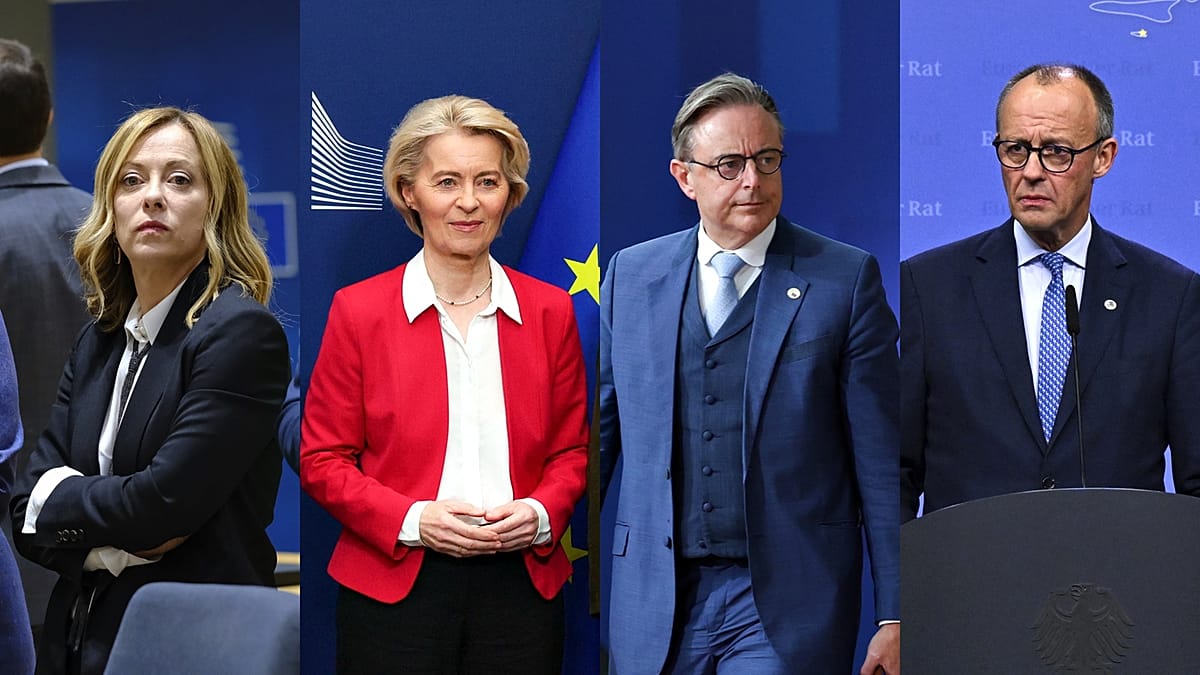
Reparations loan for Ukraine: Who’s in favour and who’s against?
The European Union’s bold attempt to issue a reparations loan to Ukraine using immobilised Russian assets has sharply divided the bloc’s key leaders. Ahead of…