
The sharp escalation in Russian strikes on Ukraine in July 2026 appears to be more than a series of isolated attacks. Rather, it forms part of a broader strategy aimed at exerting pressure on multiple fronts simultaneously.
Moscow appears to be seeking to exploit weaknesses in Ukraine’s air defence capabilities, disrupt military and transport logistics, reduce Kyiv’s export revenues and retaliate for Ukrainian attacks on Russian oil facilities and maritime traffic.
The campaign culminated in a massive strike on Kyiv on the night of 19 July. According to Ukrainian authorities, Russia launched 41 missiles of various types and 125 drones. Ukraine’s Air Force said it had intercepted 18 missiles and 108 unmanned aerial vehicles.
Seven people were killed in the Kyiv, Kharkiv and Zaporizhzhia regions, while dozens more were injured. Residential buildings, warehouses, a supermarket, a dormitory, a metro station and an underground passage were damaged in the Ukrainian capital.
On the same day, Russian forces allegedly attacked an international cargo vessel in the Black Sea near Odesa. According to Ukrainian officials, the Guinea-Bissau-flagged ship had departed from the port carrying a cargo of corn.
The crew comprised 17 Indian and Syrian nationals and one Ukrainian citizen. At least five crew members were killed, eight were rescued and another five were reported missing.
Russia has not publicly commented on the incident.
There is no single explanation for why Moscow has intensified its attacks at this particular moment. Official Russian statements reveal only the stated objectives of individual operations.
The broader pattern, however, points to several interconnected military and political motives.
The first appears to be an attempt to exploit vulnerabilities in Ukraine’s air defence network.
Ukraine possesses only a limited number of Patriot air defence systems, which remain among the few Western platforms capable of effectively intercepting Russian ballistic missiles. Kyiv has repeatedly warned that its stockpile of interceptors is insufficient to cope with the scale of the threat.
Russia, by contrast, has expanded its use of ballistic missiles.
According to various Western estimates, the Russian defence industry now produces around 700–800 Iskander and Kinzhal missiles annually. Intercepting a single ballistic missile may require the launch of several Patriot interceptors.
Meanwhile, Western production of PAC-3 interceptors remains limited, and a substantial increase in manufacturing capacity is not expected in the near term.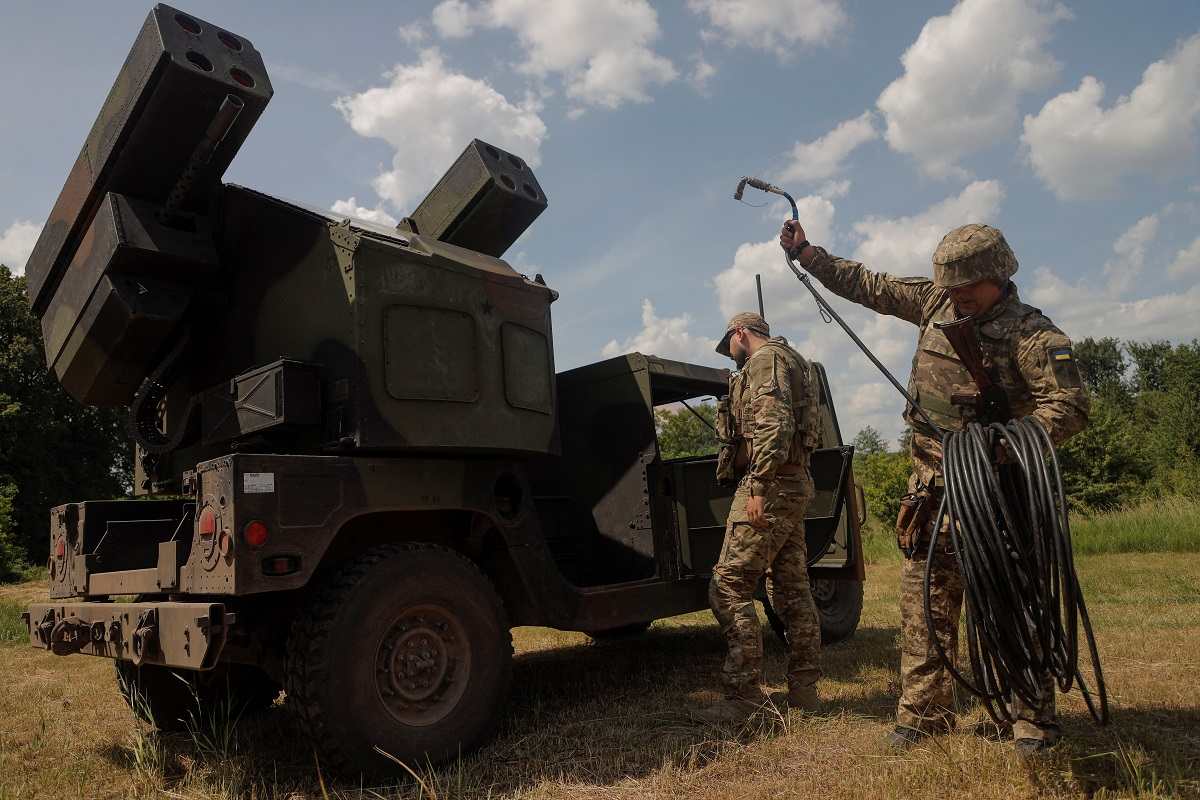

Source: Ukrinform
Moscow is therefore waging not only a conventional war of attrition but also an economic one.
Even when Ukraine successfully intercepts a high proportion of incoming missiles, every large-scale attack forces it to expend scarce and costly interceptors. Russia can combine ballistic missiles with large numbers of relatively inexpensive drones, compelling Ukrainian air defences to engage multiple targets approaching simultaneously from different directions and at different altitudes.
This vulnerability has become even more apparent as demand for US-made air defence systems has increased in the Middle East.
Washington and its allies must now distribute limited stockpiles across several theatres. Even political agreements on the future production of Patriot systems or interceptors in Ukraine cannot provide an immediate solution. Establishing production facilities, transferring technology and launching serial production will inevitably take time.
Russia appears to believe that this imbalance provides it with a temporary window of opportunity.
The second objective is to degrade Ukraine’s military-industrial base.
Russia’s Defence Ministry claimed that the strike on Kyiv targeted enterprises and logistical centres involved in the production of missiles, drones, electronic warfare equipment and other military systems.
Moscow identified several facilities that it said were linked to defence manufacturing, drone assembly and component storage. These claims cannot be independently verified under wartime conditions.
The focus on these facilities reflects the rapid expansion of Ukraine’s drone industry.
Ukraine is increasingly deploying long-range unmanned systems to strike Russian oil refineries, fuel depots, ports, railway infrastructure and defence-industrial facilities.
Russia is therefore seeking to target not only completed Ukrainian weapons but also the entire production chain behind them.
This includes design bureaux, assembly plants, warehouses, transport hubs and energy infrastructure. The objective is to raise the cost of Ukrainian weapons production, delay deliveries to the front and force Kyiv to disperse its manufacturing capacity.
Russia may also be attempting to slow the development of Ukraine’s domestically produced long-range missiles and drones, which have become increasingly important as restrictions and uncertainty continue to affect Western military assistance.

Source: Sky News
The third objective is to weaken Ukraine economically by targeting its Black Sea ports.
The ports of Odesa, Chornomorsk, Pivdennyi and other terminals are critical to the Ukrainian economy. The overwhelming majority of Ukraine’s grain and vegetable oil exports pass through the ports of the Odesa region.
These exports remain a vital source of foreign currency earnings.
Russian strikes have already reduced the operational capacity of Ukrainian ports. Some major terminals have suspended grain purchases, while shipping companies have become increasingly cautious about entering Ukrainian waters.
As a result, insurance premiums, freight rates and the overall cost of exporting Ukrainian goods have all increased.
The attack on the international cargo vessel near Odesa should be viewed within this broader context.
Even if the vessel itself was not the intended target, the implications extend far beyond a single ship.
Every incident involving a foreign commercial vessel raises the perceived risks of trading with Ukraine. Shipowners may demand higher freight rates, insurers may increase premiums or withdraw cover altogether, and exporters may be forced to divert cargo via more expensive road and rail routes.
For Moscow, this offers an opportunity to inflict economic damage on Ukraine without imposing a formal naval blockade.
It may be sufficient simply to make shipping routes near Odesa dangerous and costly enough to discourage maritime traffic and increase the cost of Ukrainian exports.
A fourth factor is the intensifying struggle for control of the Black Sea and the Sea of Azov.
Ukraine has significantly stepped up attacks on Russian maritime traffic, fuel infrastructure and energy facilities.
Ukrainian drones have targeted tankers, cargo ships, tugboats and other vessels linked to Russian logistics. Kyiv says the objective is not necessarily to sink these vessels, but to damage them and disrupt the maritime networks used to transport oil products and other cargo.
These attacks have reportedly disrupted shipping through the Kerch Strait and the Azov–Don Shipping Canal, while also affecting Russian fuel supplies to Crimea.
Ukraine has also continued its strikes on Russian oil depots, refineries and port terminals.
Russia characterises such operations as acts of terrorism and attacks on civilian shipping.
The intensification of Russian strikes on Odesa and other Ukrainian ports may therefore form part of a broader retaliatory campaign.
There is, however, no evidence that the attack on the cargo vessel was a direct response to any single Ukrainian operation.
A more convincing conclusion is that both sides are expanding the geographical scope of the conflict and increasingly targeting each other’s transport networks, energy infrastructure and revenue-generating sectors.
Ukraine is seeking to reduce Russia’s oil revenues and disrupt its maritime logistics. Moscow, meanwhile, is attempting to weaken Ukraine’s agricultural exports and make the Black Sea shipping corridor as hazardous as possible.
The fifth motive is diplomatic.
Negotiations aimed at ending the war remain effectively deadlocked.
Russia continues to demand Ukrainian territorial concessions, including control over areas that its forces have yet to occupy fully. Kyiv has rejected those demands.
At the same time, US attention and military resources have increasingly been divided between Ukraine and other security crises, particularly in the Middle East.
Moscow may calculate that intensified military pressure will weaken Ukraine’s negotiating position ahead of any future talks.
Strikes on Kyiv, defence-industrial facilities and ports are intended to demonstrate that prolonging the war will carry mounting human and economic costs.
This is a classic strategy of coercion.
Russia is attempting to compel Ukraine to accept political concessions not only through territorial advances, but also by destroying infrastructure, reducing export revenues and fostering a persistent sense of vulnerability.
The attacks also send a message to Western capitals.
Moscow is signalling that promises of future weapons deliveries or expanded air defence production cannot provide Ukraine with immediate protection. Each new strike increases pressure on the United States and its European allies to choose between supplying additional military equipment to Kyiv and preserving their own limited stockpiles
Source: PBS News
There is also a psychological dimension.
Concentrating ballistic missile strikes on Kyiv carries considerable symbolic significance.
The capital is Ukraine’s political and administrative centre and is home to the country’s leadership, foreign embassies, defence enterprises and key transport and logistics infrastructure.
Repeated attacks are intended to reinforce the perception that no part of the country can be fully protected.
They also compel Ukraine to concentrate its most advanced air defence systems around Kyiv, potentially leaving other cities, energy infrastructure and military facilities more exposed.
Russia is therefore pursuing several objectives simultaneously.
It is seeking to deplete Ukraine’s stock of missile interceptors, disrupt the production of Ukrainian drones and missiles, undermine agricultural exports, retaliate for attacks on Russian energy infrastructure and increase pressure on Kyiv ahead of any future diplomatic process.
This strategy, however, also carries risks for Russia.
The deaths of foreign seafarers and attacks affecting international commercial shipping could alarm countries that have so far sought to maintain a neutral stance on the war.
Disruptions to Ukrainian grain exports may drive up global food prices and fuel discontent across Africa, Asia and the Middle East.
Nor are attacks on Ukrainian ports likely to persuade Kyiv to abandon its campaign against Russian oil facilities and maritime infrastructure.
Instead, the conflict is increasingly extending beyond the front line into the energy, industrial, transport and trading systems of both countries.
The latest escalation therefore represents more than simply an increase in Russian air strikes.
It reflects the expansion of a broader war of attrition in which air defence, economic infrastructure, maritime trade, energy networks and each side’s capacity to sustain military operations have become central targets.
Russia has intensified its campaign because it perceives several opportunities at once: Ukraine’s shortage of Patriot interceptors, the vulnerability of its ports, the diversion of US attention and resources to the Middle East, and the perceived need to respond to expanding Ukrainian attacks deep inside Russian-controlled territory.
There are, however, no clear signs that this latest wave of attacks will rapidly alter Kyiv’s political position.
Instead, the escalation is likely to broaden the conflict further, making the Black Sea an increasingly important theatre in the Russia–Ukraine war.
By Murad Samedov