
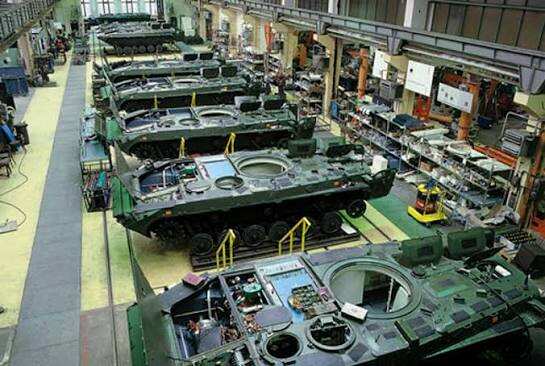
 A shift toward technological sovereignty: DAP 2026 prioritizes indigenous design and IP over simple assembly.
The proposed Defence Acquisition Procedure (DAP) 2025—subsequently released in draft form as DAP 2026 for stakeholder consultation—represents perhaps the most significant overhaul of India‘s defence procurement architecture since the introduction of the Defence Procurement Procedure in 2002.
More than a revision of procurement rules, it signals a doctrinal shift in India’s defence industrial policy. The transition is not merely from DAP 2020 to DAP 2025/26; it is a movement from an acquisition-centric framework to a capability-development and industrial-ecosystem framework.
The review emerged from widespread recognition that despite major reforms introduced under DAP 2020, acquisition timelines remained excessively long, indigenous programmes struggled to transition from development to procurement, private industry faced entry barriers, and critical technologies continued to be imported.
The Ministry of Defence’s decision to review DAP 2020 under the broader “Year of Reforms” initiative reflected a growing understanding that procurement reform had become inseparable from national security reform.
The proposed framework therefore seeks to address four strategic imperatives simultaneously: acceleration of military modernisation, achievement of technological sovereignty, strengthening of domestic defence manufacturing, and creation of globally competitive defence export champions.
Why DAP 2020 Needed Reform
DAP 2020 was itself a landmark document. It prioritised the Buy (Indian IDDM) category, strengthened the Make procedure, promoted MSME participation, encouraged indigenous software and introduced provisions for emerging technologies. It represented the first serious attempt to align procurement with the Atmanirbhar Bharat vision.
However, implementation exposed several structural weaknesses. The most significant challenge was acquisition timelines. A procurement proposal frequently took six to ten years from Acceptance of Necessity (AoN) to contract signature. By the time equipment entered service, technological obsolescence often became a concern.
Industry repeatedly complained about cumbersome trial procedures, repetitive evaluations, prolonged commercial negotiations and overlapping approval layers. Procurement cases frequently moved through multiple committees, leading to uncertainty and escalating costs.
Private industry also argued that despite policy pronouncements, Defence Public Sector Undertakings (DPSUs) continued to enjoy structural advantages. Many private companies found it difficult to secure long-term orders necessary for sustaining investments in research and development.
Another concern involved indigenous content calculations. Vendors often claimed high indigenous content percentages despite dependence on imported sub-systems. Questions emerged regarding the authenticity of localisation claims and vulnerability of supply chains to foreign dependencies.
The Strategic Partnership model progressed far more slowly than anticipated. Several major programmes remained stalled due to procedural complexities and ambiguities regarding technology transfer and intellectual property ownership.
Most importantly, DAP 2020 continued to emphasise manufacturing within India rather than ownership of technology by India. This distinction has become central to the philosophy of the new draft.
The Philosophical Shift: From “Made in India” to “Owned by India”
The defining feature of the proposed DAP 2025/26 is its emphasis on technological ownership. For two decades, India’s indigenisation strategy largely focused on licensed production. Aircraft, warships, artillery systems and armoured vehicles were manufactured domestically but frequently depended upon foreign design authority, foreign source codes and foreign upgrade permissions.
The new draft recognises that genuine strategic autonomy requires control over intellectual property, source codes, design data and upgrade pathways. Accordingly, procurement preferences increasingly favour companies that possess indigenous intellectual property rights and design authority. This marks a profound conceptual departure.
The central question under DAP 2020 was often: “Where is the equipment manufactured?” The central question under DAP 2025/26 increasingly becomes: “Who owns the technology?” That distinction may ultimately prove more consequential than any procedural reform.
Simplification of Procurement Categories
One of the most significant proposed changes is the rationalisation of procurement categories. DAP 2020 contained multiple procurement pathways that often-created overlaps and interpretational challenges. The draft framework seeks to simplify these categories by reducing complexity and removing redundancies. Industry experts believe this will reduce confusion during categorisation and shorten decision-making timelines.
Simplification is important because category selection determines indigenous content requirements, eligibility conditions, offset obligations and acquisition timelines. Delays often originated at this stage. A more streamlined categorisation structure is therefore expected to improve predictability for both the armed forces and industry.
Higher Indigenous Content Requirements
Perhaps the most visible reform concerns indigenous content norms. The draft raises indigenous content requirements under key procurement categories. Under Buy (Indian-IDDM), indigenous content thresholds are proposed to rise from 50 per cent to 60 per cent.
Similar tightening is proposed across other categories. This change serves multiple objectives. First, it encourages deeper localisation of supply chains. Second, it reduces dependence on imported components. Third, it incentivises domestic development of critical sub systems. Fourth, it promotes domestic value addition rather than screwdriver assembly.
Industries engaged in electronics, propulsion systems, sensors, avionics, cyber systems, software-defined capabilities and advanced materials stand to benefit significantly. The impact could be particularly substantial for MSMEs, which often occupy lower tiers of defence supply chains.
Compression of Acquisition Timelines
Time has become a strategic variable in modern warfare. The Ukraine conflict, the Red Sea crisis and technological developments in artificial intelligence and autonomous systems have demonstrated that military innovation cycles are now measured in months rather than decades.
Recognising this reality, the draft proposes monitoring timelines from the Request for Information stage onward, parallel processing of activities and compression of approval cycles. The intent is to reduce bureaucratic inertia and ensure that acquisition processes keep pace with technological evolution.
Fasttrack procedures are also being strengthened, particularly for emerging technologies and urgent operational requirements. If implemented effectively, this could represent one of the most impactful reforms in the entire document.
A New Push for Design-Led Defence Manufacturing
DAP 2020 incentivised manufacturing. DAP 2025/26 seeks to incentivise design. The draft proposes giving additional weightage to indigenous design capability, ownership of intellectual property rights, source-code access and in house research and development investments.
This has profound implications. Indian defence firms will increasingly be rewarded not merely for assembling equipment but for creating technology. The beneficiaries are likely to include companies engaged in: Artificial intelligence enabled military systems, Autonomous and unmanned platforms, electronic warfare systems, Cyber warfare tools, Space-based military technologies, Software-defined weapons and networks, Advanced drone ecosystems and future combat systems.
These sectors align closely with the technological requirements of modern warfare and India’s long-term strategic ambitions.
Opportunities for Indigenous Manufacturing
The proposed DAP opens new opportunities across multiple sectors. India’s drone ecosystem is likely to benefit significantly because the draft specifically recognises commercial-off-the-shelf technologies and emerging domains.
Electronic warfare and cyber-security industries could receive increased procurement opportunities due to simplified acquisition pathways. The space sector may witness greater participation from private players as military applications of space technology become increasingly important.
Defence software companies stand to gain because software ownership and source-code control have become procurement priorities. Advanced materials manufacturers, semiconductor suppliers, sensor developers and propulsion technology firms could also benefit from higher indigenous content mandates.
Perhaps most importantly, startups and innovation-driven firms are likely to find greater opportunities through enhanced integration with iDEX, Technology Development Fund and indigenous development programmes.
Impact on Imports
The draft is not anti-import. India will continue importing technologies where domestic capability does not exist. However, the framework clearly seeks to reduce dependency on imports for critical military capabilities.
Higher indigenous content requirements, stronger emphasis on intellectual property ownership and preference for domestic design authority will gradually reduce the attractiveness of pure import-based procurement models.
Foreign Original Equipment Manufacturers will increasingly be required to participate through partnerships that contribute to domestic capability creation rather than simple product sales. One particularly noteworthy provision is the proposed exclusion of wholly owned Indian subsidiaries of foreign OEMs from treatment as Indian vendors under certain acquisition categories.
This reflects concerns that foreign firms could otherwise dominate categories intended to nurture indigenous capability. The message is clear: India welcomes foreign technology, but it increasingly seeks co-development rather than dependency.
Impact on Defence Exports
India’s defence exports have grown dramatically over the last decade. The draft DAP could accelerate this trend. By encouraging ownership of intellectual property, domestic design authority and indigenous technologies, the framework supports the creation of exportable products rather than licence-produced equipment.
Countries are generally reluctant to buy systems whose upgrade authority remains with a third country. Therefore, Indian firms possessing complete design ownership will enjoy greater flexibility in export markets. The long-term objective appears to be the emergence of Indian defence firms capable of competing internationally in niche technology domains.
In this sense, DAP 2025/26 is as much an export policy as it is a procurement policy.
Ease of Doing Business Improvements
Several reforms directly address industry concerns. Simplified procurement categories reduce compliance burdens. Compressed timelines improve predictability. Parallel processing decreases delays. Enhanced emphasis on objective evaluation criteria reduces subjectivity.
Recognition of commercial technologies facilitates participation by non-traditional defence firms. Greater integration of startups, MSMEs and innovation ecosystems broadens market access. Increased focus on indigenous intellectual property creates incentives for private-sector investment in research and development.
Collectively, these reforms could make India’s defence sector significantly more attractive to investors.
Remaining Concerns
Despite its strengths, the draft is not without challenges. Several industry observers have raised concerns regarding implementation architecture. The success of the framework will depend less on policy language and more on enforcement mechanisms.
Verification of indigenous content remains difficult. Determining ownership of intellectual property can be complex. Procurement officials will require specialised expertise in emerging technologies. The armed forces may continue favouring proven foreign systems over developmental domestic products. Testing and certification infrastructure remains limited in several technological domains.
Furthermore, technology transfer remains an unresolved challenge. Many foreign firms remain reluctant to transfer truly critical technologies. Without corresponding reforms in testing, certification, contracting and project management, procedural improvements alone may not achieve desired outcomes.
Recommendations for Strengthening the Final DAP
The final document should incorporate an independent indigenous-content audit mechanism. Self-certification has repeatedly generated disputes and credibility concerns. A dedicated Defence Technology Evaluation Authority should be created to assess emerging technologies and reduce dependence on traditional procurement structures.
The government should establish differentiated acquisition timelines for software-based systems, artificial intelligence applications and autonomous technologies. These sectors evolve too rapidly for conventional procurement cycles. A guaranteed procurement pathway should be created for successful iDEX and Make projects. Many innovations struggle to transition from prototype to production.
The Strategic Partnership model requires institutional strengthening through dedicated professional acquisition cadres possessing expertise in finance, law, engineering and programme management. The final DAP should also introduce explicit export-support provisions linking domestic procurement success to export promotion mechanisms.
Long-term framework contracts and assured order pipelines should be expanded to encourage private investment in research and development.
Finally, India should adopt a capability-development approach rather than a platform-acquisition approach. Future wars will increasingly be fought through networks, software, autonomous systems and data ecosystems rather than individual platforms.
Conclusion
The proposed Defence Acquisition Procedure 2025/26 is arguably the most ambitious procurement reform undertaken by India in over two decades. It recognises that defence acquisition is no longer merely an administrative function but a strategic instrument of national power.
Its most important contribution lies in shifting the debate from manufacturing to technological ownership, from procurement to capability creation, and from import substitution to innovation leadership. If implemented effectively, the new framework could help India move beyond being one of the world’s largest defence importers and emerge as a significant defence technology power.
Yet success will depend not on the elegance of the policy document but on the discipline of execution. Procurement reforms have been attempted repeatedly in the past. The real test of DAP 2025/26 will be whether it can translate ambition into acquisition, acquisition into capability, and capability into strategic advantage.
As former President and scientist A. P. J. Abdul Kalam famously observed: “Strength respects strength.” The proposed DAP seeks to ensure that India’s strength increasingly originates not from imported systems, but from technologies conceived, designed and owned within the country itself.
(The author is Major General (Retd.); Views expressed are personal)
Published On Aug 9, 2026 at 11:57 AM IST
Join the community of 2M+ industry professionals.
Subscribe to Newsletter to get latest insights & analysis in your inbox.
All about ETGovernment industry right on your smartphone!
