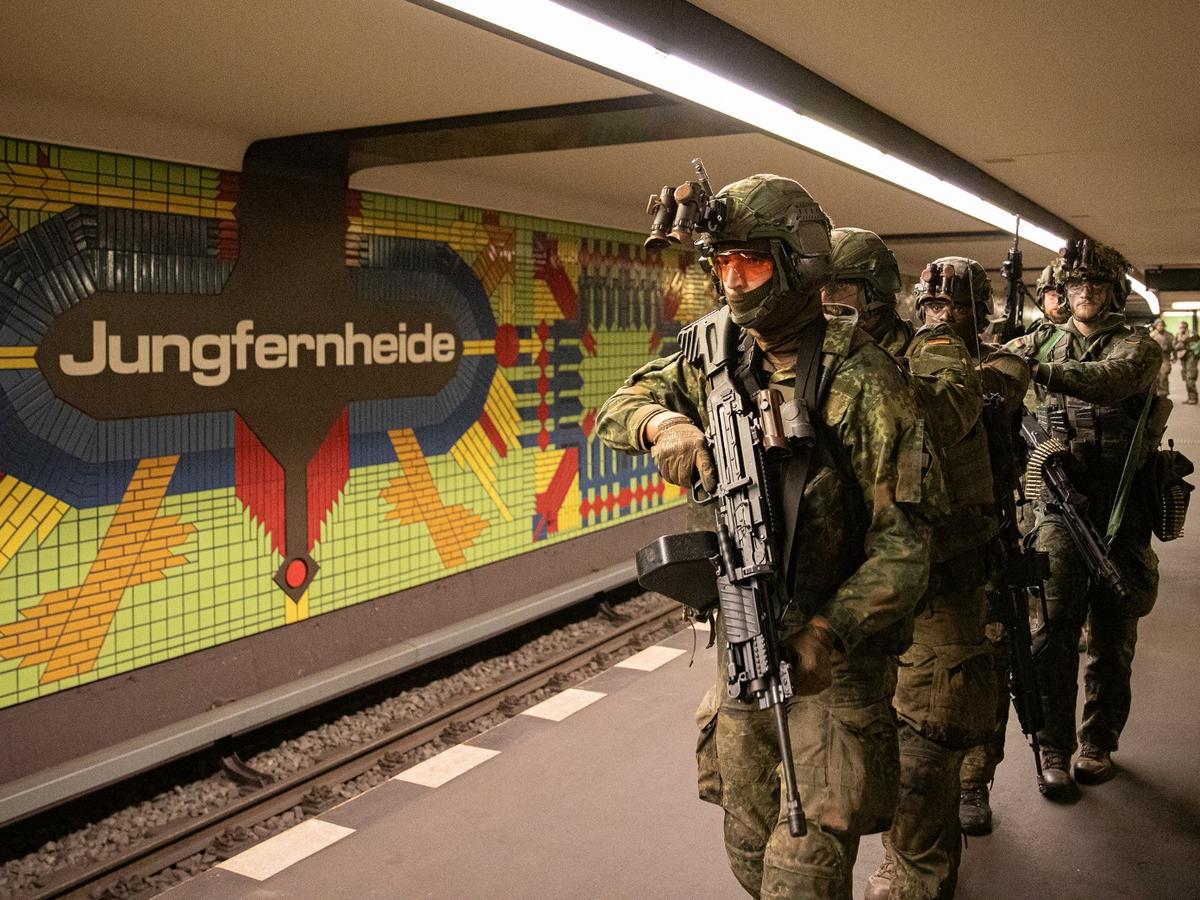
Nations across Europe face a growing and diversifying array of threats within their borders and beyond. Readiness to meet these threats is improving, but unevenly. While some European nations are taking increasingly prudent steps to counter hostile state-sponsored threats, others risk delaying their responses to the detriment of their readiness to withstand crises.
Europe is already confronted on its own soil, with hybridised and non-linear Russian threats directly affecting national security, economic activity and critical infrastructure. The number of Russian state-sponsored acts of sabotage across Europe continued to increase in 2025 after almost tripling in 2024 compared to preceding years. In 2024, 34 Russian attacks in Europe were documented, many of which were connected to the ongoing invasion of Ukraine.
For instance, several companies supplying arms to Ukraine—including BAE Systems, Rheinmetall, the German Diehl Group and EMCO—have been targeted in recent years. The largest proportion of attacks however, over a quarter, were directed at the transport sector. As before, these attacks have targeted perceived weaknesses in European societal structures, industry, infrastructure and government and military premises.
Such attacks do not only incur physical damage. They are also intended to test European cooperation, its readiness to meet emergent crises, and to expose flaws in the resilience of its democratic and societal structures.
It is increasingly apparent that European nations must be prepared to meet these diverse challenges with an appropriately comprehensive and holistic response. National preparedness must be founded on a whole-of-society approach to meet, contain and deny new threats. Research highlights the multi-faceted nature of resilience, spanning cyber security, supply chain and societal cohesion. It also examines specific case studies of good practice across the Nordics, Ukraine as well as historical examples of wartime economies.
National preparedness must be founded on a whole-of-society approach to meet, contain and deny new threats.
The private sector has a critical role to play in this response, which must involve industry in a broader sense, including energy providers, food retailers, transport industry and their respective supply chains. Private companies and industries possess not only physical and digital infrastructure and production facilities needed for mobilising the economy in times of crisis; they also employ a workforce whose skills can support preparedness and readiness. Governments that proactively engage with the private sector around national preparedness help businesses plan better (PDF) for personnel, purchases and overall resilience.
Close collaboration between the government, military and the private sector has been evident in Ukraine. Since the onset of the war, both the public and private sectors in Ukraine have been engaged in repairing (PDF) telecommunications and critical infrastructure networks. Ukrainian companies have benefited from a rapid government relocation scheme launched in March 2022, which supported 745 enterprises in moving operations to western Ukraine.
Governments can also engage with industry representatives to identify critical sectors and professions and determine how their operations can be sustained during crisis or war. France’s recent efforts to establish an industrial reserve—essentially a pool of former defence industry staff available for mobilisation in the event of national crisis—is an attempt to do just that. It offers an example of how nations might maintain a standing register of key occupations essential to wartime production, minimising disruption and delay in the event of a major crisis.
Although real increases in defence spending matter, it is the frameworks in place governing the deployment of such spending, rather than the sheer size of the budget, that will make or break a nation’s response to crisis.
Subscribe to the Policy Currents newsletter
European spending on defence continues to rise year-on-year, but without comprehensive frameworks to address the increasingly diverse nature of threats, its overall impact will continue to be undermined. This gap is not uniform across the continent. In Central Europe, the Nordics, and the Baltics, preparedness is far more embedded in national consciousness than in Western Europe, and crisis response frameworks are correspondingly more advanced. Finland, Sweden, Norway, Estonia, Latvia, Lithuania, Poland and Germany are not only acutely aware of the risks of hostile state interference and hybrid threats, but are actively strengthening resilience across society, government and industry. Their frameworks for national response extend beyond purely military scenarios; cross-border coordination efforts focus on countering and adapting to novel physical threats, and also pre-emptive resilience-building against hybrid pressures—such as irregular migration—which have been effectively weaponised by Russia and Belarus in the past.
A Europe capable of deterring, denying and defeating existential threats is within reach. However, achieving such resilience will require difficult conversations on security and preparedness across European NATO, as a whole. Effective preparedness will mean having frameworks in place ensuring that the right people can be put in the right place when needed. This requires building cooperation and coordination between government, industry and society, establishing mechanisms that not only mandate but also incentivise, encourage and where needed, compensate, civilian participation in preparedness.
All of this must be underpinned by clear communication and engagement with the public. Regulatory frameworks and financial incentives should promote and encourage engagement from all levels of society, from individuals and communities to businesses and public institutions. The Nordic concept of “Total Defence” serves as a blueprint for Western European leaders to translate into their own context. National preparedness must start from the ground up—and be supported by a collective ethos instilled by its leaders from across government, industry, the military and broader society.