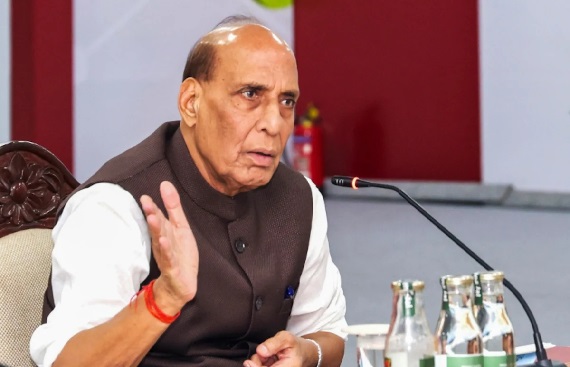
Defence Minister Rajnath Singh has approved the transfer of DRDO-developed technologies for all conventional missile systems to eligible Indian defence companies for domestic production. The move aims to accelerate indigenous manufacturing, reduce import dependence, and expand private-sector and MSME participation in India’s defence ecosystem.
Defence Minister Rajnath Singh has approved the transfer of Defence Research and Development Organisation (DRDO)-developed technologies for all conventional missile systems to Indian defence companies for production within the country, marking a significant step in the government’s effort to move advanced weapons technology from research and development into large-scale industrial manufacturing. The Defence Ministry says the decision is intended to strengthen India’s domestic defence manufacturing base, reduce dependence on imports and give private industry a larger role in building critical military capabilities.
The approval allows Indian companies to undertake production of DRDO-developed conventional missile technologies, but access will not be automatic. Companies will have to meet applicable technical qualifications, certifications, approvals and regulatory requirements before they can manufacture the systems. This distinction is important because the decision is aimed at creating a broader industrial ecosystem around technologies that have already gone through the government’s development process, rather than simply handing over unrestricted access to defence technologies.
The Defence Ministry described the move as an important milestone in increasing industry participation and creating a clearer path from missile development to industrial production. “The provision will enable successful transition of missile system development to industrial production, reflecting the continued efforts of DRDO to leverage the capabilities of the Indian industry for the development and manufacture of advanced defence systems”, says the ministry.
For India, the significance goes beyond simply increasing the number of companies involved in missile manufacturing. Missile production requires a complex network of suppliers covering propulsion, electronics, guidance systems, sensors, materials, testing and other specialized components. Bringing more domestic companies into that network can help expand manufacturing capacity while increasing the amount of value created within the country. The government expects the initiative to create new opportunities for micro, small and medium enterprises and other technology partners to become part of these supply chains.
Also Read: Government To Back High-Tech Industries With More Flexible BIS Certification Norms
The decision also comes as India seeks to build greater industrial capacity around technologies developed by DRDO. In recent years, the organization has increasingly worked with domestic industry during development and testing rather than treating manufacturing as a completely separate stage. A June 2026 test of the Long Range Land Attack Cruise Missile, for example, involved subsystems developed by DRDO laboratories and Indian industry partners, demonstrating how government research and private-sector manufacturing capabilities are already becoming more closely integrated.
Another example is the UAV-Launched Precision Guided Missile-V3, for which DRDO has worked with production agencies and a wider network of Indian companies and MSMEs. The system’s development involved multiple domestic organizations, with the government saying the missile had been produced through an Indian defence ecosystem capable of supporting serial production.
The latest policy could therefore help address one of the longstanding challenges in defence manufacturing: turning successful indigenous designs into products that can be manufactured consistently and at scale. For the armed forces, a stronger domestic production base can potentially improve availability, shorten supply chains and make it easier to expand production when operational requirements increase.
The ministry said the initiative is also intended to enhance operational capability, reduce import dependence and increase domestic value addition. DRDO will continue working with Indian industry to facilitate the transfer and absorption of advanced technologies, helping companies build the technical capabilities required to manufacture sophisticated defence systems.
The move fits into the government’s wider Aatmanirbhar Bharat strategy, which increasingly treats defence manufacturing as both a national-security priority and an industrial opportunity. As India seeks to develop a deeper domestic ecosystem for advanced weapons, the transfer of missile technologies could give private manufacturers, MSMEs and specialized technology suppliers a larger role in converting indigenous research into deployable systems. The broader objective is to ensure that technologies developed within India do not remain confined to laboratories, but become part of a sustainable manufacturing base capable of supporting the armed forces over the long term.