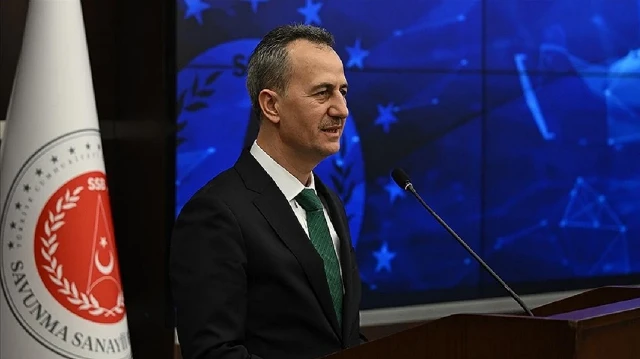
Türkiye has officially unveiled its roadmap and strategic vision for quantum technologies through the SSB Quantum Program, led by the Defence Industries Secretariat (SSB). The launch event, hosted by the SSB, brought together Higher Education Council (YÖK) President Erol Özvar, university rectors, academics, and industry representatives to outline the country’s ambitions in this emerging field.
Strategic vision and sovereignty
Speaking at the event, Defence Industries Secretary Haluk Görgün emphasised that quantum technologies have evolved beyond theoretical science into a strategic capability domain. New-generation abilities in computing, sensing, and communications will directly shape the future of defence, offering advantages in cryptology, optimisation, data analysis, simulation, and signal‑independent navigation. Görgün warned: “Dependence on critical technologies is not merely a procurement issue, but a matter of whether sovereignty is silently transferred or not”. He noted that Türkiye has significantly reduced external dependence in defence over the past two decades under President Recep Tayyip Erdoğan’s leadership.
Young workforce and global standing
Görgün highlighted the importance of human resources, noting that the National Competence Initiative was launched to define the talent sets needed for the future. With an average age of 34 in the defence industry — at least 20 years younger than in developed countries — Türkiye possesses a dynamic workforce. He also confirmed that Türkiye ranks 11th globally in defence industry exports.
Concrete projects and ecosystem
Following the speeches, several strategic projects were signed, including the Superconducting Quantum Processor Unit Development Project and the Kerteriz Project on quantum magnetometers for navigation and submarine detection. The event also introduced the newly launched Türkiye Quantum Platform. YÖK President Özvar stated that the cooperation protocol aims to strengthen research capacity and develop a sustainable quantum ecosystem, with 11 universities contributing to this effort.