Pay up
While Strömgren insists such dialogue — especially with the business community — is key to reducing automotive pressure in the city center, tougher measures have been employed as well.
The price of parking a private vehicle in some parts of Stockholm have increased from 1,100 to 1,600 kronor — roughly €140 — per month. And the deputy mayor freely admits the goal is to make using private cars in the city inconvenient.
“We want people to really think about whether it’s worth it to own a car, or whether it makes more economic sense to rely on the public transport network,” which accounts for roughly half of all city travel, he said.
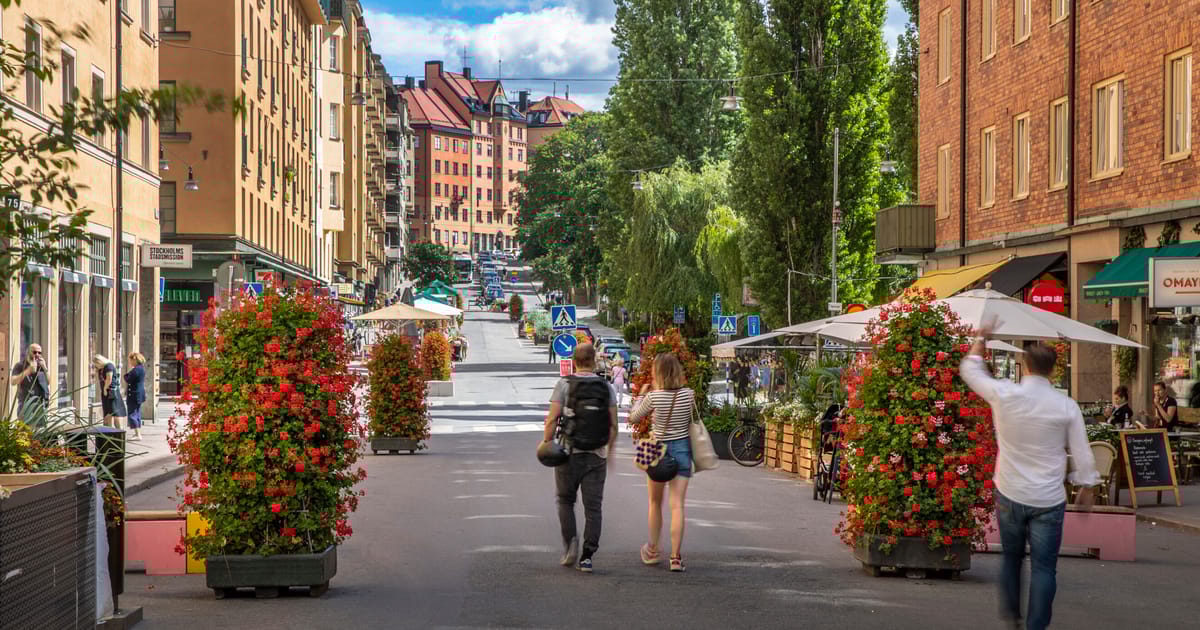
Heavy investment in public transport and cycling infrastructure — which led to a 34.8 percent increase in urban biking since 2015 — have also been instrumental in reducing car traffic in central Stockholm by 11.7 percent over the past decade.
While car ownership in Stockholm remains relatively stable, it has decreased by 5.3 percent since 2017, which the city views as a “a small but steady” success. Plus, Stockholm’s automotive ownership rates are at their lowest since 2000, with 355 cars per 1,000 inhabitants compared to 491 cars per 1,000 inhabitants in the rest of Sweden.
With just a year left until elections, Strömgren — a member of the Green Party governing Stockholm in coalition with the Left Party and the Social Democrats — conceded that measures like the parking price hike may be unpopular with some voters. Even though the policy was designed with working-class residents in mind, and includes provisions for tradespeople who rely on their cars for work, it remains a thorny issue.
Emphasizing the importance of listening to such backlash and taking “a step back” when errors are made, the deputy mayor added that city leaders can’t let progress be halted by a few critical voices either.
“Some people are just not going to like what you do, whatever it is. I don’t waste time worrying about losing their vote; they weren’t going to vote for me anyway.”