
Fact checked by Vikki Velasquez

The Bryggen harbor district in Bergen, Norway, is a UNESCO World Heritage site.
Credit: Mediterranean / Getty Images
Key Takeaways
Finland, Norway and Denmark offer high quality of life, universal healthcare, and safety for retirees.
Residency requirements vary, with Finland and Norway offering easier paths compared to Denmark’s stricter rules.
Living costs and taxes are high in all three countries, but public transit and healthcare are affordable.
Retiring abroad is becoming a popular option for many Americans, especially if you’re looking for a high quality of life, good healthcare, and overall affordability. But you’ll need to plan carefully before you start packing your boxes.
Finland, Norway and Denmark are the top three Scandinavian countries on Investopedia’s list of best international destinations for retirement. Here’s what you’ll need to make the move.
Retiring in Finland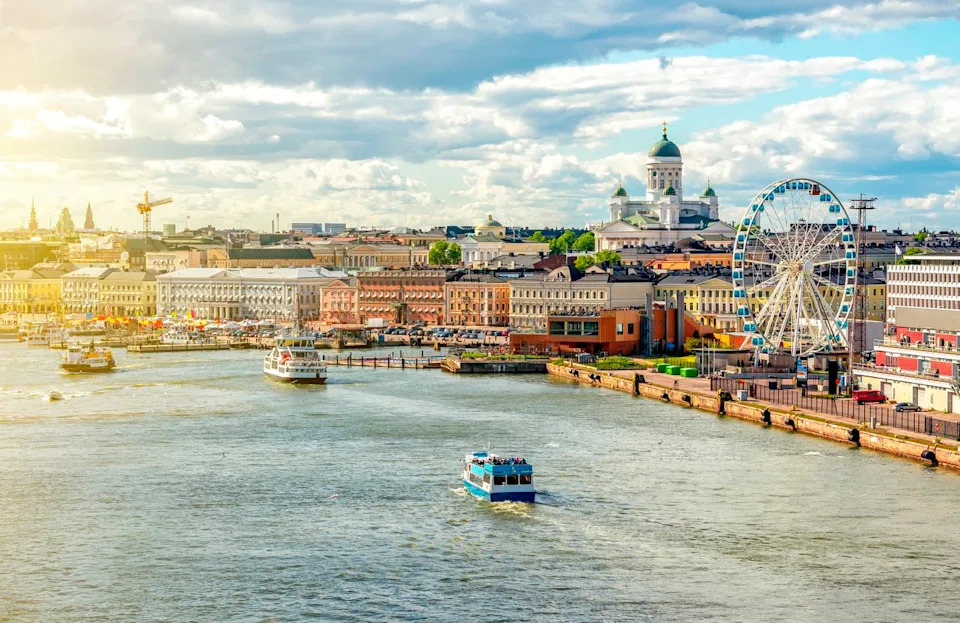
Helsinki cathedral and Market Square dot the horizon of the capital city in Finland
Credit: Vladislov Zolotov / Getty images
Finland may not be the first place you’d think of to settle down, but it ranks high as a retirement destination. You won’t need a special visa to become a resident, and the healthcare is top-notch. The country has a low crime rate, so it’s a very safe place to live.
Living costs in Finland can be higher than in any other European country, though it’s lower than in major U.S. cities. You’ll also need to be prepared for the weather, especially the long, cold winters.
Note
Finland is not technically part of the Scandinavian peninsula, though it is a Nordic country along with Iceland, Sweden, Denmark, and Norway.
Getting Your Residency in Finland
You need to apply for a residence permit if you plan to be in Finland for more than 90 days. Retirees must apply for a residence permit “on other grounds” while they’re in their home countries. Make sure any supporting documents required are translated before you apply. Fill out the application, pay the €800 application fee, and book an appointment at your local Finnish mission to prove your identity. Processing times take about four months.
You must meet the income requirements to become a resident in Finland. Finland requires a monthly income of at least €1,210 if you plan to live in the Helsinki metro area, €1,090 in other large metro areas, or €1,030 if you’re going to live anywhere else in the country. That’s about $1,200 to $1,450 per month.
You can also get dual citizenship, holding both Finnish and U.S. passports. You have to wait eight years to become a citizen of Finland.
Where to Live
Helsinki is the capital of Finland and is considered the best place for foreigners to retire. English is widely spoken in the city, and it offers a vibrant culture with all the services you’ll need. Turku and Tampere are also excellent cities to retire to.
But these are major cities, which makes them expensive. If you can sacrifice access to amenities, you can lower your cost of living and get natural beauty by living in a smaller town.
Affordability
The cost of living in Finland is higher than in other European countries. But it’s lower than many major U.S. cities.
Housing: Most Finnish residents own their homes, but you can also rent in the country. Costs depend on where you live and the type of dwelling. The average rental is €16 per m², which translates to about $870 per month for a 500-square-foot apartment.
Transport: Gas is expensive in the country, so many people take public transit. Public transport is efficient and fast throughout Finland. You can travel by train, coach, and bus, along with trams, the metro, and commuter trains in major cities.
Taxes: Finland is a high-tax country that uses a progressive system. You won’t pay taxes on Social Security, but you will be taxed on other retirement income, like a 401(k) or IRA, which you must declare. Since the U.S. has a tax treaty with Finland, you avoid double taxation.
Healthcare
Finland’s healthcare system is publicly funded. This means every resident has access to social, health, and medical services.
Once you have a valid resident permit and access to Kela, the country’s social security system, you get public healthcare services in the county where you’re registered. You can also get services outside your county. Or, you can choose private health insurance and get reimbursed for certain costs through Kela.
Note
Finland is the happiest country in the world, according to the World Happiness Report. Its high social support, GDP per capita, life expectancy, freedom, generosity, and low perceptions of corruption factored into its high ranking.
Retiring in Norway
Sommaroy, Norway, is a picturesque fishing fillage with a “time-free zone.”
Credit: Roberto Moiola / Sysaworld / Getty Images
Norway ranks second among Scandinavian countries on our list. Like Finland, Norway is very safe and has great healthcare, and you can get residency by proving you have sufficient income. But be prepared for high taxes and a higher cost of living than the U.S. average.
English is widely spoken throughout the country, but you’ll need to learn Norwegian to integrate, especially in rural areas. And be prepared for the weather, as winters are long, cold, and dark.
Getting Your Residency in Norway
Anyone staying in Norway for more than 90 days must get a residence permit, which gives them the right to live and work in the country. Norway typically grants residency through family reunification or if you have enough income to be deemed self-sufficient. To qualify for an income-based permit, you need an annual income of at least NOK 325,400 (about $35,000) in the last 12 months.
You must apply, register your application, pay the fee (NOK 11,900 for family visas and NOK 4,000 for adults for general residence permits), and provide supporting documents in person at a Norwegian embassy in your home country. Processing times can take up to 25 months.
You can become a dual Norwegian-U.S. citizen and hold both passports. You must live in the country for eight years to become a citizen.
Where to Live
Most expats choose to live in major cities in Norway. Metro areas like Oslo, Bergen, Stavanger, and Trondheim offer abundant housing choices, public transit, cultural amenities, and a high quality of living.
If living in a large city is too expensive and crowded for you, smaller coastal towns like Riser and Lyngenfjord can help you save money and give you a quieter lifestyle.
Affordability
Housing: Housing is the largest expense in Norway, and it can be expensive in major cities like Oslo. How much you’ll spend typically depends on where you live. The average rent for a one-bedroom apartment in the city center is about NOK 13,100, while the same accommodations outside the city center are just under NOK 10,370. That’s about $1,400 and $1,100, respectively.
Transport: The country’s public transit system is safe and efficient. You can travel by train, bus, and boat to and from major metro areas. Prices are high, but you can save by buying prepaid passes for longer periods. Gas prices, though, are generally high in the country.
Taxes: The country has a dual tax system, taxing a flat 22% tax on general income and a progressive system with tax brackets based on personal income. You’re responsible for paying taxes on your Social Security and other retirement income. Keep in mind that Norway has a tax treaty with the U.S., so you’ll avoid double taxation.
Healthcare
Norway offers residents universal healthcare primarily funded by taxpayers. You’ll need private health insurance before qualifying for public healthcare if your permanent residence is based on your income. You must live in Norway for 12 months before you can qualify for the National Insurance Scheme. Once you’re enrolled, services are provided in your municipality of residence. Primary care, emergency care, mental health, and hospital stays, and some prescription drugs are covered. Certain services require co-pays, but there are caps on out-of-pocket costs.
You can also get private insurance, which gives you access to a larger provider network and quicker service.
Retiring in Denmark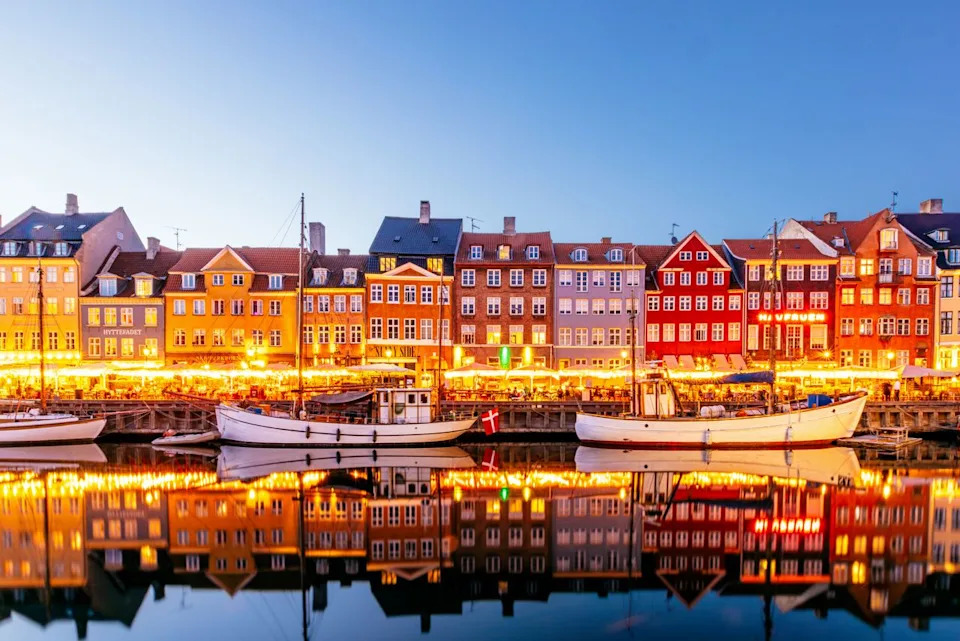
Nyhavn, meaning “new harbor,” is a colorful waterfront district in Copenhagen, Denmark
Credit: Alexander Spatari / Getty Images
Like the other two countries on this list, Denmark’s high quality of life and universal healthcare make it a contender for many retirees. Getting residency can be challenging, however, and the high cost of living can make it a tough choice for retirees on a fixed income. The climate is moderate, with mild winters and cool summers, thanks to its maritime location.
Getting Your Residency in Denmark
You’ll need to become a permanent resident to move to Denmark. Unlike Finland and Norway, you can’t apply based on your income. You can qualify for residency under family reunification (the easiest route for American expats), if you have a job offer (and plan to retire later), or as a student. You can also apply if you’re a citizen of the EU, EEA, Switzerland, a Nordic country, or the U.K.
Denmark recognizes dual citizenship.
Where to Live
Many expats choose to live in Copenhagen. The capital city offers an urban feel with many housing options and all the amenities you’ll need. Odense, located in the northeast, is more relaxed and more affordable than Copenhagen.
As in other countries, smaller towns are less expensive, though they tend to have fewer amenities. Towns like Ribe and Faaborg are picturesque backdrops for a slower-paced retirement.
Affordability
Housing: Housing is more expensive if you choose to live in a major city center. The average rent for a one-bedroom apartment in Denmark is about DKK 7,400 in a central area of a major city and about DKK 5,800 outside those areas. That translates to roughly $1,160 and $910 per month, respectively.
Transport: Denmark’s public transit system is inexpensive, reliable, and efficient. You can travel by bus, metro, train, or boat anywhere throughout the country. Use the Copenhagen Card in the capital for transit and free admission to over 80 attractions and museums.
Taxes: Although Denmark has a tax treaty with the U.S., taxes are very high. Denmark uses a progressive tax system. Your Social Security benefits and other retirement income will be taxed, and your investments may incur capital gains taxes.
Healthcare
Denmark has a universal healthcare system funded by taxpayers. Every resident can access the same care, including primary and preventive services, hospital care, mental health care, and long-term care. Although free to use, there is an option to pay co-pays for coverage without needing a referral for a specialist.
The Bottom Line
Scandinavian countries offer a high quality of life and great healthcare for retirees. Which is the best option for your retirement will depend on your personal goals, financial situation, and even family connections.
Finland and Norway have easier paths to residency, while Denmark has stricter requirements. Although everyday expenses and taxes are high in these countries, the cost of living can be lower than in some U.S. cities. All three offer strong public transit and affordable healthcare, making them solid retirement options as long as you plan carefully.
Read the original article on Investopedia