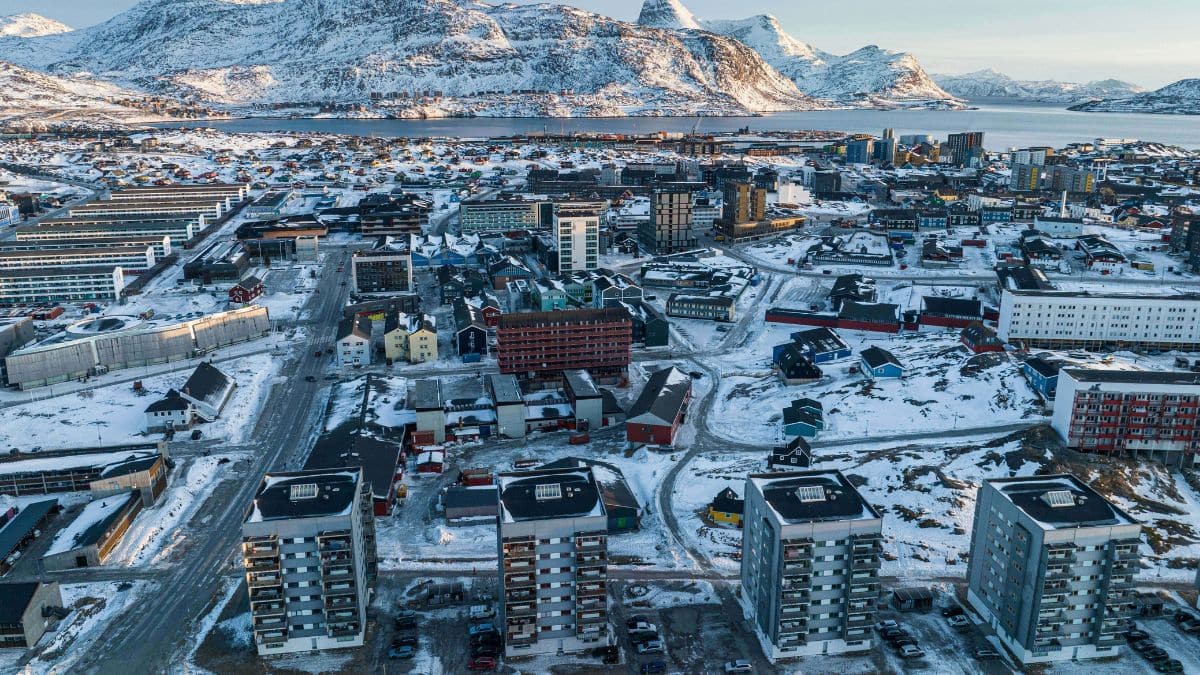
Canada and France, which both adamantly oppose Donald Trump’s wish to control Greenland, will open consulates in the Danish autonomous territory’s capital on Friday in a strong show of support for Nato ally Denmark and the Arctic island.
In a move widely seen as a show of political solidarity with Denmark and the Arctic island after renewed pressure from US President Donald Trump to secure greater American control over the strategically vital, mineral-rich territory, Canada and France are opening new diplomatic consulates in Greenland this week.
While both nations maintain that these moves were planned well in advance, the timing of the Friday ceremonies serves as a pointed message to Washington. By establishing a permanent presence in the Arctic outpost, Ottawa and Paris are effectively drawing a line in the permafrost, signalling to the White House that Greenland is not a real estate commodity to be bartered but a strategic partner protected by a web of international alliances.
STORY CONTINUES BELOW THIS AD
The decision comes amid heightened geopolitical attention on Greenland, a self-governing region of Denmark that has increasingly found itself at the centre of global competition over Arctic security, rare earths and future shipping routes. While Ottawa and Paris have framed their moves in diplomatic and developmental terms, the timing has highlighted growing unease among US allies over Washington’s recent rhetoric and tactics.
A shield of sovereignty: Strengthening the arctic alliance
The inauguration of Canada’s consulate featured high-profile representation, including Foreign Minister Anita Anand and Mary Simon, Canada’s first Indigenous Governor General. For Canada, the move is deeply symbolic. Minister Anand emphasized that as Arctic neighbours, Canada and the Kingdom of Denmark are committed to “stability, security, and cooperation.”
Beyond security, the Canadian presence aims to address shared northern challenges, particularly Inuit rights and climate change. By sending Simon, an Inuk leader, Canada is centering the voices of Greenland’s indigenous majority, a demographic often overlooked in the high-stakes “Greenland Purchase” rhetoric emanating from the Trump administration.
France, meanwhile, has become the first European Union member state to establish a consulate general in Nuuk. Led by Jean-Noël Poirier, the French mission is tasked with deepening scientific and economic ties. This move by President Emmanuel Macron’s government provides the EU with a direct “listening post” in the Arctic, ensuring that European interests remain central as the race for the region’s critical minerals intensifies.
Countering the “art of the deal” diplomacy
The diplomatic flurry comes on the heels of a volatile period in U.S.-Danish relations. In January, President Trump threatened to slap aggressive tariffs on Denmark and seven other European nations for opposing his calls for a U.S. takeover of Greenland. While those threats were abruptly dropped following a “framework” agreement brokered by NATO Secretary-General Mark Rutte, the underlying anxiety remains.
The US has recently entered technical talks with Denmark and Greenland to forge a new Arctic security deal. However, the lack of transparency surrounding this “framework” has prompted allies like Canada and France to accelerate their own physical presence in the region. By opening these consulates, Ottawa and Paris are providing Greenland with alternative partners, reducing the risk of the island becoming solely dependent on or pressured by American interests.
The new arctic equilibrium
The “Great Game” of the 21st century is no longer confined to the South China Sea or Eastern Europe; it has moved to the melting ice caps of the North. Greenland’s vast deposits of rare earth minerals essential for the global green energy transition have made it the world’s most sought-after territory.
While the US views Greenland through the lens of strategic defence and resource acquisition, the presence of Canada and France introduces a multilateral approach. This “show of support” reinforces the sovereignty of the Kingdom of Denmark and empowers Greenlandic local authorities to negotiate from a position of strength rather than vulnerability.
STORY CONTINUES BELOW THIS AD
As the Arctic security deal between the US, Denmark and Greenland continues to take shape, the diplomatic flags of Canada and France now flying in Nuuk serve as a reminder that the future of the North will be decided by cooperation, not coercion.
HomeWorldCanada, France open consulates in Greenland as Trump presses for greater controlEnd of Article