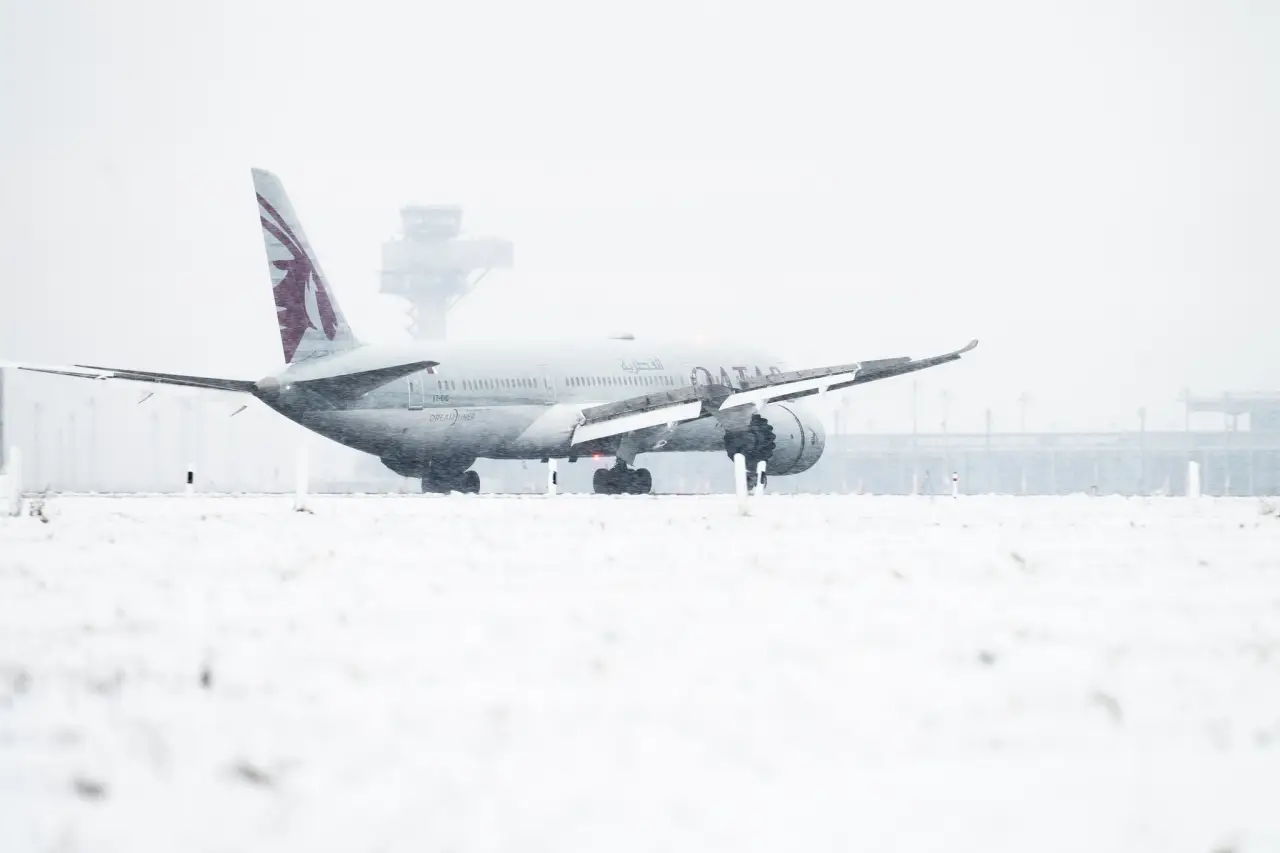
Black ice caused by freezing rain forced a full shutdown at Berlin-Brandenburg Airport on Friday, Feb. 6, canceling hundreds of flights and disrupting travel across the German capital region.
The airport suspended all takeoffs and landings after runway and taxiway surfaces became dangerously slick, creating conditions that authorities said could not be made safe for aircraft movements.
The closure followed a night of freezing rain that rapidly formed near-invisible ice on transport infrastructure, triggering wider delays and disruptions across air, road and rail services. Airlines advised passengers to check flight status before traveling and to expect knock-on disruption as aircraft and crews were repositioned.
Flights canceled as runway conditions deteriorate
Berlin-Brandenburg Airport remained closed for the day due to black ice, as reported by German news agency dpa and carried by Reuters. With operations halted, airlines canceled large numbers of departures and arrivals, and diversions to alternative airports increased as the morning progressed.
Separate reports described freezing rain paralyzing transport in the German capital, with flight operations grounded as the airport worked to assess whether surface treatments could keep pace with refreezing conditions. Travelers faced rebooking backlogs and limited accommodation availability as disruptions spread through airline networks.
Freezing rain is particularly disruptive for aviation because ice can form quickly on runways and aircraft surfaces, reducing braking performance and safe stopping distances during landing and taxiing. Airport operators typically require sustained improvements in temperature and surface friction levels before resuming commercial operations.
Wider transport disruption in and around Berlin
Transport disruption extended beyond the airport, with rail connections also affected as freezing conditions created operational issues across parts of the network. Road conditions deteriorated in places as black ice formed on bridges and untreated secondary routes, contributing to hazardous travel conditions during the morning commute.
Airlines and travel operators warned that cancellations could continue beyond the day of the closure because aircraft rotations and crew schedules were thrown out of alignment. Passengers traveling onward from Berlin faced missed connections and longer journey times as services adjusted to the disruption.
Officials monitored conditions through the day, with any reopening dependent on sustained improvements rather than short-term fluctuations. Travelers were advised to follow airline notifications and transport authority updates closely as winter weather continued to affect parts of Germany.
Photo credit: facebook.com/berlinairport