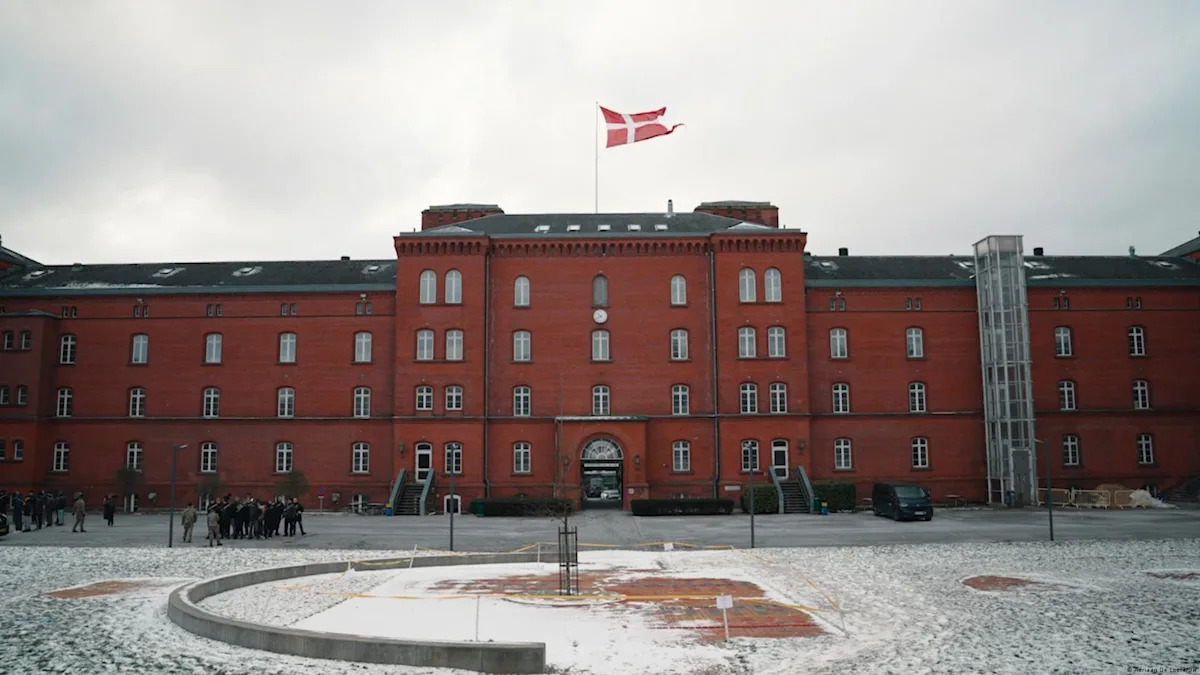
Haderslev, a city close to the eastern coast of Denmark, is where Danish forces last fought a war on their own territory. That was in 1940, when Germany invaded. Now, in a scenario previously unimaginable in postwar Europe, Danish sovereignty is under threat again — this time by Copenhagen’s biggest ally, the United States. And once again it’s Haderslev where new Danish soldiers are preparing for an unpredictable future.
In 2025, the Danish government decided to extend mandatory military service from four to 11 months, and to make it gender-neutral, removing the right women had until then to decline service. The threat from Russia that all Nordic countries are accustomed to dealing with has only grown in recent years with the full-scale 2022 invasion of Ukraine and ramped-up hybrid attacks.
But US President Donald Trump’s repeated refusal to rule out the use of force to acquire the semi-autonomous Danish island of Greenland, and the Trump administration’s apathy toward NATO in general, was likely what pushed Copenhagen over the edge and ended its decades of complacency.
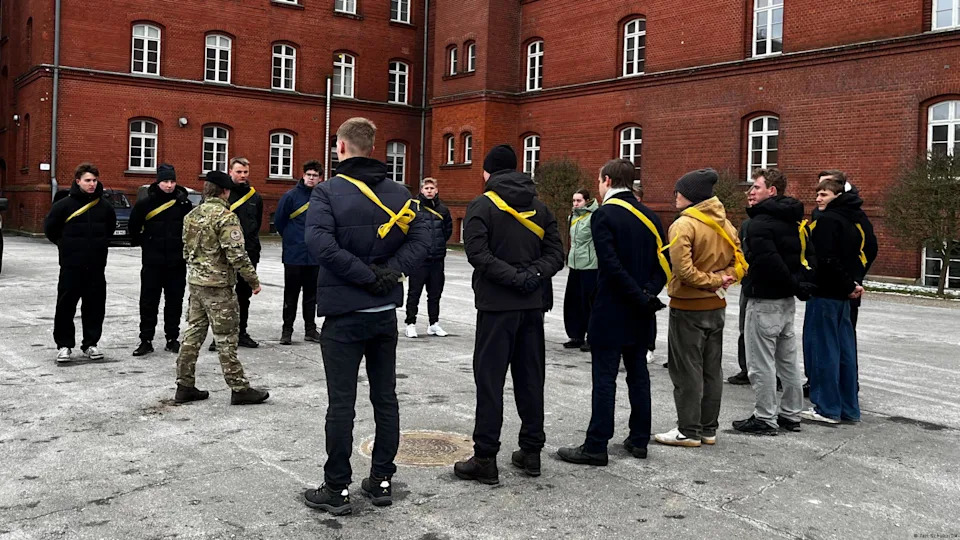
On their first day of conscription service, young Danes learn how to line up on the grounds of Haderslev military baseTeri Schultz/DW
Jacobsen: Danes finally dealing with reality
“If we can’t trust the Americans and the Russians are actually winning, then we are in a completely new world,” the Royal Danish Defence College’s Peter Viggo Jacobsen told DW. “That has been the official messaging from the government since February of last year, and that’s the environment that these youngsters are coming into.”
The first class of conscripts to enter training under the new system checked in Monday morning at the Haderslev barracks.
“This is definitely a very big day for Danish defense,” the head of Danish Defence Command’s conscription program, Col. Kenneth Strom, told DW. “It makes the possibility to have more combat power and have the combat power faster.”
Battling for a spot in the ranks
While military service is mandatory, every one of this class of 120 is a volunteer. Even with the longer obligation, Denmark still has the luxury of turning away people offering to serve.
One who made the cut was 19-year-old Leorah Olsen, with a big smile on her face after learning basic commands in formation.
“I’m happy to be here,” she said, welcoming the extension of training time. “I think it gives more opportunity to learn more and to have more experience.”
She said she’s interested in joining the military police, but hadn’t thought much about the heightened threat environment Denmark faces now.

Leorah Olsen volunteered to serve 11 months in the military, saying she wants to challenge herselfAdriaan De Loore/DW
Finding his place in the barracks, 23-year-old Sebastian Hedegaard said he had indeed contemplated the risks of military service, as he’s always wanted to join.
“I definitely think about it,” he shared while unpacking his things next to the bunkbeds. “Obviously going to war is a big part, … maybe it won’t happen. Maybe it will.”
Asked whether he thought that possibility is closer today than a year ago, Hedegaard said “yes” but didn’t identify either Russia or the US as the challenge, but rather the “entire world, just the state we’re in.”
Tobias Roed Jensen with the Danish Defence Command explained that by 2033 the new system is expected to turn out almost 2,000 more people per year who have gone through military training. In 2024 before the change in conscription, about 4,600 per year had completed the four-month service. That will rise to 6,500 per year with the longer term, significantly boosting the current ranks of more than 20,000 total defense forces, according to publicly available estimates.
Greenland-based force to grow
Those forces are more likely than before to be deployed to Greenland in the wake of Trump’s threats. Before the US president backed down after negotiations in Davos, Denmark boosted its troop presence on the island — and even reinforced their orders, a scenario military analyst Jacobsen found hard to fathom but understandable.
“It’s out of this world that a Danish prime minister has to go on television and say that Denmark will not rule out the use of force because the US is not doing it,” he said, “so in a sense, Denmark was forced to put forces on the ground in Greenland with orders to shoot in the event of a US attack.”
Back in Haderslev, Regiment Commander Kore Jacobsen acknowledges this situation will have to be part of the training given to new conscripts.
“The new youth that we’re getting in, they are on social media, they are in the media all the time, so they know what’s going on in the world,” he said. “So we have to address that issue and tell them what’s actually going on, and what are we going to use them for in that frame as well. I know some of them are actually quite eager to know what are the Danish defense going to do? What is the government going to about this?”
Trump tosses insult after injury
But just as the Greenland crisis eased, Trump ignited a new firestorm, outraging all NATO allies but hitting Denmark especially hard. He said countries serving alongside the US in Afghanistan had stayed a “little off the frontline.”
Denmark lost more soldiers per capita in that war than any other country besides the US. According to Denmark’s Armed Forces, 44 Danish soldiers died in Afghanistan while serving in NATO-led missions.
In response to Trump’s remarks, citizens put 44 flags bearing the names of the fallen servicemembers outside the US embassy in Copenhagen on Tuesday (January 27).
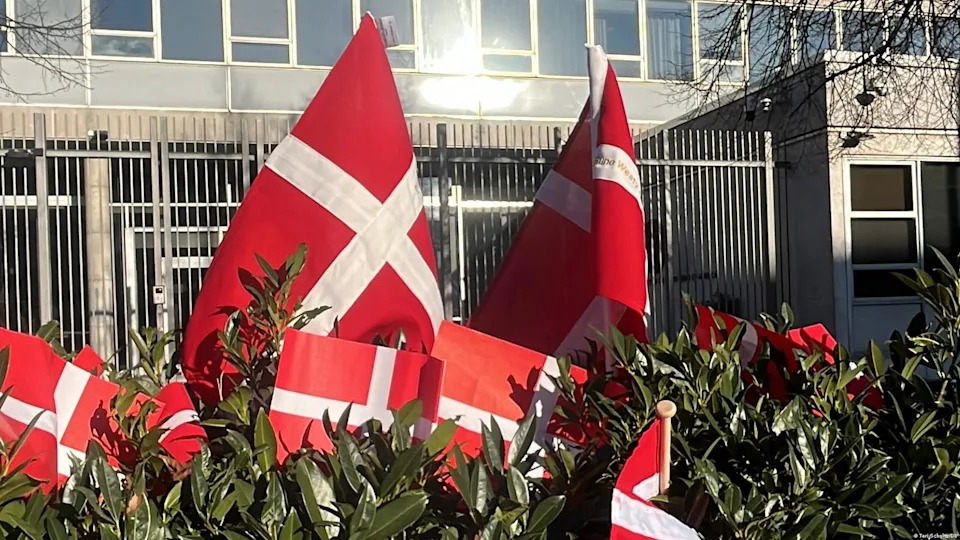
Danish flags are planted outside the US embassy in Copenhagen, honoring Danes who lost their lives fighting alongside the US in the Afghanistan warTeri Schultz/DW
Embassy security removed the flags that same night in what the ambassador called a “misunderstanding.”
Small plastic replacements were later reinstalled, but they were dwarfed by large replacements, again embroidered with the names of the lost soldiers, delivered in a silent march that saw thousands of veterans participate on Saturday (January 31).
Among those walking was 83-year-old retired Air Force General Christian Hvidt, who’d said he’d never never participated in a demonstration before. Hvidt felt Trump’s slight deeply because he had personally deployed and waved goodbye to the Danish troops headed for Afghanistan, so many of whom would not come back alive.
“That’s a stab in the back,” he told DW, referring to Trump’s comment. “We were there from day one.”
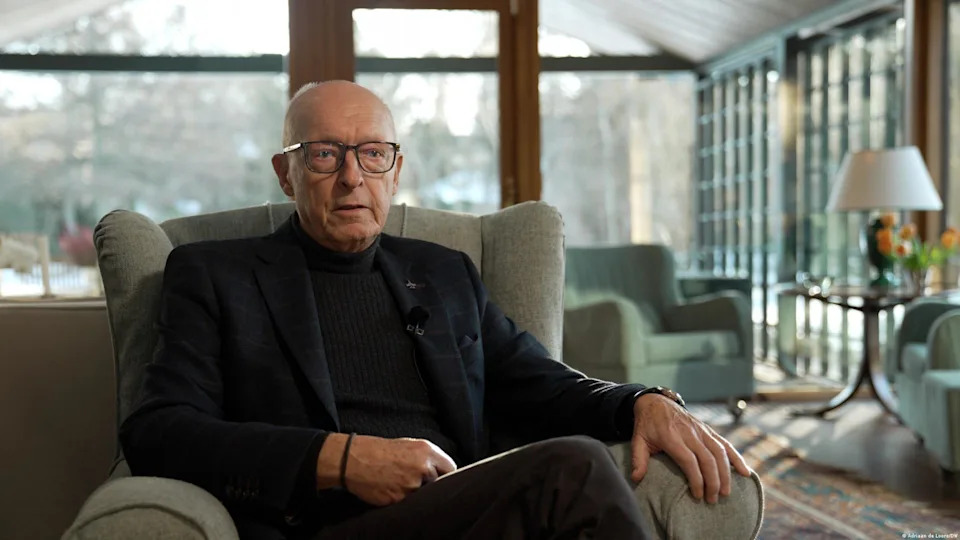
Danish Air Force General Christian Hvidt was chief of defense when the Afghanistan war started and sent his fellow Danes to the front. He feels betrayed by the US president’s comments dismissing European sacrificesAdriaan de Loore/DW
Hvidt hopes the youngsters entering military service today won’t have to go to battle with anyone — especially not Denmark’s traditionally closest ally.
“I know [Americans] stand by us,” he said. “My hope, of course, is that one man, or two or three, cannot disrupt this forever. We will get together again one day very closely. That’s what I hope, and I’m sure that will happen.”
But it’s certainly not how many of Hvidt’s fellow citizens feel today.
A new poll by Danish public broadcaster DR indicates that less than a fifth of Danes still consider the US an ally.
Edited by: Carla Bleiker