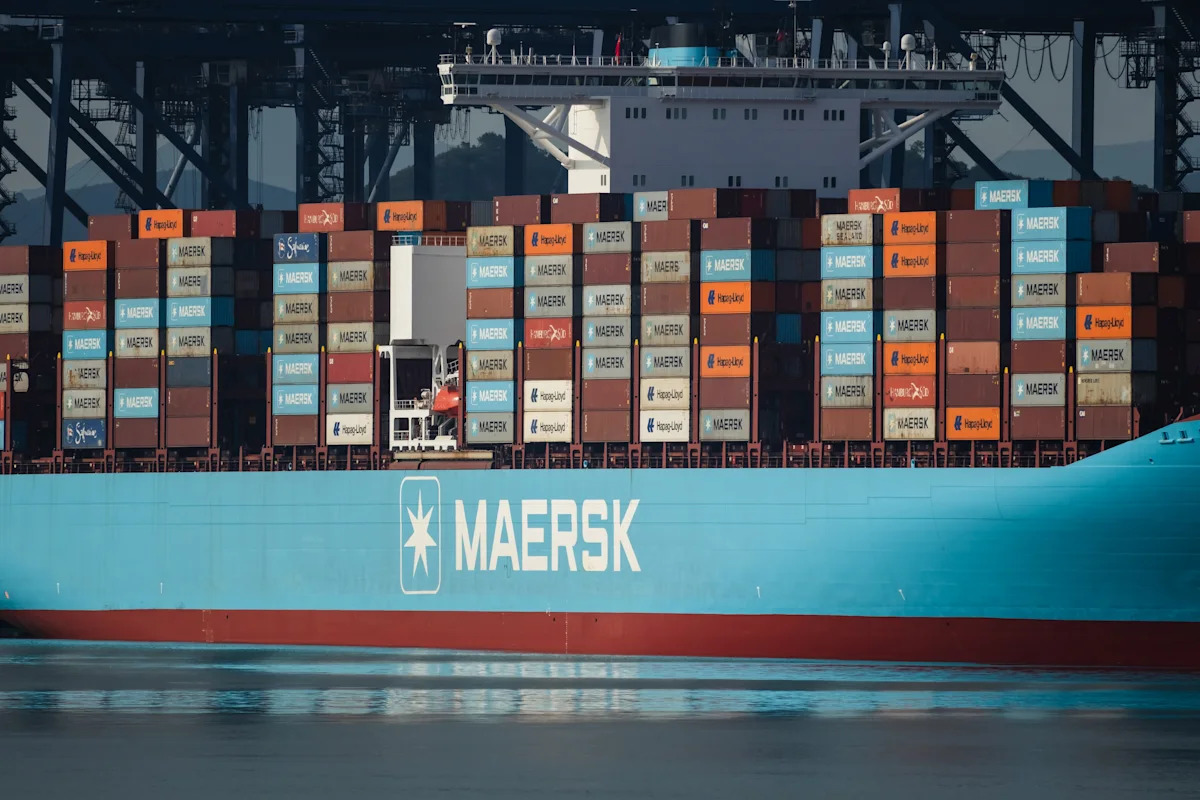
A.P. Moller-Maersk is growing more optimistic about the remainder of 2026, raising its full-year earnings outlook after stronger-than-expected container demand and sustained freight rate increases reshaped what many carriers had expected would be another challenging year.
The Danish shipping and logistics giant on Monday raised its guidance for underlying EBITDA to between $8 billion and $10 billion, up from its previous forecast of $4.5 billion to $7 billion. It also boosted its underlying EBIT outlook to between $2 billion and $4 billion, compared with prior guidance issued in February that ranged from a $1.5 billion loss to a $1 billion profit.
More from WWD
Maersk likewise lifted its free cash flow outlook, now expecting an outflow of at least $1.5 billion instead of at least $3 billion.
The revised guidance assumes global container market growth of about 4 percent this year, the high end of the company’s previous forecast of 2 percent to 4 percent.
Maersk attributed the improved outlook to continued market strength, particularly in Asia, as well as a sustained rise in spot freight rates that has supported carrier profitability despite ongoing geopolitical uncertainty.
The upgrade marks a sharp reversal from sentiment earlier this year, when ocean carriers warned that a wave of new vessel deliveries would pressure freight rates and margins after two years of Red Sea-driven supply chain disruptions.
Instead, the market has remained surprisingly resilient.
Benchmark container freight rates have climbed steadily through June as retailers continued pulling forward shipments ahead of evolving U.S. tariff policies and peak-season inventory builds. Drewry’s World Container Index increased 5 percent in the latest weekly reading to $4,166 per 40-foot container, its highest level since September 2024. The benchmark has surged more than 45 percent over the past month, fueled largely by rising trans-Pacific rates.
The result has been stronger pricing power than many carriers anticipated heading into the year.
Freight rates rose rapidly in May as carriers added more fuel surcharges and general rate increases amid the war in Iran and near-cessation of traffic through the Strait of Hormuz. But rates have remained elevated even as fuel costs eased, suggesting underlying cargo demand has been stronger than expected rather than driven solely by temporary cost inflation.
Story Continues
While geopolitical tensions remain a major wildcard, Maersk is hoping the recent memorandum of understanding between the U.S. and Iran to end their war will also result in a more secure environment in the Red Sea.
Earlier this month, container shipping market research firm Linerlytica reported that Maersk resumed limited sailings through the Suez Canal, with vessels including the Santa Catarina Maersk and Clementine Maersk successfully transiting the Bab el-Mandeb Strait in recent weeks. In total, Linerlytica said Maersk had three westbound sailings on its Middle East Container Line (MECL) move through the Suez Canal since June 13.
The voyages represent the company’s first known container ship passages through the corridor since suspending its tests at the start of the Iran war, suggesting Maersk is cautiously testing security conditions rather than fully restoring Red Sea services.
This coincides with the container shipping industry at large, with the number of cargo vessels sailing via the Suez Canal rising to 35 in the week ended June 28. This was the highest weekly number since the 37 that passed through on Feb. 1, according to the Drewry Red Sea Diversion Tracker.
According to Linerlytica, there are over 780 ships deployed across 60 services that are still diverted from the Suez Canal to the Cape of Good Hope route, housing a total capacity of 11.3 million 20-foot equivalent units (TEUs). If all these services return to the Suez route, it would release more than 120 ships, or roughly 1.7 million TEUs, which account for 5 percent of global fleet capacity.
Union Pacific captures Maersk’s key eastbound volumes
As Maersk adapts to the ongoing shifts in the container market, it also is retooling how it moves goods inland from the U.S. West Coast.
The carrier shifted most of its eastbound Southern California intermodal business from BNSF Railway to Union Pacific last month, according to data from rail traffic tracking firm RailState.
Through the middle of May, Union Pacific carried a single-digit percentage of Maersk’s eastbound containers from the Southern California ports when accounting for a four-week average, RailState said In a blog post Friday.
But by the week of June 1, UP’s share crossed 50 percent for the first time. One week later, the share reached about 76 percent. Since the shift began in late May, the Omaha-based railroad has carried roughly 59 percent of the volume.
Over the full period tracked, going back to June 2, 2025, Maersk moved 100,559 TEUs east on this lane, with 90 percent of it moving via BNSF’s Southern Transcon route.
“A change like this is hard to see from the outside. The volumes may turn up later in a quarterly report, but that can take months, and many shifts are never announced at all,” read the blog post. “The only way to catch one as it happens is to measure the network directly.”
RailState uses proprietary trackside sensors to read ID information on containers, providing real-time railroad data and analytics for shippers, logistics teams, planners and investors.
Best of WWD