
[Adobe Stock]
Imitation is the sincerest form of flattery, some say. Novo Nordisk would probably disagree. Copycats of the company’s popular weight loss treatment, Wegovy, have been popping up for years. One copycat comes from the company Hims & Hers, an online provider of obesity medications as well as erectile dysfunction and hair regrowth treatments.
Hims & Hers announced its new compounded semaglutide pill last week, offering the treatment at just $49 for the first month and $99 per month thereafter. This is cheaper than the price offered for Wegovy on TrumpRx, $149 per month. The day after the announcement, the top lawyer for the Department of Health and Human Services, Mike Stuart, announced on X that his office had referred Hims & Hers to the Justice Department for potential violations of the Federal Food, Drug and Cosmetic Act, which regulates the sale of medications. Hims responded with a post on X stating they would stop offering access to the treatment.
On Monday, Novo Nordisk said it is suing Hims, asking the court to permanently ban the company from selling compounded versions of its drugs that infringe on Novo’s patents.
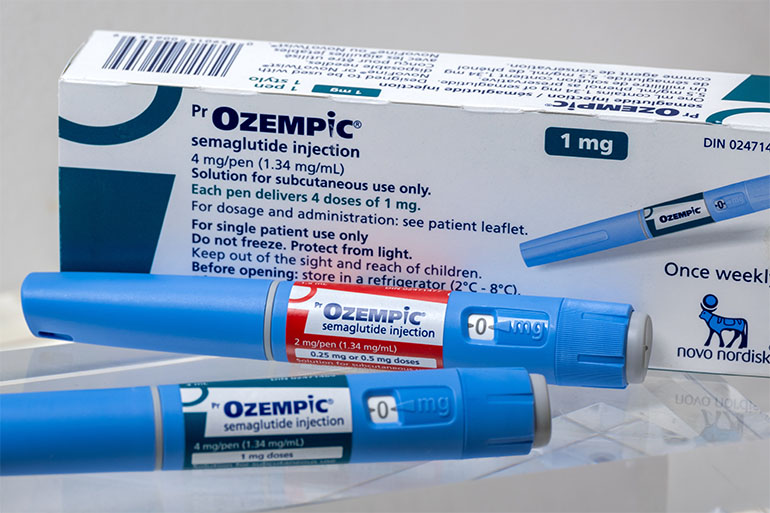
“Hims & Hers is mass marketing unapproved knock-off versions of Wegovy and Ozempic that evade the FDA’s gold standard review process – that’s dangerous and deceptive to patients, and undermines the scientific innovation and regulatory rigor in place to ensure these treatments are safe and effective,” said John F. Kuckelman, senior vice president, Group General Counsel, Global Legal, IP and Security. “We’ve taken legal action to protect the American public and our intellectual property and will continue to work with regulators, law enforcement, and other key stakeholders to ensure patients have access to FDA-approved, safe and effective medicines.”
Novo claimed that compounding pharmacies have flooded the market with Wegovy and Ozempic knockoffs that may contain dangerous impurities or incorrect amounts of active ingredients. According to its testing, Novo found that injectable semaglutide drugs compounded by pharmacies contained impurities of up to 86%.
Patent ‘343 and SNAC
U.S. Patent No. 8,129,343 protects the chemical structure of the semaglutide molecule, meaning no one else is allowed to manufacture that specific sequence of amino acids until the patent expires in December 2031. Novo’s lawsuit claims that Hims infringed on this patent by selling a pill containing semaglutide.
The FDA declared the semaglutide shortage resolved in February 2025, closing the legal loophole that was allowing Hims to sell compounded semaglutide. The FDA provided a grace period for compounding pharmacies, allowing them until April 22, 2025 to stop production.
In order to create an oral version of the popular weight loss treatment, semaglutide needs to be delivered through the gastrointestinal tract without being degraded by enzymes. Oral semaglutide uses sodium N-(8-[2-hydroxybenzoyl] amino) caprylate (SNAC) technology to protect the medicine from degradation by gastric enzymes.
This technology creates a localized, temporary increase in pH which neutralizes gastric acid and inhibits pepsin activity. SNAC also includes a transient, non-covalent conformational change in the semaglutide molecule that allows it to travel through the stomach lining. Novo Nordisk used this proprietary technology to neutralize the stomach acid long enough for the GLP-1 to be absorbed into the bloodstream.
Hims avoided infringing on the patents protecting the SNAC technology by using liposomal technology, or fatty bubbles, to encase the drugs. Novo’s lawsuit states that this approach is untested and unproven. If the liposomal technique does not work, the active ingredient would be digested before it reaches the bloodstream, rendering the medicine ineffective.
On a call with analysts, Novo Nordisk CEO Mike Doustdar claimed that patients would be wasting their money on Hims oral semaglutide pill because without the SNAC technology, the medicine “just simply doesn’t work.”
Without SNAC techniques, Hims’ semaglutide pill could be considered a new, and unapproved, drug by the FDA. This could be why the HHS got involved when Stuart referred Hims to the DOJ.
A history of tension
This situation goes deeper than patent infringement. Hims & Hers started selling copycat GLP-1 injections in May of 2024, taking advantage of a loophole that allows pharmacies to compound versions of drugs that are on the FDA’s official shortage list. Ten days later, Novo Nordisk released an announcement stating the company was escalating legal actions to protect patients from compounded semaglutide drugs. While the release does not mention Hims & Hers directly, it establishes Novo’s position, condemning the compounded copycats.
In February 2025, Hims advertised their semaglutide injections with a Super Bowl commercial. The following day, Novo Nordisk ran a print ad in The New York Times and USA Today that advised patients to “Check before you inject,” showing a vial of compounded semaglutide.
Despite the tension, in April 2025, Novo Nordisk and Hims & Hers announced a long-term collaboration to make obesity care and treatments more accessible and affordable. The partnership allowed patients to access NovoCare Pharmacy through the Hims & Hers platform, with a bundled offering of all dose strengths of Wegovy and a Hims & Hers membership at a single price. The announcement also stated the companies were “developing a roadmap” to combine Novo Nordisk’s treatment with Hims & Hers ability to scale access to care.
The truce was short-lived, however. The collaboration lasted less than two months. Novo Nordisk abruptly terminated the deal in June 2025, accusing Hims of illegally mass compounding their drugs under the false guise of personalization and using deceptive marketing.
Surprisingly, Hims announced it was in discussions with Novo to make Wegovy available through Hims’ online platform at its third quarter earnings call in November 2025. Despite this, the Wegovy pill launched in January 2026, and Hims was not on the partner list.
Hims announced its copycat pill just one month later, pulling it two days after announcing it when it appeared they might have violated the Federal Food, Drug and Cosmetics Act.
Filed Under: Metabolic disease/endicrinology
Tagged With: 129, 343, compounded semaglutide, deceptive marketing, Department of Health and Human Services, Drug and Cosmetic Act, drug compounding, drug impurities, FDA, Federal Food, gastric acid, gastrointestinal absorption, GLP-1, Hims & Hers, intellectual property, John F. Kuckelman, Justice Department, liposomal technology, Mike Doustdar, Mike Stuart, Novo Nordisk, NovoCare Pharmacy, obesity treatment, Ozempic, patent infringement, pepsin inhibition, pharmacy compounding, semaglutide, semaglutide shortage, SNAC technology, Super Bowl commercial, TrumpRx, U.S. Patent No. 8, Wegovy, weight loss drug