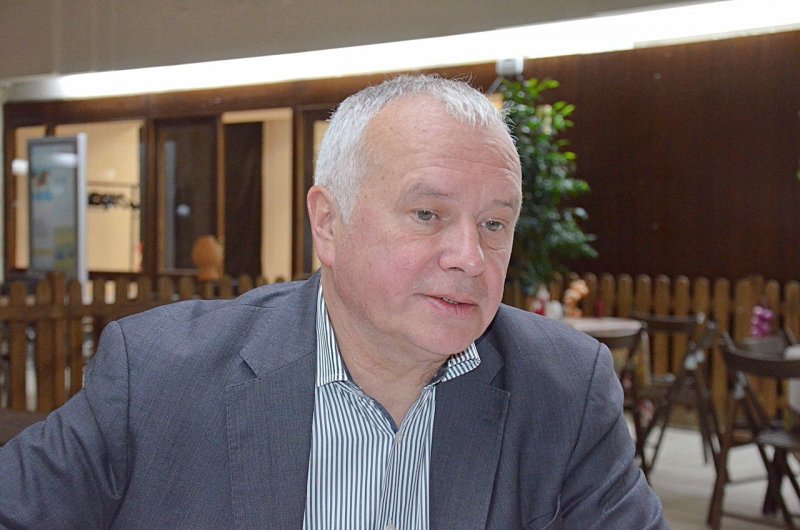
Azerbaijani President Ilham Aliyev’s visit to Germany is of major strategic importance and could open a new chapter in relations between Baku, Berlin, and the European Union, prominent German political analyst Alexander Rahr said in an exclusive interview with News.Az.
According to him, President Aliyev’s talks with German Chancellor Friedrich Merz are expected to be highly substantive and cover a broad range of geopolitical and economic issues.
“Germany expects two important things from Azerbaijan. First, Berlin would like to see stronger Azerbaijani support for Germany’s and Europe’s sanctions policy toward Russia. In this context, Azerbaijan may be offered new opportunities to increase its oil and gas supplies to the European market, as the European Union intends to completely abandon Russian energy imports by 2027,” Rahr said.
At the same time, he noted that implementing such plans would require complex negotiations involving not only Azerbaijan and the European Union, but also Türkiye, which plays a key role in regional energy and transport infrastructure.
The second major issue on the agenda will be Iran and the broader situation in the Middle East.
“Germany is concerned about Iran’s growing influence in the region. Since Azerbaijan shares a border with Iran and has significant political weight in the South Caucasus, Berlin expects Baku to contribute to regional stability. Therefore, the talks will undoubtedly include extensive strategic and geopolitical discussions,” the analyst said.
Another key topic will be the Armenia-Azerbaijan peace process. According to Rahr, Germany is seeking to strengthen its role as one of the main European supporters of rapprochement between Baku and Yerevan.
“Germany, which aspires to act as a political leader of the European Union, would like to become one of the principal sponsors of the normalization process between Azerbaijan and Armenia. Europe wants to help secure a lasting and genuine peace between the two countries under the geopolitical auspices of the European Union,” he said.
In return, Berlin may offer Azerbaijan closer cooperation with the European Union, including stronger political, economic, and institutional ties.
Rahr noted that Europe is currently undergoing a major transformation. EU countries are increasing military spending, developing a European defense industry, and reconsidering their previous economic model. Against this background, the future place of Azerbaijan in the emerging European architecture may also be discussed.
“The question is how this new Europe, which is changing its economic and political identity, will cooperate with Azerbaijan. This concerns not only energy, but also industry, transport links, security, and possibly defense cooperation,” he said.
Green technologies are also expected to feature in the talks, although Rahr does not anticipate any major breakthrough in this area.
“There will probably be the usual diplomatic statements about green technologies. In reality, the German economy is currently facing difficulties in this field and is focused on other priorities and more urgent challenges,” he said.
According to Rahr, the visit could become historic if it leads to genuinely expanded opportunities for Azerbaijan’s cooperation with the European Union.
“For Baku, the most important outcome would be the opening of wider doors toward Europe. Discussions are currently underway over how countries such as Ukraine, Moldova, or Armenia could be integrated into the future European Union — not necessarily as full members, but perhaps as associated partners. Azerbaijan could also be offered something similar,” the analyst said.
However, he added that the most concrete issues would likely be discussed behind closed doors at the German Chancellery.
Rahr also drew attention to continuing disagreements between Baku and Berlin over human rights.
“In Azerbaijan, there is a perception that many constructive proposals and demands put forward by Germany are later undermined by criticism of Azerbaijan’s human rights record and domestic policies. President Ilham Aliyev and other Azerbaijani officials have repeatedly stated that they regard such criticism as destructive and incompatible with genuine partnership and rapprochement,” he said.
At the same time, Rahr believes Germany is unlikely to completely avoid raising the issue.
“Germany would not be Germany, with its foreign policy traditionally based on liberal values, if the issue of human rights were not raised during high-level talks. Therefore, it will most likely also be part of the agenda between Baku and Berlin,” Rahr concluded.