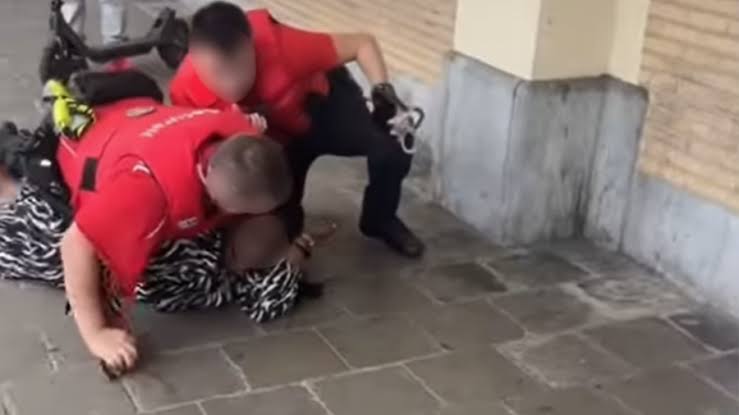
A Belgian shopkeeper has died after being seriously injured while intervening to protect a woman who was allegedly subjected to racist and Islamophobic abuse on a tram in Brussels.
The victim, 54-year-old Driss Atouane, reportedly stepped in after witnessing a male passenger directing racist and anti-Muslim remarks toward a woman aboard Tram 55 in the municipality of Evere, News.Az reports.
According to Belgian authorities, the suspect allegedly responded with a violent assault that left Atouane critically injured. He later died in hospital.
The incident has shocked Belgium and prompted widespread public tributes to Atouane, who was well known in his local community. Prosecutors have arrested the suspect and launched a criminal investigation, while an investigating judge has ordered a psychiatric evaluation as part of the legal proceedings.
Beyond the individual tragedy, the case has reignited discussions about hate-motivated violence, public safety on public transportation, and the role of bystanders who intervene to protect victims of discrimination. It also highlights broader concerns across Europe regarding racist and Islamophobic incidents and the challenges authorities face in preventing violence motivated by prejudice.
What happened aboard the Brussels tram?
According to Belgian authorities and local media, the incident occurred on July 23 aboard Tram 55 in the Brussels municipality of Evere. Witnesses reported that a man allegedly directed racist and Islamophobic remarks toward a female passenger during the journey.
Driss Atouane, a 54-year-old supermarket owner, reportedly intervened after observing the confrontation. According to available accounts, he attempted to defend the woman from the alleged verbal abuse, becoming directly involved in the incident.
Authorities say the suspect then allegedly attacked Atouane in what prosecutors and local media described as an exceptionally violent assault. Reports indicate that he repeatedly struck Atouane, causing severe injuries.
Emergency services responded quickly, transporting Atouane to hospital, where he received treatment for life-threatening injuries. Despite medical efforts, he died several days later from those injuries.
Police officers arrived at the scene shortly after the attack and arrested the suspect within minutes. The investigation remains ongoing, and prosecutors have not publicly disclosed all details surrounding the circumstances of the assault.
Although investigators continue gathering evidence, the case has already attracted significant public attention because it involves an individual who reportedly intervened to protect another passenger from alleged hate-motivated abuse.
Who was Driss Atouane?
Driss Atouane was a 54-year-old shopkeeper who operated a neighborhood supermarket in Brussels’ Schaerbeek district. According to local officials and community members, he was widely known and respected by residents who regularly visited his business.
Tributes following his death describe him as a person who actively contributed to the local community through both his business and his everyday interactions with customers and neighbors. His decision to intervene during the alleged assault has led many people to characterize him as someone who placed the safety of others ahead of his own.
Social media users, local residents, and public officials have praised Atouane’s actions, describing him as courageous for stepping in when another passenger was allegedly experiencing racist and Islamophobic abuse.
Hasan Koyuncu, the incoming mayor of Schaerbeek, described Atouane’s death as “an unbearable injustice” and expressed hope that those responsible would be held accountable. He also stated that Atouane’s courage would not be forgotten.
For many residents, the tragedy has become symbolic of the risks sometimes faced by ordinary citizens who choose to intervene during acts of violence or discrimination in public spaces.
The widespread public response reflects not only sympathy for Atouane’s family but also recognition of his reported willingness to defend a stranger despite the personal danger involved.
How are Belgian authorities investigating the case?
Belgian prosecutors have opened a criminal investigation into the fatal assault and confirmed that the suspect was arrested shortly after the incident.
According to the Brussels Public Prosecutor’s Office, police officers responded rapidly after receiving reports of the attack and detained the alleged attacker within minutes. The suspect has since been placed under an arrest warrant while investigators continue examining the circumstances surrounding the incident.
Prosecutors have also confirmed that an investigating judge ordered a psychiatric evaluation of the suspect. Such evaluations are commonly used in criminal proceedings to assess an individual’s mental condition and determine whether it may have affected their behavior or legal responsibility.
Investigators are expected to review witness testimony, surveillance footage from the tram, forensic evidence, and medical findings to establish a comprehensive account of what occurred.
Authorities have not yet announced the final charges that may ultimately be pursued, as investigations of this nature often continue until all evidence has been collected and evaluated.
The legal process will also examine whether the alleged racist and Islamophobic remarks formed part of the motive behind the assault and whether hate-related elements should be considered during prosecution under Belgian law.
How does Belgium treat racist and hate-motivated crimes?
Belgium has legislation prohibiting discrimination and criminalizing certain forms of hate speech, incitement to hatred, and bias-motivated violence. When investigators determine that an offense was motivated by racism, religious hatred, or another protected characteristic, that motive may influence the legal treatment of the case.
Belgian authorities investigate alleged hate crimes by examining not only the violent act itself but also statements made before, during, or after the incident. Evidence such as witness testimony, recorded communications, video footage, or public statements may help establish whether prejudice played a role in motivating the offense.
Cases involving alleged Islamophobia have received increasing public attention in Belgium and elsewhere in Europe, where governments continue working to address discrimination affecting religious and ethnic minorities.
At the same time, prosecutors must meet legal standards of proof before hate-related motives can be formally established in court. Allegations reported immediately after an incident are therefore subject to investigation and judicial review before legal conclusions are reached.
Belgian institutions also cooperate with European organizations that monitor discrimination, racism, antisemitism, Islamophobia, and other forms of hate-motivated violence in order to improve prevention and law enforcement responses.
The Brussels tram case is therefore likely to be examined not only as a violent assault but also in light of the allegations that the incident began with racist and anti-Muslim abuse.
Why are bystander interventions important, and what risks do they involve?
Bystander intervention refers to situations in which ordinary members of the public choose to assist someone experiencing harassment, discrimination, or violence. Such interventions can discourage abusive behavior, support victims, and sometimes prevent incidents from escalating further.
However, intervening also carries significant personal risks, particularly when confronting individuals who may already be acting aggressively or unpredictably. Physical violence, as alleged in the Brussels case, illustrates the potential dangers faced by people attempting to protect strangers.
Public safety experts generally emphasize that interventions should prioritize personal safety whenever possible. In many situations, contacting emergency services, alerting transport staff, gathering witnesses, or creating a distraction may be safer alternatives to direct physical confrontation.
Nevertheless, society often recognizes individuals who intervene to protect others because their actions demonstrate solidarity and a willingness to assist vulnerable people despite personal danger.
The death of Driss Atouane has renewed discussions about how communities should encourage people to respond to discrimination while also ensuring that interventions do not place individuals at unnecessary risk.
The incident highlights both the importance of public courage and the responsibility of authorities to maintain safe public spaces where passengers do not face violence for defending others.
What broader issues does this case highlight?
The Brussels tram incident has become part of wider European discussions concerning hate-motivated violence, discrimination, and public security. Reports of racist, antisemitic, anti-Muslim, and other bias-related incidents continue to prompt governments to strengthen prevention strategies and improve support for victims.
Public transportation systems present particular challenges because they bring together large numbers of people in confined spaces, where verbal disputes can sometimes escalate rapidly into physical violence. Transit authorities increasingly invest in surveillance systems, staff training, emergency communication, and rapid police coordination to improve passenger safety.
The case also illustrates how individual acts of courage can resonate far beyond the immediate event. Public tributes describing Atouane as a hero reflect broader social recognition of those who stand up against hatred and discrimination, even at considerable personal risk.
As the investigation continues, Belgian courts will determine the legal responsibility of the suspect based on the available evidence. Regardless of the eventual judicial outcome, the incident has already prompted renewed reflection on the importance of combating hate speech, protecting vulnerable individuals, and ensuring that public spaces remain safe for everyone.
Ultimately, the death of Driss Atouane serves as a reminder that acts of discrimination can have devastating consequences when they escalate into violence. It also underscores the continuing need for effective law enforcement, community solidarity, and efforts to reduce prejudice while encouraging respectful coexistence in increasingly diverse societies.