
The European Commission is preparing new rules for agricultural subsidies that would significantly affect the Czech Agrofert holding, which prime minister Andrej Babiš transferred to a trust fund at the end of February. And it is precisely he who could co-decide on their final form at European level.
Babiš’s role in the upcoming EU negotiations on the setting of the common agricultural policy will be important. The Czech position, led by minister of agriculture, Martin Šebestyán, has so far favoured agricultural giants.
But it is the subsidy support for large companies that the EU commission now wants to end. It believes that the biggest players on the market can do without it and wants to channel public funds into supporting generational renewal among farmers and strengthening their resilience to crises.
For the next seven-year budgetary period, Brussels is proposing to cut direct payments that the EU pays out based on the size of the farmed area. The larger the overall package of such subsidies received by one applicant, the greater the reduction should be.
The Commission is also pushing for a fixed financial ceiling. After the introduction of so-called “degressevity”, the biggest agrarian behemoths would be able to claim at most €100,000 a year. In the case of the Agrofert group, however, subsidies exceed CZK 1.5 billion annually [around €62m]. The proposal would therefore significantly affect the holding’s operations, as its profits usually reach several billion crowns.
Where the ceiling is and what ‘degressevity’ of direct payments looks like
The European Commission proposes to divide direct payments to agricultural enterprises into four levels, based on the amounts they are to receive according to their size and, for example, the number of animals they keep. These levels range from the smallest to the largest companies.
For Šebestyán, setting the new rules for distributing money is one of the most crucial issues that will influence the financial conditions of domestic agriculture in the coming years. The Czech government is among the opponents of mandatory degressevity.
Babiš may enter the game due to disagreements
Last year, Šebestyán was still heading the Initiative of Agricultural and Food Enterprises , which brings together large Czech agrarian conglomerates. In this way he defended the interests of Agrofert, which is linked to prime minister Andrej Babiš, the Úsovsko group of former minister Jiří Milek, and Agro Měřín of Gabriel Večeřa, for whom Šebestyán worked.
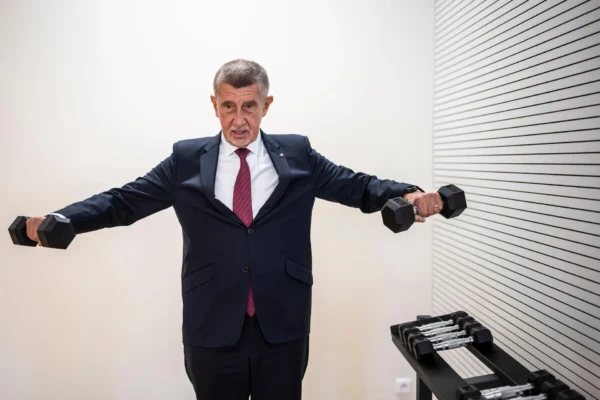
As minister, he has continued in the same vein. He has joined forces with five other EU ministers of agriculture to oppose the proposed reform of the Common Agricultural Policy. Šebestyán’s view is that any capping of entitlement-based agricultural subsidies should be voluntary for individual member states.
He has argued that the situation differs from country to country. In the Czech Republic, 85 percent of milk is produced by farms larger than one thousand hectares. If they lost public support, this could, in his view, have an impact on prices.