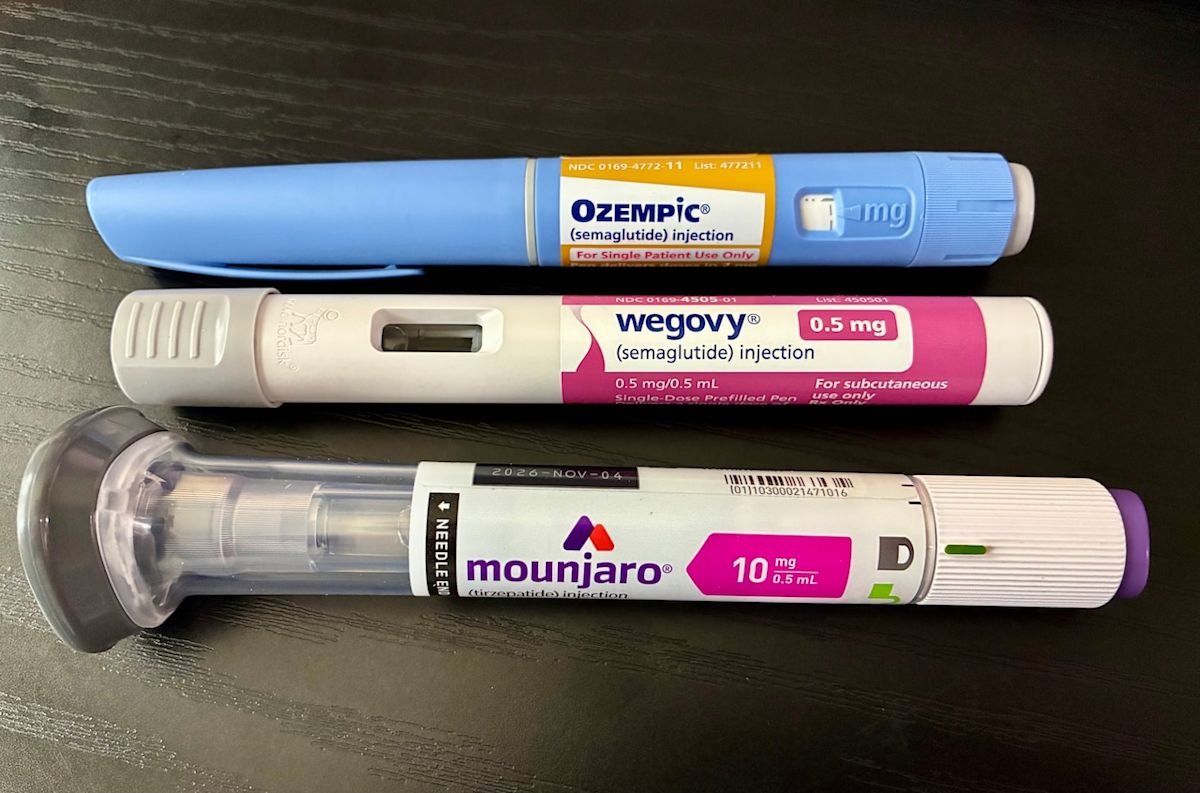
In recent years, GLP-1 medications such as Ozempic, Wegovy, Mounjaro and Zepbound have dominated headlines for helping people lose weight — but now those same drugs are making headlines for a different reason.
What started as roughly 60 consumer lawsuits in August 2025 has grown to more than 200 federal cases within a year.
Consumers allege the blockbuster drugs caused a rare and often permanent form of vision loss known as nonarteritic anterior ischemic optic neuropathy, or NAION.
The condition is now at the center of a consolidated federal case, In re GLP-1 RAs Non-Arteritic Anterior Ischemic Optic Neuropathy (NAION) Products Liability Litigation.
The claims have not been proven in court, and the manufacturers dispute the allegations.
“In July 2024, a publication first raised concerns about potential risks of NAION associated with semaglutide… but cautioned it was not determining a causal relationship,” Eli Lilly, maker of Mounjaro, Trulicity and Zepbound, said in a 2025 motion to consolidate more than 60 lawsuits against the company and Novo Nordisk, maker of Ozempic and Wegovy.
Cynthia Kane, an Arkansas woman who used Ozempic from October 2022 to July 2024, was among the first to sue Novo Nordisk over the alleged link.
According to her lawsuit, Kane developed NAION and “is now completely blind. She cannot read, write, or drive,” and now requires a caregiver for daily tasks.
Her suit, filed Dec. 20, 2024, targeted Novo Nordisk.
Kane sought compensatory, treble and punitive damages, along with medical expenses, lost income and attorneys’ fees, alleging the company failed to warn her that Ozempic could cause NAION.
A similar case followed against Eli Lilly.
Steven Morris, a Philadelphia man who used Trulicity to manage his health condition, filed suit against Eli Lilly in July 2025.
In his complaint, Morris alleges Trulicity caused him to suffer “ileus, intestinal obstruction, NAION, and their sequelae, which resulted in, for example, debilitating nausea, debilitating vomiting, debilitating diarrhea, debilitating abdominal pain, and vision loss.”
Morris’ suit accuses Eli Lilly of failing to warn him and his doctors about the risk of NAION, mirroring the allegations at the heart of Kane’s case against Novo Nordisk.
His case was initially filed as part of the earlier gastrointestinal-injury litigation, but was transferred into the newly created NAION-specific MDL-3163 following the December 2025 consolidation order.
One patient’s account
Ed Gillen, of Dedham, Mass., told Boston 25 News that in May 2025, he woke up with a “speck” in his eye. Two weeks later, he said he was “completely blacked out.”
Shortly after Memorial Day weekend, Gillen went to get a CT scan. On the way, he told his daughter he was beginning to lose sight in his other eye.
By the time the scan was finished, he needed help walking. Later that day, while riding in the car with his daughter, he lost his vision entirely and went to the emergency room.
Doctors initially diagnosed him with NAION, but after seeing a specialist at Mass General Brigham, Gillen said the doctor “discovered that Ozempic blindness is a thing.”
Gillen said he was told his symptoms didn’t fully match typical NAION — leaving his exact diagnosis unresolved.
“Right now, I’m at a stalemate,” he said of the lawsuit he’s filed, which he said is part of the consolidated Pennsylvania litigation.
“I’m just trying to survive every day. Every day is a journey,” Gillen said.
How GLP-1s work
GLP-1 drugs mimic a natural hormone that slows digestion, curbs appetite and helps regulate blood sugar.
Novo Nordisk’s Ozempic and Wegovy use semaglutide.
Eli Lilly’s Mounjaro and Zepbound use tirzepatide, a related compound that, according to the Kane lawsuit, acts on the same GLP-1 receptor plus a second hormone receptor.
How GLP-1s relate to NAION
According to the Cleveland Clinic, the optic nerve needs a steady blood supply to function.
In NAION, blood flow to the front part of that nerve suddenly drops, usually overnight. Deprived of blood, part of the nerve swells and dies, and the damage is permanent.
Researchers are not certain why GLP-1 drugs might trigger this.
According to a 2024 study from Massachusetts Eye and Ear, one theory is that GLP-1 receptors sit directly on the optic nerve, and the drugs’ may disrupt blood flow to that exact spot.
The study did not determine whether the drugs caused NAION.
While the 2024 study focused on semaglutide, a 2025 study published in JAMA Network Open found an increased risk of NAION among patients prescribed both semaglutide and tirzepatide.
However, the researchers noted that the overall risk remained low.
More Business News
Read the original article on oregonlive.com. Add oregonlive.com as a Preferred Source by clicking here.