
 Inside Biotech: Novo Nordisk cuts GLP-1 prices as pressure builds on obesity juggernaut Proactive uses images sourced from Shutterstock
Novo Nordisk (NYSE:NVO)’s once-dominant position in the booming obesity drug market is facing its sternest test yet.
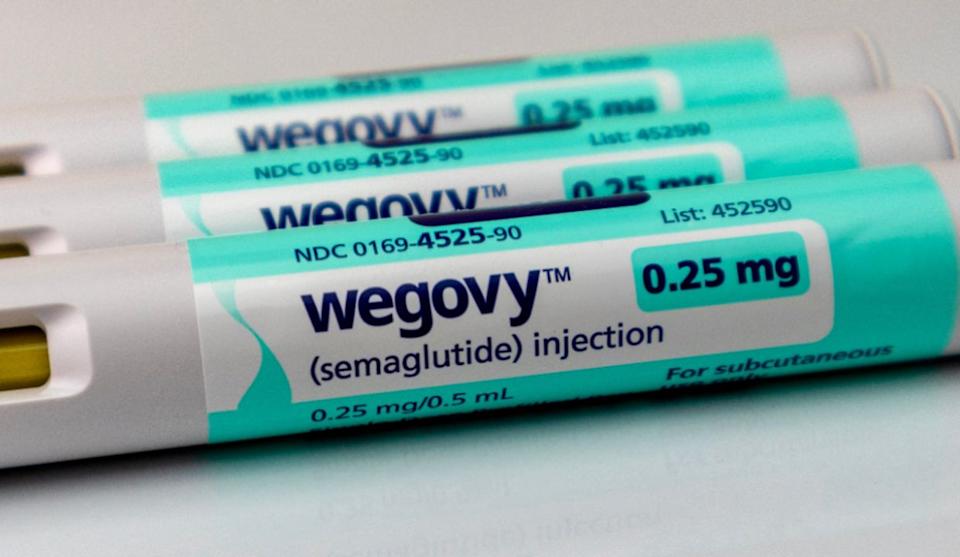
The Danish pharmaceutical giant announced today that it will cut US list prices for its blockbuster GLP-1 therapies — including Wegovy and Ozempic — by up to 50%, a move that signals both political and competitive pressure on the sector’s most dominant player. The decision comes as the company grapples with a bruising run of headlines: a disappointing late-stage trial for its next-generation obesity candidate CagriSema and renewed scrutiny of pricing across the US healthcare system.
Shares in the company fell about 3% on Tuesday, before the post-close announcement, and are down more than 22% over the past five trading sessions, reflecting investor unease about growth durability in what had been one of Europe’s most reliable pharma stories.
Novo said it would significantly reduce US list prices for its GLP-1 portfolio, including Wegovy, Ozempic and the oral semaglutide Rybelsus, to a flat US$675 per month for each drug, down from about $1,350 for Wegovy and from about $1,000 for Ozempic and Rybelsus. While net prices after rebates have long been lower than headline figures, published list prices have drawn sustained political scrutiny and fuelled debate over affordability; the reset aims to ease out-of-pocket costs for patients with high-deductible or coinsurance insurance designs.
By slashing sticker prices, Novo appears to be pre-empting further regulatory intervention while also positioning itself more aggressively against chief rival Eli Lilly and Co (NYSE:LLY), whose tirzepatide-based therapy Zepbound has taken over as GLP-1 market leader.
The pricing move may also reflect a shift in the supply-demand dynamic. After two years of constrained manufacturing capacity and persistent shortages, incremental capacity expansions across the industry are gradually easing bottlenecks. In a more balanced market, pricing power becomes harder to defend.
For investors, the key question is margin impact. GLP-1 drugs have delivered extraordinary revenue and profit growth for Novo, underpinning a re-rating that briefly made it Europe’s most valuable listed company. Lower list prices — even if partially offset by higher volumes — introduce uncertainty into medium-term earnings forecasts.
The pricing decision lands against the backdrop of recent clinical disappointment. Novo’s combination obesity candidate CagriSema failed to outperform Eli Lilly’s Zepbound in head-to-head comparisons, prompting several leading banks to downgrade the stock.
That trial setback raised doubts about Novo’s ability to maintain technological leadership in what is fast becoming a multi-trillion-dollar therapeutic category. The obesity market is moving beyond first-generation GLP-1s toward dual- and triple-agonist combinations designed to enhance weight loss and metabolic benefits.
While Novo continues to advance earlier-stage candidates, the CagriSema underperformance narrows its perceived edge — at least in the near term — and amplifies the significance of commercial levers such as pricing strategy.
The broader environment for obesity drugs is shifting rapidly. Policymakers in the US have signalled increased scrutiny of pharmaceutical pricing, particularly for high-demand therapies that strain insurer budgets. At the same time, new entrants and next-generation molecules are reshaping competitive dynamics.
For Novo, lowering list prices could serve multiple objectives: diffusing political pressure, expanding patient access, and defending market share as insurers weigh reimbursement decisions between rival products.
But the optics are delicate. A sharp share price reaction suggests investors fear that what began as a high-margin growth story could evolve into a volume-driven, more competitive market with compressed profitability.
Novo’s shift is a reminder of how quickly sentiment can turn when clinical momentum falters or pricing power weakens. Premium valuations built on category dominance can unwind just as quickly.
The structural demand story, however, remains intact. Obesity rates continue to rise and payers are increasingly focused on the long-term costs of metabolic disease. Lower prices may broaden access and expand volumes, even if margins tighten.
For companies targeting metabolic and diabetes pathways, the bar is climbing. As the GLP-1 class matures and combination therapies crowd the pipeline, incremental improvements are unlikely to sustain premium pricing or investor enthusiasm.
Novo Nordisk remains a global heavyweight with unmatched scale. But the GLP-1 price reset — on top of the CagriSema trial setback — signals an obesity market that is becoming more competitive and less forgiving than the early growth narrative implied.