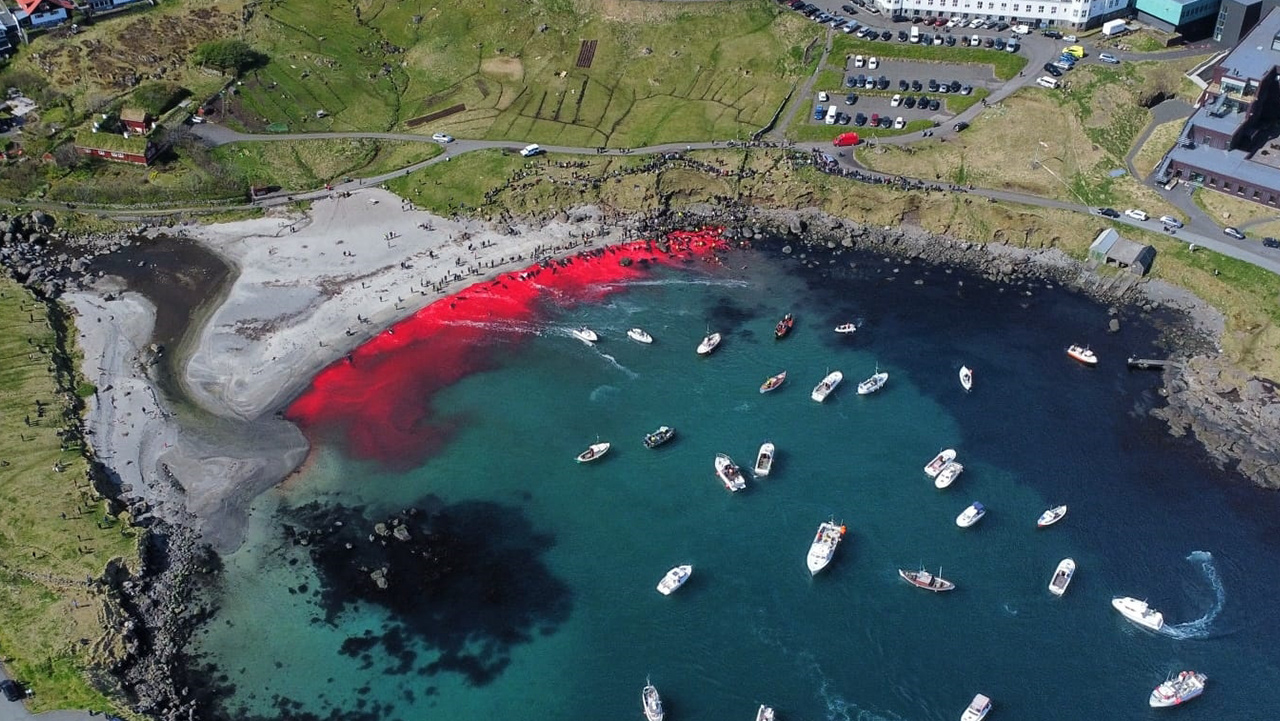
The Faroese islands are not subject to EU law, but they do rely closely on economic and security ties with the European Union.
MEPs underlined the benefits the Faroe Islands derive from their relationship with the EU, including preferential trade arrangements with substantial tariff reductions, participation in EU programmes, and security guarantees provided by EU member states.
The Commission acknowledged the concerns, but said it is not currently seeking to renegotiate trade agreements with the Faroe Islands or introduce mandatory origin labelling for fish products – a position that failed to satisfy MEPs across the political spectrum.
Environmental campaign groups have welcomed the unified stance from MEPs across many political groups.
Several MEPs including Cesar Luena, from the Socialist and Democratic Party, warned that the ongoing hunts risk undermining the EU’s international credibility on marine conservation, particularly as the bloc seeks to position itself as a global leader in ocean protection and biodiversity.
Martin Hojsik from The Renew Party said the practice was: “Indiscriminate mass slaughter of sea mammals that is hard to find anywhere else in the world.”
Everything we’ve done in Nice and in ratifying treaties to protect biodiversity on the high seas becomes pointless. We will look ridiculous to the rest of the world,” Clergeau from the Greens added.
Tilly Metz, also from the Greens, summed up the frustration, and said: “For me and for many citizens, no culture should be based on slaughter and cruelty. Multiple questions have been sent to the Commission over the last years. The answers have often been vague.”