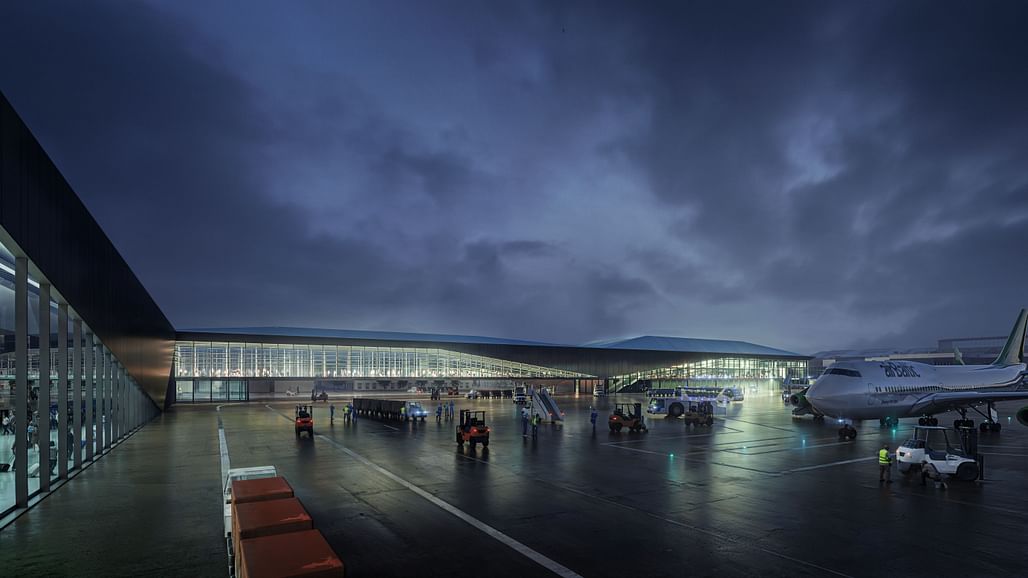
Zaha Hadid Architects (ZHA) has won the international competition to design a new arrivals terminal for Vilnius Airport in Lithuania.
This project represents a key component of the airport’s long-term plan to handle rising passenger numbers and support the growth of Lithuania’s aviation sector and economy. The arrivals terminal will complement the airport’s newly completed departure terminal, enabling annual capacity to reach up to 10.6 million travelers.
The design draws inspiration from Lithuanian heritage, incorporating traditional patterns and cultural motifs into a contemporary form. A modular geometry based on the rhombus—an important shape in Baltic folklore—forms the basis of the design.
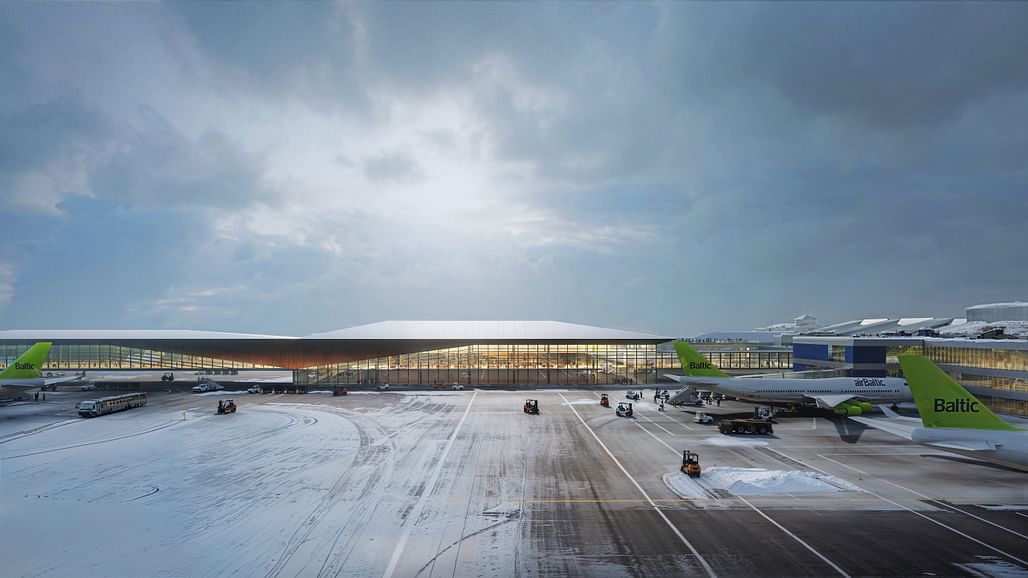
The layout and scale of the new terminal are shaped by the airport’s existing buildings. Terminal 1, a historic structure, remains central to a unified ensemble that will include the new arrival and existing departure terminals.
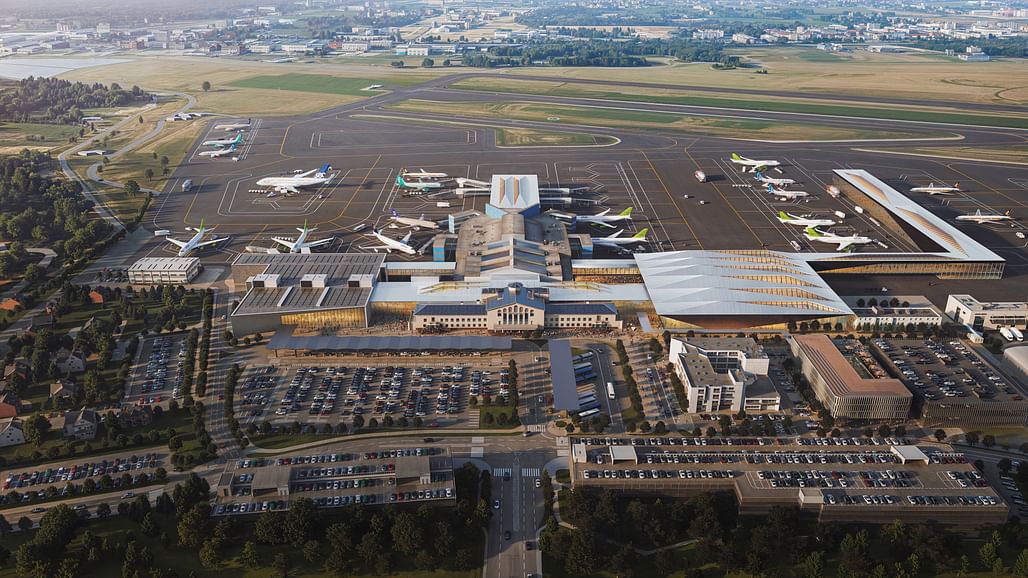
Aligned with the Vilnius Sustainable Urban Mobility Plan, the terminal will promote seamless connections for travelers. It is also part of a broader masterplan to transform the central Airport Plaza into a multi-modal transport hub, integrating a high-speed rail station, regional and local trains, buses, taxis, bike lanes, and pedestrian routes.
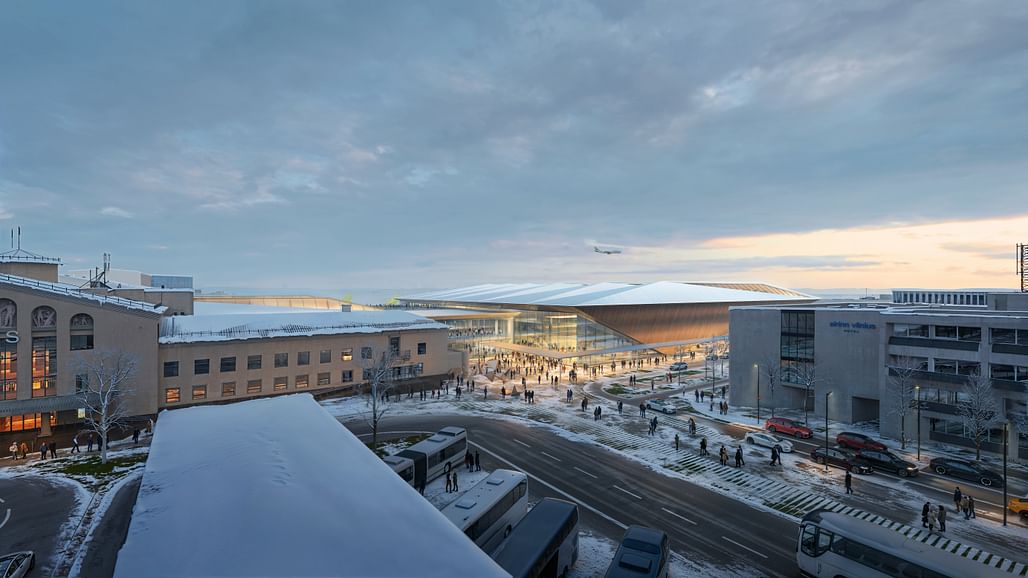
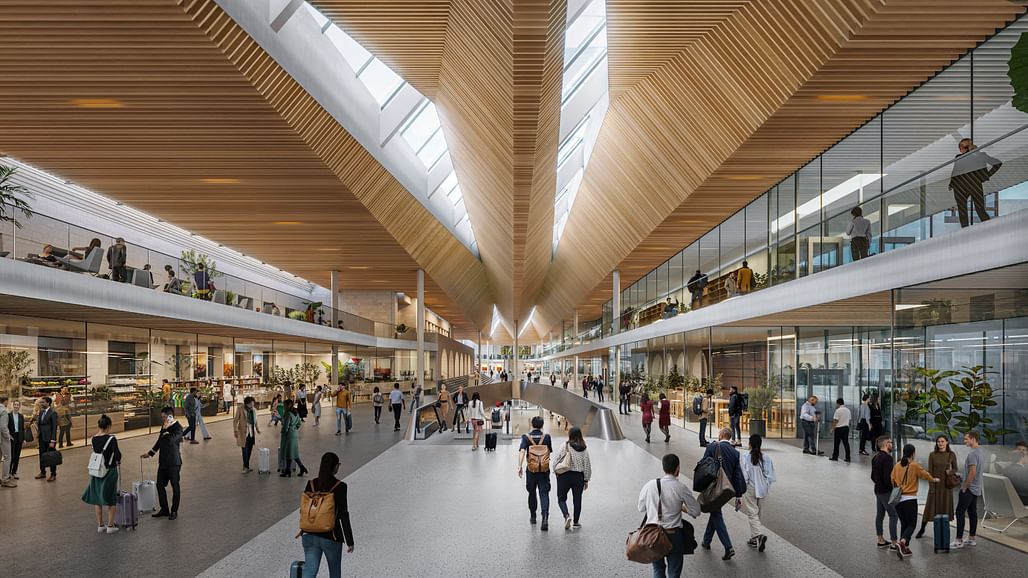
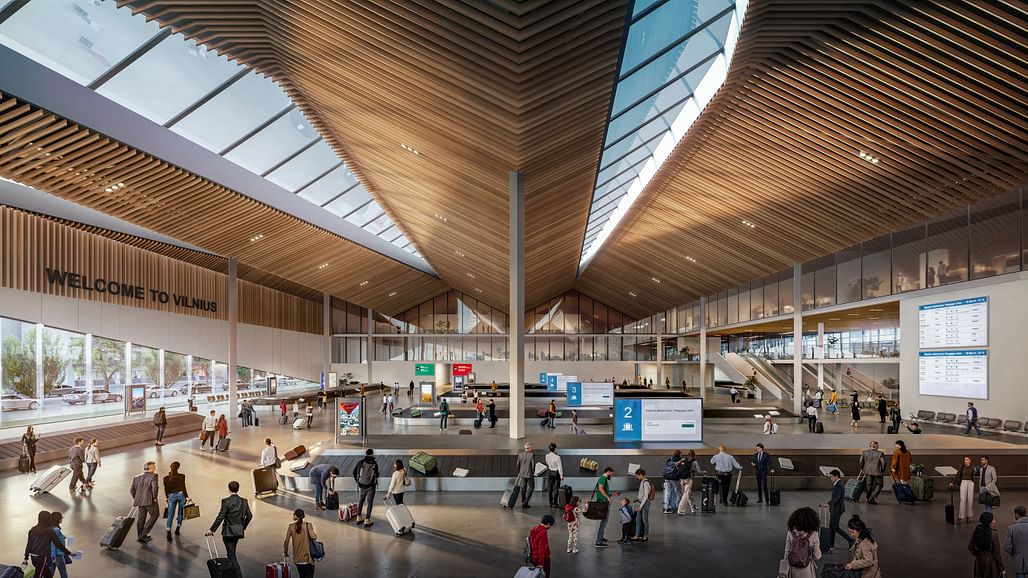
Inside, the terminal takes cues from Lithuanian *sodai*—delicate straw ornaments made from grain stalks and shaped in triangular geometries. Traditionally associated with well-being and festivity, *sodai* serve as a symbolic and aesthetic influence throughout the design.
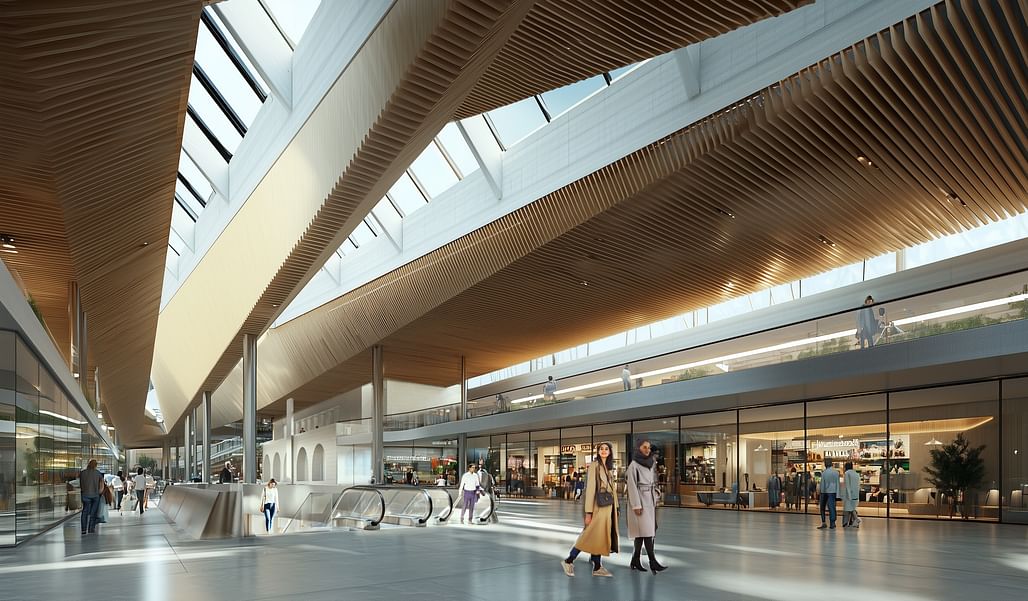
The pleated roof, made of locally sourced timber, aims to evoke the feeling of being immersed within a *sodai* garden. This modular roofing system is designed for adaptability, allowing the terminal to accommodate evolving technologies and passenger needs. Rhomboid and triangular skylights bring in natural light and accentuate the terminal’s structural rhythm.
Approximately 139,931 square feet of solar panels will generate on-site renewable energy from the terminal’s roof and adjacent structures. The development will also include stormwater management, rainwater harvesting, and a greywater recycling system that uses natural filtration and storage for reuse.
The arrivals terminal is a key element in Vilnius’ larger masterplan to enhance Lithuania’s regional and international connectivity over the coming decades.
“The design presents a mature architectural solution for a public infrastructure project of this scale,” said Laura Kairienė, Vilnius City Chief Executive Officer. “It boldly steps into the future but maintains respect for its location and the environment. I believe the new terminal will not only ensure functionality and passenger comfort, but will also become an example of sustainable, high-quality architectural development in Vilnius.”