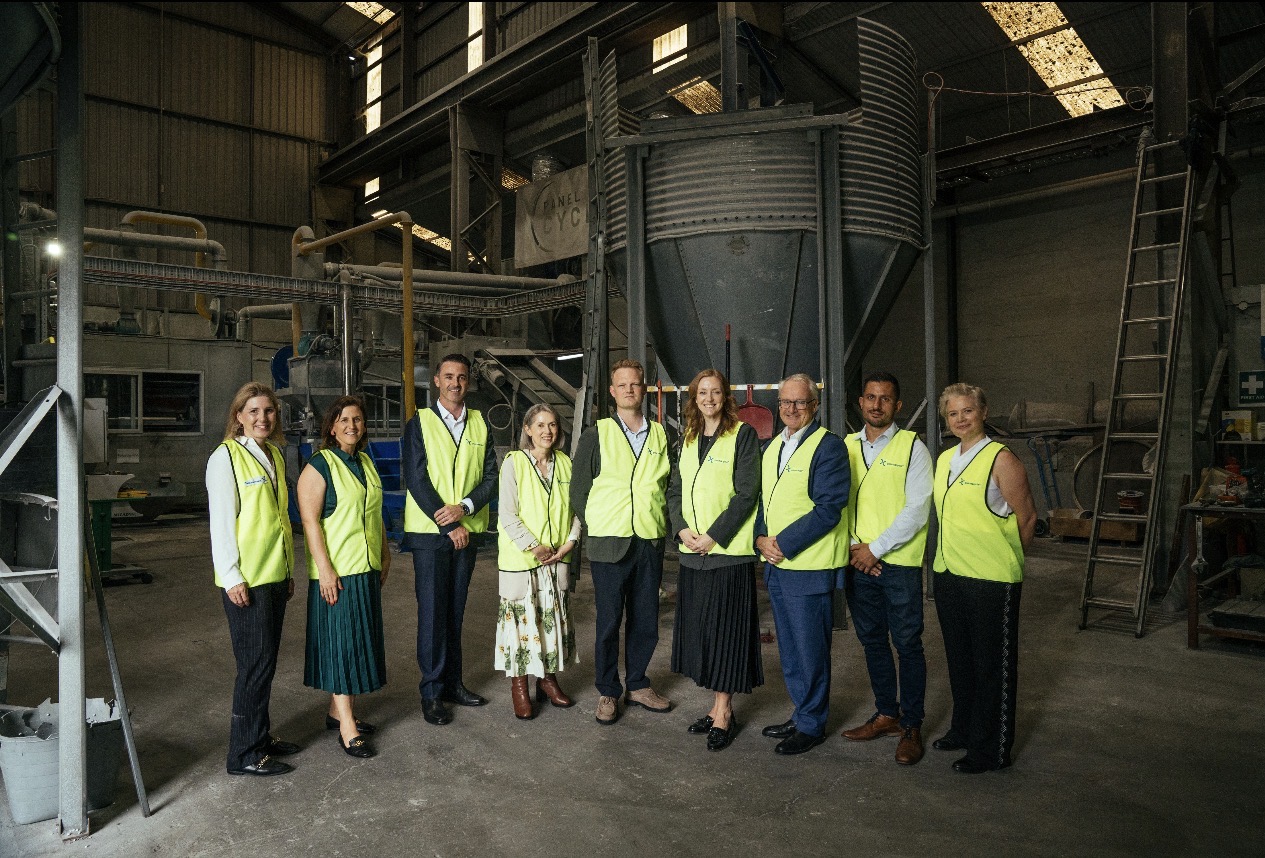
Novo Nordisk has signed a Memorandum of Understanding (MoU) with Pharmacycle, TerryWhite Chemmart, Northern Sydney Local Health District (Royal North Shore Hospital) and St Vincent’s Hospital Sydney to launch Australia’s first pilot recycling initiative for medical injection pens.
The pilot is part of ReMed™, Novo Nordisk’s global take-back and recycling initiative, and
will explore practical, scalable pathways to help keep valuable materials out of landfill
through a coordinated collection and recycling approach across the healthcare system.
How the ReMed™ pilot will work
Subject to operational readiness and relevant requirements, the pilot will launch in H2
2026, allowing patients using Novo Nordisk medicines delivered via disposable, pre-filled
injection pens to return used pens at participating TerryWhite Chemmart pharmacy
locations in Sydney for appropriate collection and processing.
Inpatients and outpatients at Royal North Shore Hospital and St Vincent’s Hospital
Sydney will also be able to return used pens at their respective hospital sites.
The pilot will test end-to-end steps, including:
• Patient return and safe collection at participating pharmacy sites
• Secure transport and handling through agreed channels
• Sorting and recycling pathways to recover materials where feasible
• Operational learnings to inform whether the approach can be scaled over time
Tackling a growing waste challenge
Australia is experiencing a rising prevalence of metabolic conditions such as obesity and
type 2 diabetes, which is expected to contribute to ongoing demand for treatments
delivered via injection devices.
Around 1.5 million Australians live with diabetes, many of whom rely on injectable
therapies to manage their condition.[1] This includes people with type 1 diabetes, who
require daily insulin, as well as a growing number of people with type 2 diabetes using
insulin or GLP-1 receptor agonists, often delivered via injection pens as their primary treatment method.[2]
Used injection pens often end up in household rubbish and ultimately in landfill, resulting in lost materials that could otherwise be recovered. This is occurring at a time when Sydney faces an impending waste crisis, with the city’s landfill capacity expected to be exhausted by 2030.[3]
Elin Jäger, Senior Vice President, Chief of Staff to CEO, Corporate Strategy & Sustainability at Novo Nordisk, said,
“With ReMed™ already active in seven countries, expanding the program to Australia is an important step in reducing the impact of medical waste. This work directly supports Novo Nordisk’s Circular for Zero ambition by turning our sustainability commitments into tangible action. We look forward to working with local partners to strengthen a more circular and sustainable healthcare system.”
Michelle Isles, Chief Executive Officer of the Climate and Health Alliance (CAHA), added,
“We are proud to support this Australia-first initiative on product stewardship for an essential medical device, as it demonstrates the collaboration and leadership needed to tackle the plastics and waste crisis we face in Australian health systems. We congratulate Novo Nordisk, a CAHA member, for their leadership on driving this exciting initiative and look forward to championing the roll out.”
Michael Klapsogiannis, General Manager of Pharmacycle, said,
“Healthcare plays a critical role in improving lives, but it also generates complex waste streams that require specialised recycling solutions. This pilot will demonstrate how collaboration across manufacturers, pharmacies and hospitals can create practical and transparent pathways to recover materials from medical injection pens that would otherwise end up in landfill. We’re proud to be working with partners across the healthcare system to help bring this initiative to life.”
Michael Beaumont, General Manager, TerryWhite Chemmart, commented,
“Pharmacies are often the most accessible healthcare touchpoint for patients managing chronic conditions like diabetes and obesity. Supporting this pilot allows us to play a role in testing how used injection pens can be safely returned and responsibly handled, while learning alongside our partners what a scalable solution might look like for the future.”
Paul Klarenaar, Director, Population & Planetary Health, Northern Sydney Local Health District, said,
“We are grateful to be part of this pilot at Royal North Shore Hospital and excited to support a practical step toward reducing medical waste and advancing a more sustainable, circular approach to healthcare.”
Novo Nordisk is a member of the Medicines Australia’s Medical Sustainability Group and Climate and Health Alliance (CAHA).
References
1. Diabetes Australia, 2023 Snapshot: Diabetes in Australia report, accessed March 2026, available from: https://www.diabetesaustralia.com.au/wpcontent/
uploads/2023-Snapshot-Diabetes-in-Australia.pdf.
2. Diabetes Australia, Managing Diabetes – Medicines for your diabetes, accessed March 2026, available from: https://www.diabetesaustralia.com.au/managing-diabetes/medicines.
3. NSW Environment Protection Authority. Sydney landfill shortage [Internet]. Sydney: NSW EPA; 2025 [cited 2026 Mar 4]. Available from: https://www.epa.nsw.gov.au/Working-together/Community-engagement/updates-on-issues/Sydney-landfill-shortage.