
An international team of scientists is heading to Greenland for two months this summer to learn how quickly the ice sheet’s rapidly melting glaciers are pushing the Atlantic Ocean towards a critical climate tipping point.
The fieldwork is part of a five-year project, known as GIANT (Greenland Ice sheet to AtlaNtic Tipping points) – a collaboration of 17 partners led by the British Antarctic Survey (BAS) and funded by the Advanced Research + Invention Agency (ARIA).

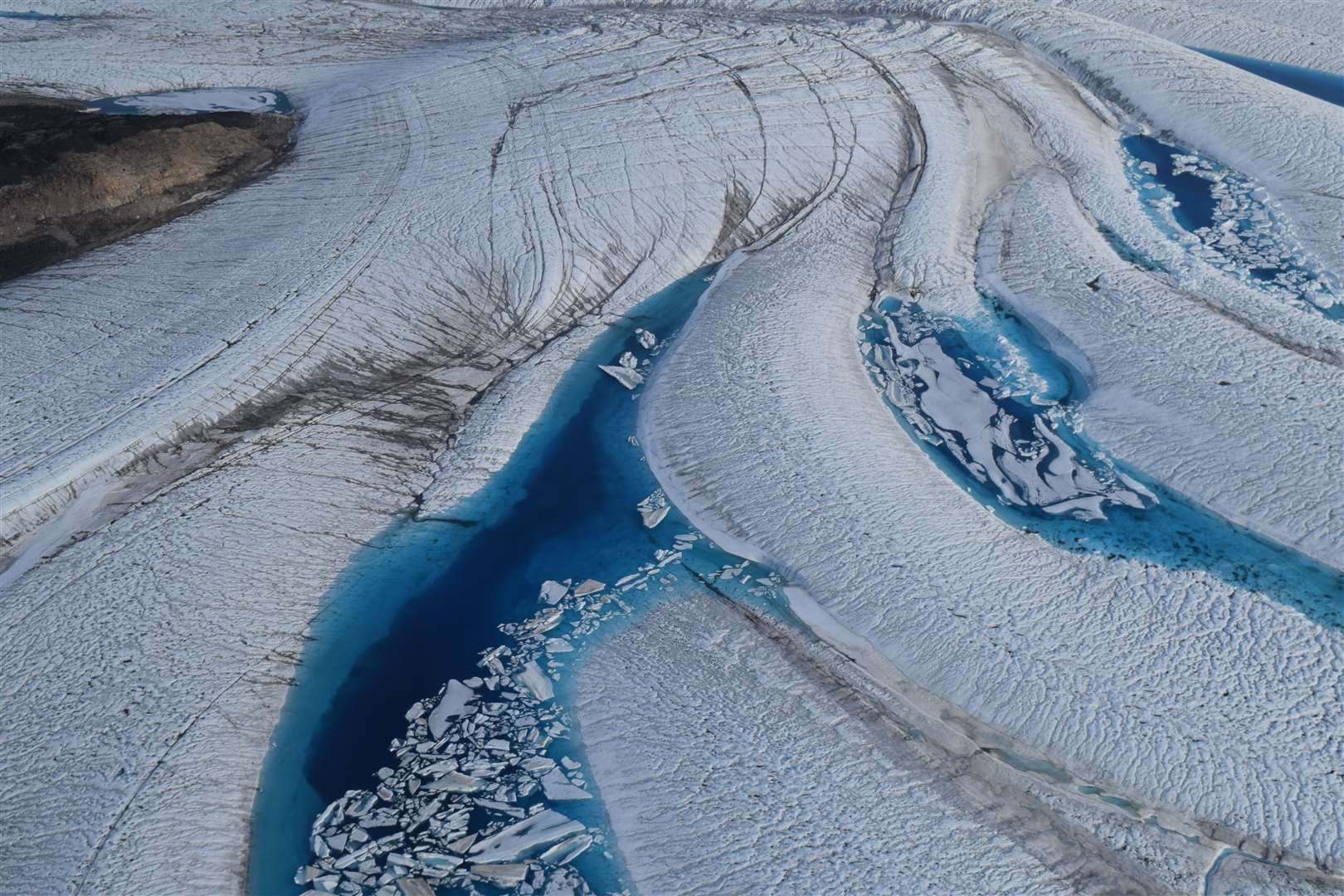 North East Greenland. Picture: Dave Roberts, BAS
Researchers hope to understand how much meltwater is released from Greenland’s fjord glaciers, how it enters the North Atlantic Ocean and how this influences ocean circulation and the global climate system.
Sophisticated technologies, including airborne drones, autonomous marine robots, satellites and instruments embedded directly into glacier ice, will be used to understand how these glaciers interact with the ocean. To date, the 200 or so narrow fjords have been impossible to capture in global computer models.
Dr Kelly Hogan, co-creator on GIANT and a climate scientist at BAS, said: “This is a massively ambitious project and is urgent. We know Greenland is losing ice at an unprecedented rate and this will impact the surrounding ocean – from the coastal fjords so important to Greenland’s communities to the large currents that bring heat to Western Europe.
“We want to ensure we can provide meaningful information to policymakers, so they are informed to make decisions that support the security of society.”
The co-ordinated observing system will enable researchers to study glacier behaviour from individual cracks in the ice up to the flow of meltwater and icebergs into the North Atlantic. The data will feed into multiple computer models boosted by both machine learning and AI.
Scientists will then incorporate Greenland’s fjords into the UK’s main climate model and develop a prototype Early Warning System that could provide advance notice of rapid glacier change.
Current models struggle to predict exactly when a climate tipping point will be crossed and the consequences of doing so.
These are critical thresholds in Earth’s systems – such as ice sheets, rainforests or ocean currents – beyond which change can become rapid, self-perpetuating and potentially irreversible.
 Researchers will head to Greenland this summer. Picture: BAS
Greenland’s melting ice discharges huge amounts of freshwater into the ocean, so scientists think this might affect the North Atlantic Subpolar Gyre – a major Atlantic Ocean current system that transports heat from the tropics to the North Atlantic, helping to regulate temperatures and weather in Europe and North America.
Adding fresh meltwater from Greenland’s glaciers could put a ‘cap’ on the Subpolar Gyre that prevents the formation of warmer, dense water that powers the wider global ocean conveyor belt, which moves heat and nutrients around the world.
Some estimates have suggested the North Atlantic Subpolar Gyre could change as early as the 2040s.