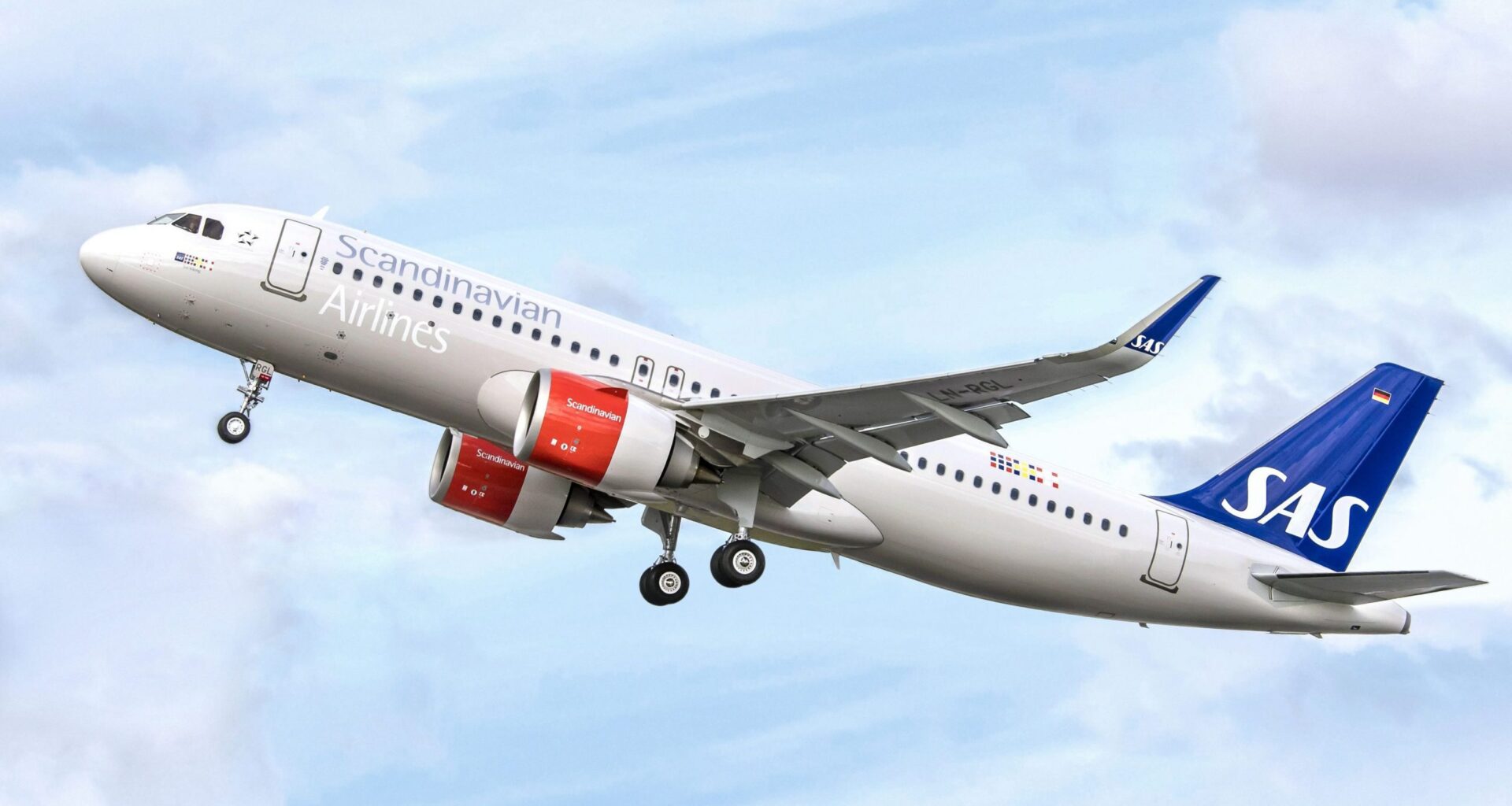
A potentially catastrophic near miss was narrowly averted on Thursday after an SAS Scandinavian Airlines Airbus A320neo reportedly attempted to take off from a taxiway at Brussels International Airport.
As a signal of just how serious this incident was, the aircraft has now been grounded after it reached a maximum ground speed of 123 miles per hour before the pilots carried out an emergency stop.
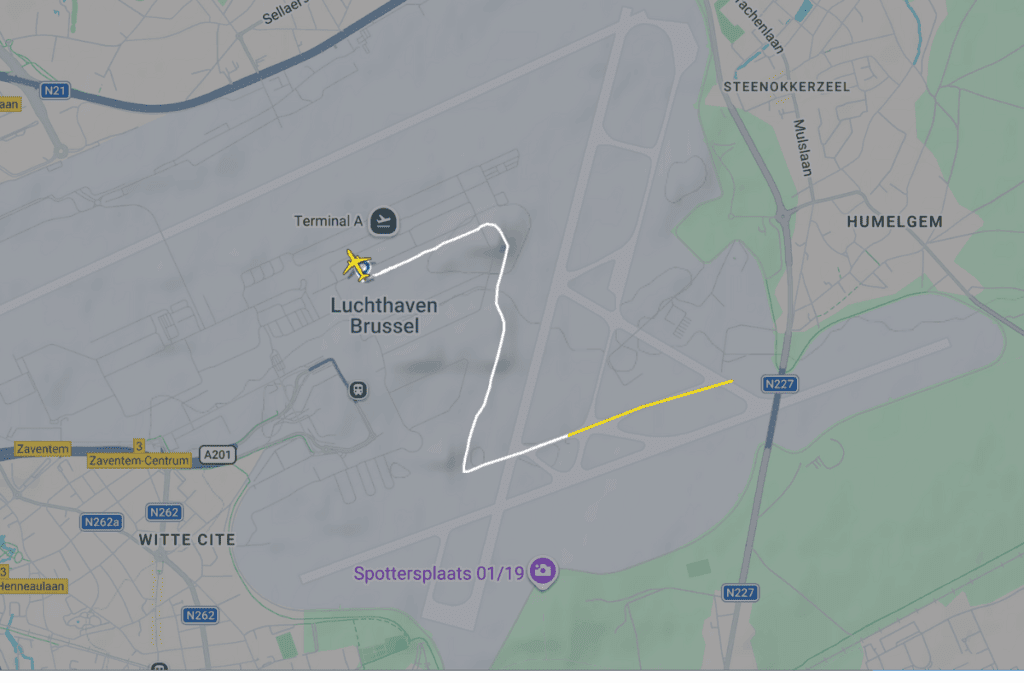 Flight tracking service Flight Radar 24 shows how the seven-year-old Airbus A320neo tried to take off from a short taxiway.
SAS flight to Copenhagen tries to take off from taxiway
On Thursday night, at around 9:44 pm, SAS flight SK-2590 from Brussels International Airport (BRU) to Copenhagen (CPH) was cleared by air traffic controllers in the airport control tower to take off from Runway 07L.
The seven-year-old Airbus A320neo (registration: SE-ROM) had departed its gate at Terminal A and taxiied around the apron area of the airport on a taxiway known as INN and OUT, running perpendicular to runway 07L, as well as an adjacent taxiway.
The pilots of flight SK-2590 were meant to continue past the perpendicular taxiway known as E1 and then turn left onto Runway 07L. Instead, aircraft tracking data provided by Flight Radar 24 shows that the plane turned left onto taxiway E1.
From there, the plane started to accelerate for takeoff, reaching an estimated speed of 107 knots, or 123 miles per hour, before the pilots realized their mistake and made an emergency stop on the tarmac.
Aircraft is now grounded and airline opens investigation
Despite the speed at which the plane suddenly stopped, no injuries were reported, and the aircraft was able to return to the gate, where the flight was immediately cancelled.
The aircraft has since been taken out of service, perhaps indicating that some damage was caused during the emergency stop, or, at the very least, that engineering checks need to be completed before it can be released back into service.
In a statement, a spokesperson for the airline explained: “Safety is our absolute priority. We are currently conducting a thorough internal investigation alongside local authorities to understand the sequence of events.”
Expect Belgian accident investigators to also probe this incident, given just how serious the consequences of this near miss could have been.
Similar incident involved a Southwest flight at Orlando Airport
To give some indication of just how fast the aircraft was travelling at when the pilots realized they were attempting to take off from a taxiway, a similar incident involving a Southwest Airlines Boeing 737 at Orlando International Airport in March 2025 saw the plane reach a maximum speed of 70 knots before the pilots pumped on the brakes.
In that incident, Southwest flight 3278 to Albany had been cleared for takeoff from Runway 17R, but the pilots initiated the takeoff roll from Taxiway H. Again, no injuries were reported, but the plane had to be temporarily taken out of service for engineering checks.
Safety systems are available to prevent these accidents
There are multiple safety systems in place to prevent just this kind of thing from happening, and it’s still unclear at what point Thursday night’s deviation was noticed.
You would normally expect some sort of intervention from the airport control tower, and the pilots should have been working together to ensure they were reading the layout of the airfield correctly.
On Thursday night, the weather conditions were good, with clear visibility.
Human factors can play a huge role in these types of incidents, which is why advanced tech solutions have been developed to complement, rather than replace, the judgment and training of pilots.
One of the leading developers of this technology is Honeywell, which has been working on add-ons to its popular ‘Enhanced Ground Proximity Warning System’ used by airlines around the world.
One such add-on is the SmartRunway system that alerts the pilots if they attempt to take off from a taxiway. Using GPS technology, the system blares out “ON TAXIWAY! ON TAXIWAY!” if it detects that the speed of the aircraft has exceeded 40 knots and the plane is not on a runway.
Related
Subscribe to our newsletter
No spam, just a weekly roundup of the best aviation news that you don’t want to miss

Mateusz Maszczynski honed his skills as an international flight attendant at the most prominent airline in the Middle East and has been flying ever since… most recently for a well known European airline. Matt is passionate about the aviation industry and has become an expert in passenger experience and human-centric stories. Always keeping an ear close to the ground, Matt’s industry insights, analysis and news coverage is frequently relied upon by some of the biggest names in journalism.