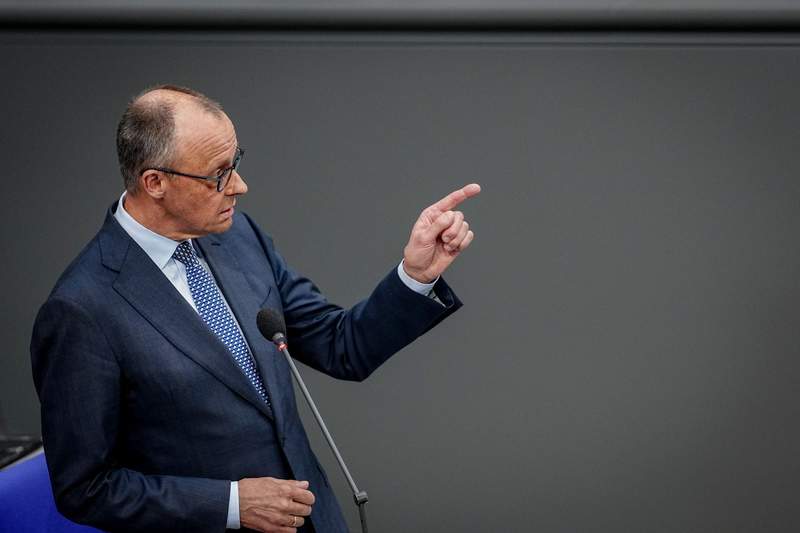
The German Cabinet could approve a bill to store IP addresses in order to protect women from online violence as soon as April, Chancellor Friedrich Merz said on Wednesday, as the government seeks to respond to a growing controversy.
The draft foresees IP addresses being stored, so that people who post or send illegal content online can be more easily found and punished. Merz’s coalition has agreed to reform cybercrime laws to close gaps in criminal liability, including in cases of image-based sexualized violence such as deepfakes.
Germany has been rocked by a controversy over gender-based violence online in recent days after a high-profile celebrity and TV presenter made serious allegations against her ex-partner, including sharing fake pornographic pictures of her on the internet without her consent.
Thousands rallied at Berlin’s Brandenburg Gate on Sunday, including well-known climate activist Luisa Neubauer.
Merz – who has previously made headlines for clunky comments on feminist issues – faced criticism earlier on Wednesday from the opposition Greens for his silence on the controversy.
Green lawmaker Irene Mihalic said “this particular form of violence against women does not seem to be of much interest” to Merz.
Asked whether the IP address bill would be enough to counter digital violence against women, Merz told lawmakers in the Bundestag – Germany’s lower house of parliament – that it was “almost certainly not,” warning of “exploding violence” both online and in real life.
Merz’s argument that “a significant proportion of this violence originates from immigrant communities in the Federal Republic of Germany” was met with loud objection in the Bundestag.