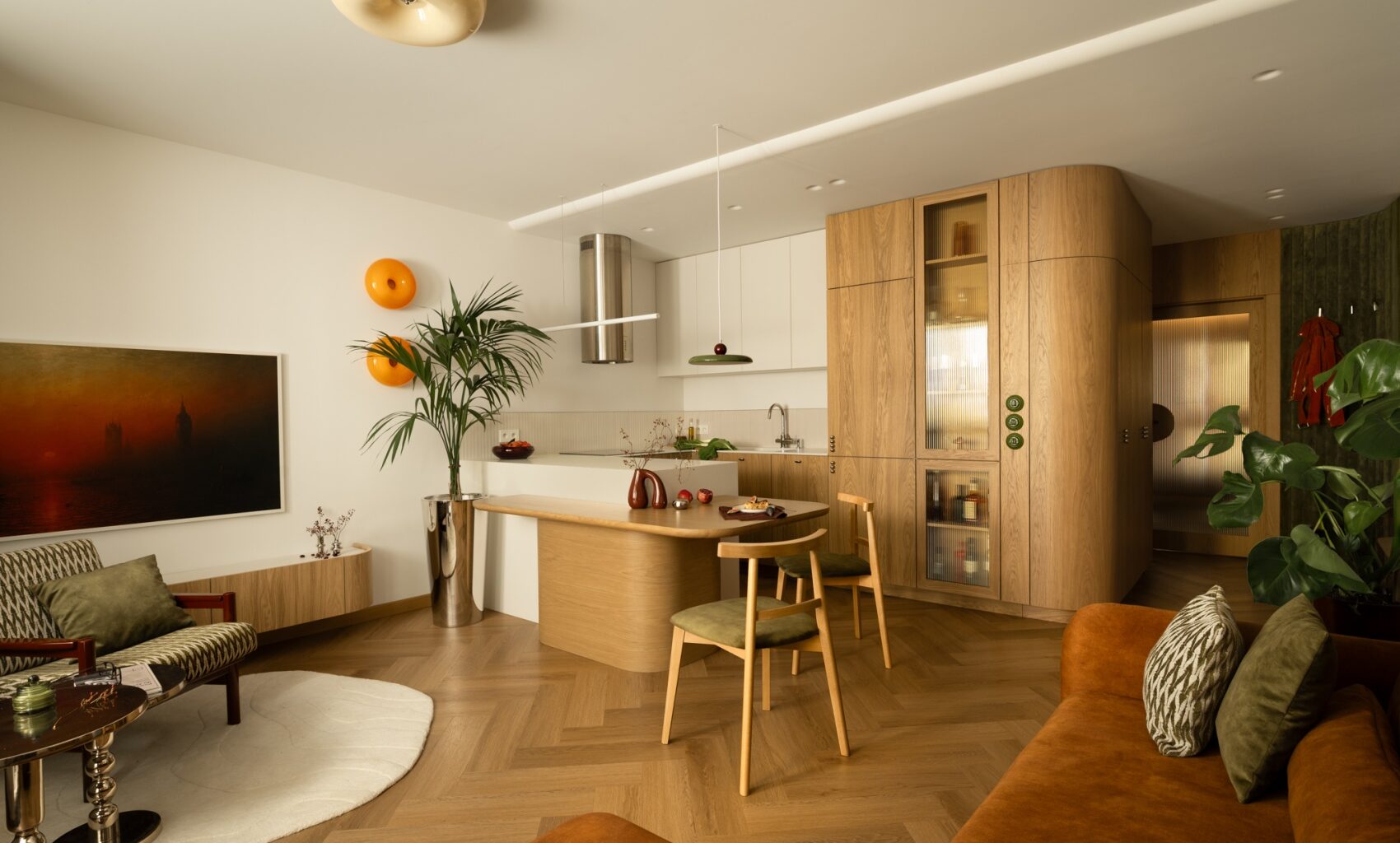
An architect’s own flat is always a special case: a project in which professional practice meets private needs, and aesthetic and functional decisions are not subject to any compromises other than those imposed by the space itself. This was the case with Kamil Urbański, who, together with his partner, decided to transform a thirty-year-old flat in Warsaw’s Służewiec district into a modern interior.
The impetus for the metamorphosis of the space was the need for greater freedom and to begin the next stage of their life together, and the architect’s experience in construction work allowed him to consciously choose a property in need of complete renovation. The proximity to their previous place of residence proved to be an additional advantage – logistically, but also emotionally.
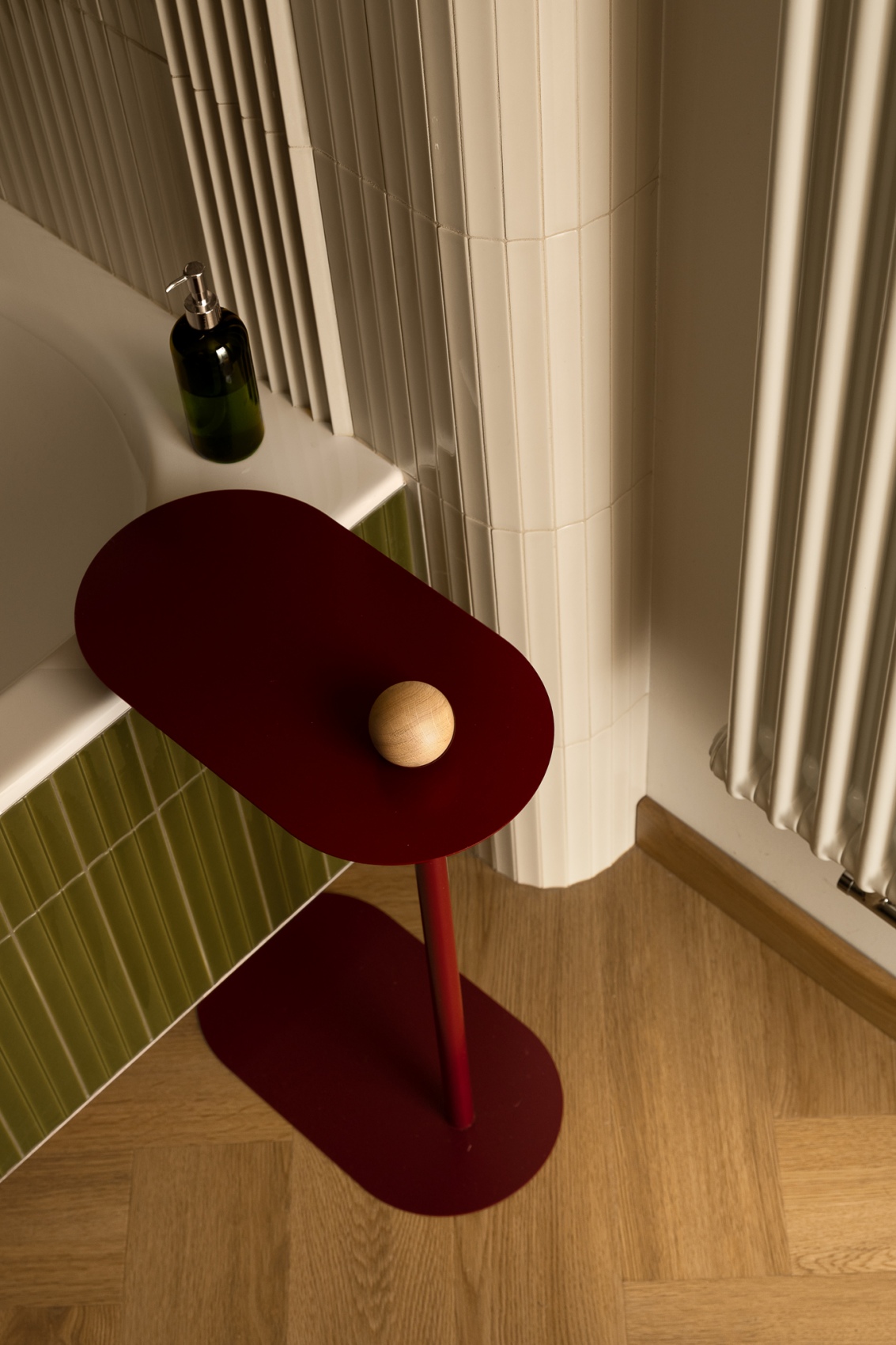
The starting point was a flat that had probably never undergone a thorough modernisation before. Apart from the new façade, only the windows and Calacatta conglomerate window sills remained. The latter, inconspicuous and often overlooked in the design process, became one of the key elements determining the colour scheme of the entire interior. Kamil Urbański treated them as a clue – a trace leading to the material and colourful identity of the flat.
A new, colourful life
The most important assumption was to create a space that would meet the needs of two people who work partly from home. The classic M3 layout, inherited from the communist era, required thorough reconsideration. The architect designed a new functional plan even before purchasing the property, which, as he emphasises, is one of the most rational steps in this type of investment. Contemporary flats often offer multi-room layouts located on one side of the building, which hinders natural ventilation. Meanwhile, in old blocks of flats, double-sidedness was the standard. Here, it became one of the greatest advantages, allowing for the creation of an airy, logically divided space.

Six full-fledged rooms, not counting the hall, were fitted into 63 square metres. A living room with a kitchenette and an island, two studies – the main one, which also serves as a guest room, and a smaller one, connected to the bedroom – as well as the bedroom itself with a wardrobe and a comfortable bathroom with minimalist Omnires fittings. The layout has been clearly divided into day and night zones, which gives the flat clarity and order. The current layout is clearly visible in the floor plan, which we publish in the gallery.
An eclectic mix
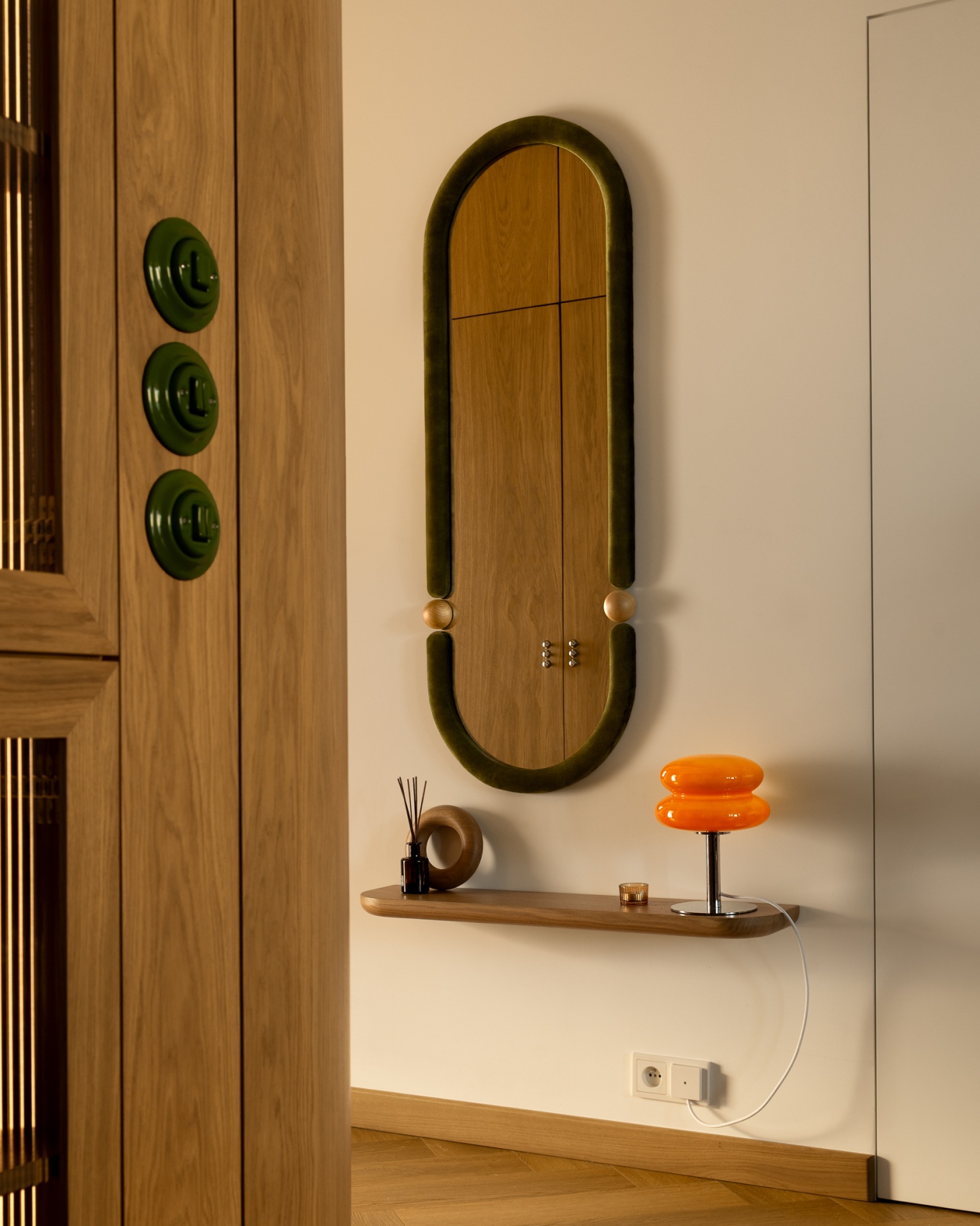
The inspiration for the interior’s aesthetics was a vintage armchair designed by Zenon Bączyk, which came from the architect’s partner’s family home. It is the only piece of furniture that came from outside, but its renovation – the choice of frame colour and upholstery – set the direction for the entire project. The architect opted for a Modern Retro style with clear Mid-Century Modern influences, enriched with contemporary technologies and materials. Wood became the foundation: oak veneer and solid oak appear in the built-in furniture, doors, furniture and details. To give the interior a distinctive character, the architect sought a single dominant colour. He found it in the dark, earthy green of tiles by the Italian brand Settecento and in a similar shade of upholstery fabric. Even the oak veneer was stained with a subtle hint of green, so that all the elements form a harmonious whole.
The leitmotif is roundness and curves. Curves appear in furniture, built-in elements and details, but are always balanced by straight lines. The kitchen island, although massive, gains softness thanks to its rounded corners. The lamps and wall lights echo Pop Art and the Space Age, especially in the characteristic “tyres” so typical of the 1970s.
Details matter
Nothing in this flat is accidental. The wood has the same shade in every room, the upholstery is repeated on different surfaces, and the same tiles and worktops connect the kitchen and bathroom. All the fixtures and fittings were made to order, as were the doors, mirrors and bed. Even the two paintings in the living room were painted by the architect especially for this interior, completing the story of full creative control over the design.
The greatest importance was attached to lighting. The 63-square-metre flat has over forty individual light sources – from lamps and wall lamps to ambient LEDs hidden in furniture and ceilings. All emit light at a temperature of 3000K, and most are dimmable and integrated with the Smart Home system. This solution not only increases the comfort of work, but also allows you to create a mood in the evenings. The selection of fixtures often required modifications to factory lamps in order to maintain colour and functional consistency.
The implementation in a building from the 1990s brought surprises typical for such investments. Crooked walls, ceilings and floors required new plaster, screed and a suspended ceiling. The ceilings were planned on two levels, and the differences in height were finished with an impressive curve. The key solution was an installation wall between the kitchen and bathroom, which concealed all plumbing and bathroom cabinets hidden behind mirrors. This is an example of clever thinking about space, which saved valuable centimetres and maintained the clarity of the layout.
design: D’ARCH KamilUrbański
photos: MikołajDąbrowski
Read also: Apartment | Interiors | Eclecticism | Recommended | Warsaw | whiteMAD on Instagram