
 Fionnuala Kavanagh
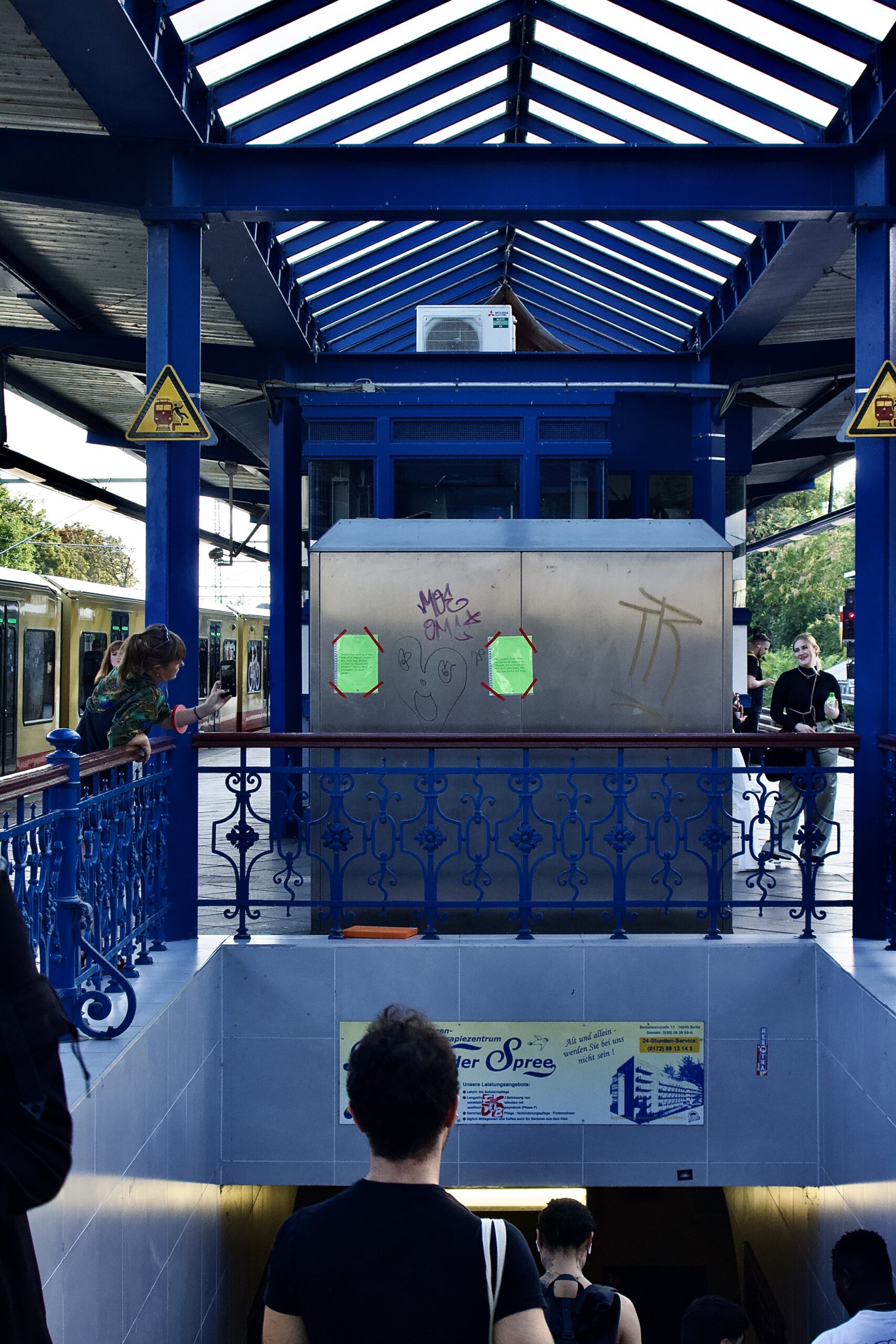
How often is guerilla marketing used for books? Well, Fionnuala Kavanagh, author of I Keep My Shadow Light, pinned up bright green posters throughout the city – all along the Landwehrkanal, on lampposts, bins, ping-pong tables. They held quotes like, “In front of the Brandenburger Tor, mini German flags were being twizzled in a few sweaty white hands,” or, “Cut out of his own little world with a pair of blunt scissors, Viktor turned to look at Svenja.” It was all to promote her debut novel – and it worked. It’s a novel that asks a simple question with no easy answer. What does it mean to belong in Berlin?
 Magda_zagorski
What inspired you to write I Keep My Shadow Light?
I went on a German integration course offered through [the Agentur für Arbeit]. That’s the narrative spine. I wanted to talk about the emotional traits of arriving in a new city and the different kinds of loneliness you can experience. That’s what the four main characters represent. Each has a specific kind of loneliness: one is with the wrong people, one feels alone in her family setup, one feels very far away from themselves – you know, the way you can get so lost in Berlin. I’ve been there myself.
What was it about the integration course that struck you?
At the time, it was 2017/18 and there was a real mix of people, but perhaps a third of the class were Syrian. Most came to Germany out of desperation, escaping war and persecution in their home countries. When you step outside the 35-hour flexi-work startup, gallery visiting, brunching, Sunday morning Berghain, record collecting, English-speaking side of Berlin, you see there’s so much more to this city – so many more perspectives, much more beauty and variety and transported pain because of all the different kinds of people who now call this place their home.
 Max / Fionnuala Kavanagh
What motivates your writing?
Writing the novel, I was trying to work out what it means to feel lost and to belong.
I’m trying to understand things I don’t understand. As the world gets more and more unbelievable and extreme, it’s a process to try and figure things out for myself. Writing the novel, I was trying to work out what it means to feel lost and to belong. That’s something I’m still trying to figure out. I Keep My Shadow Light is a very ‘Berlin’ book, really. Being in Berlin inspires you to go for these wild dreams – or at least it did back in 2016 when it was cheaper. My environment was full of sparkly creatives, which egged me on, too.
I think taking my writing seriously helped me out of the party girl phase, which lasted a bit too long, but I look back and see how that phase influenced my writing. My essays are kind of… I don’t like to use the word ‘experimental’ because it sounds inaccessible, but I do like to sample different genres. Some of my essay writing is inspired by club music and how it chops different things together. You meet a lot of people out and about on the odyssey. It was an interesting life. Now it feeds into my characters and writing and empathy.
 Sophie Florence
Why did you use such a unique marketing technique as the green posters?
Generally, I find the literary world isn’t very accessible, but if you’re writing social commentary, the purpose is to engage with people who aren’t necessarily going to buy your book or read an article in the Guardian. That’s why I’m also going into script writing. A lot of people don’t actually read, but they like watching TV. The posters also helped me observe Berlin in a different way. I hung them in places that would interact with the writing somehow or bring another element to it.
 Fionnuala Kavanagh
How did the posters come about?
I love looking at the party posters in Berlin and thought it would be nice to put something out there myself. I worked with my friend who’s a designer. That was a wonderful process. I love working with other people. Being a writer is very quiet and lonely sometimes. Now I’ve had like 440 scans on the posters, which feels like a decent amount. Through it, I’ve been invited to readings, events, made friends, had a great discussion with an Egyptian journalist and other artists. It feels quite magical, in an age where most things are digital, to interact and meet people through posters on the street. I learned that the form is as important as the text.
Did it feel like an act of resistance to put up posters in public spaces?
It felt quite artistic. My friend is extremely particular – way more than me. She was rightly militant about the placement and it being an artistic interaction. Then I started thinking about where people are likely to gather, where they’re likely to pause – like the ping pong tables. It was nice seeing how things interact with each other in their environment. There’s some poster etiquette. I don’t like to cover up posters that are still active. People would add stuff to the posters, like little graffiti or comments. And I liked to see which ones survived the winter.
 M.zagorski
It must feel quite vulnerable, too?
It took me turning 30 to have the confidence to share my work with anyone, so it was a big step to start putting it on the street. Then publishing the novel was also a massive step in overcoming fear of judgement. Not everyone is going to agree with you, especially when you’re writing social commentary. It’s about coming to a place of realising it’s fine that not everyone agrees with you, to believe in yourself and be open to hearing their side. I want my writing to be a tool to open up discussions about difficult topics, because a lot of people are so convinced.
 Fionnuala Kavanagh
Was the novel self-published?
Yes. I was frustrated with getting nowhere, and if you’re writing about social issues, it needs to be fast, otherwise it turns into historical fiction. The boyfriend I was with at the time said people didn’t want to read about an integration course. He was very dismissive. He didn’t even read the book. But he said something that stuck. He was a music producer (of course) and he took the example of when electronic artists set up their own label because the music industry isn’t financially willing to take risks. It freed something in me, and I self-published. It’s going very well, actually. You know, behind every successful woman is a couple of shit ex-boyfriends.
Fionnuala’s book launch is on May 7 at Metis Books. Follow her @i_keep_my_shadow_light.