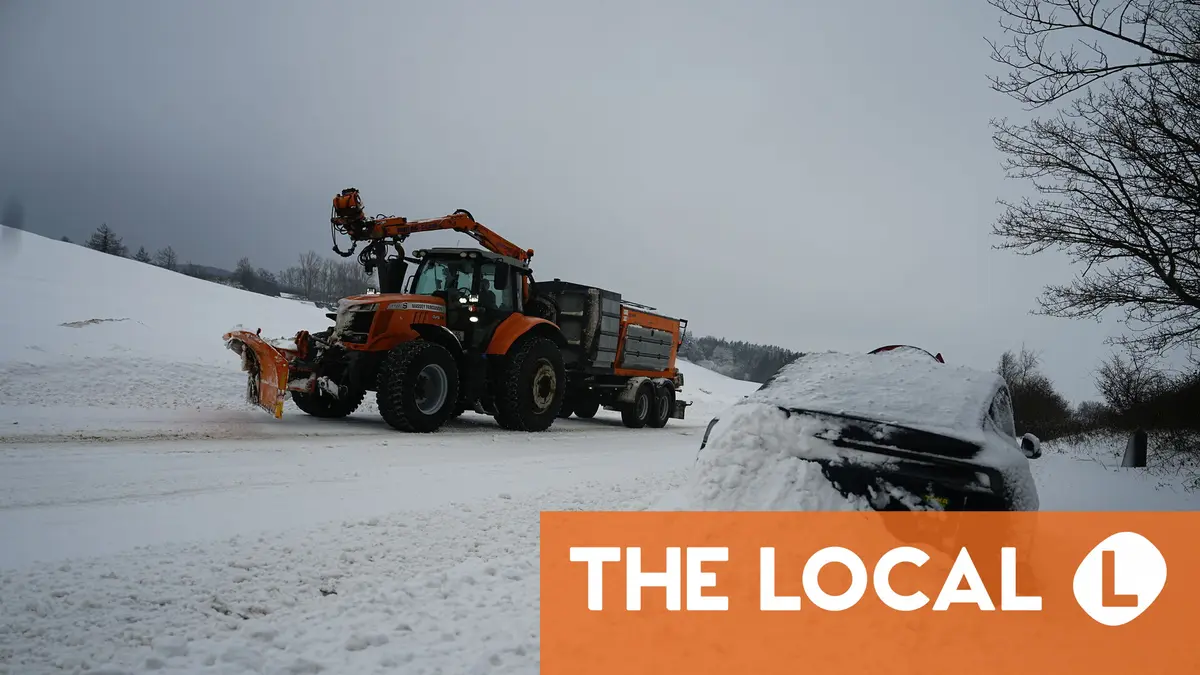
Snow ploughs were deployed on the streets of Copenhagen on Friday for the first time in 15 years, while the National Police urged the public to stay home if possible.
Copenhagen was covered in a layer of snow measured at 17 centimetres on Friday morning, the second-deepest since records began in 2011 according to meteorological agency DMI.
Only on January 1st 2011, when 18.7 centimetres were measured in the capital on the day records began, has a deeper covering of snow been measured in the city.
The winter weather has also resulted in snow ploughs being deployed in Copenhagen for the first time for 15 years.
“About 160 vehicles have been deployed, and for the first time in 15 years it has been necessary to operate snowploughs,” Copenhagen Municipality told news wire Ritzau via email.
“This is therefore an exceptional situation, and people are urged to stay informed and act according to the conditions,” it said.
Other parts of Denmark have received even heavier snowfall, with up to 25 centimetres measured in several locations including southern Zealand, southern Funen, and North Jutland.
Advertisement
DMI warned that heavy snow would likely continue until Friday evening in the east, while Copenhagen Airport cancelled flights to Paris and Berlin and warned of “delay and cancellation risks because of snowy conditions.” Many schools were closed.
Bus services have been cancelled in Aarhus while the nearby Djursland region and parts of North Jutland remain under a snow storm alert, effective until Friday evening.
The category 2 alert means that weather conditions in the affected regions can affect your surroundings and disrupt traffic. Follow the authorities’ advice and be extra careful when you’re out and about.
READ ALSO: What do Denmark’s weather warnings actually mean?
Funen, Zealand and Lolland-Falster are all at risk of icy conditions, DMI states on its weather alert page.
“People should be especially cautious in the south-eastern part of the country if the precipitation turns to rain,” DMI wrote in a post on X.
“This could lead to freezing rain – supercooled precipitation that turns to ice the moment it hits the road or pavement,” it said.
The National Police (Rigspolitiet) advised the public to avoid driving or going outside at all on Friday where possible.
“Virtually the entire country is affected by the winter weather, so wherever you are, you should check local conditions and consider whether it is necessary to go out,” the National Police wrote in a media update.
Police advised against “all unnecessary” road journeys in North Zealand, South Zealand, East Jutland, and the northern part of South-East Jutland as of Friday morning.
The public can keep informed about local conditions via politi.dk, the police noted.