

Credits: Far Out / Zofia Chomętowska / Archeology of Photography Foundation / Ilona Karwińska / Culture.Pl / Tvp Kultura / Pado Studio Film
Wed 11 February 2026 7:00, UK
Poland is one of Europe’s fastest developing countries, and it’s quickly become a tourism hotspot, with travellers excited to experience its history, beer and great cities.
As a country to visit, Poland really has everything, such as the port city of Gdansk which sits on the Baltic Coast and has an incredible old town, Wroclaw with its beautiful squares and architecture, Lodz’s vibrant art scene, and Krakow presenting real duality in the form of being both a stag-do nirvana and an essential stop to see the harrowing Auschwitz site. Then there’s Warsaw, the country’s capital and economic heartbeat, a city of two million, that blends skyscrapers and an old town faithfully reconstructed post-war, making for a political and cultural hub, and a city that invites curious travellers.
It goes without saying, Poland has come a long way since its communist era, which saw it labelled a pariah across the Western world, to become a powerful European nation since the end of communism in 1989, but one of the most fascinating periods in the city’s history occurred just decades earlier, in a bid to mimic and catch up with the capitalist world.
Whether it’s Las Vegas, Hong Kong or London’s Soho, when you think of neon lighting, you think of advertising, restaurants, bars and clubs. It’s a signifier that whatever you want, be it booze, dancing or a bite to eat, is nearby. However, in communist Poland, and in particular, Warsaw, the neon signage was used to highlight an ideological stance that would modernise and reframe a city that was decimated following World War II.
Following 1944’s Warsaw Uprising, the occupying Nazi forces retaliated with rage, razing Warsaw to the ground, with an estimated 85% of the buildings damaged or destroyed in an act of architectural terrorism designed to break the Polish people. Following the war, the capital had to be nearly entirely rebuilt, and the government wanted to showcase their communist ideology throughout the city’s new buildings. It was to be socialist, modern, but reflect optimism, following the difficult wartime years.
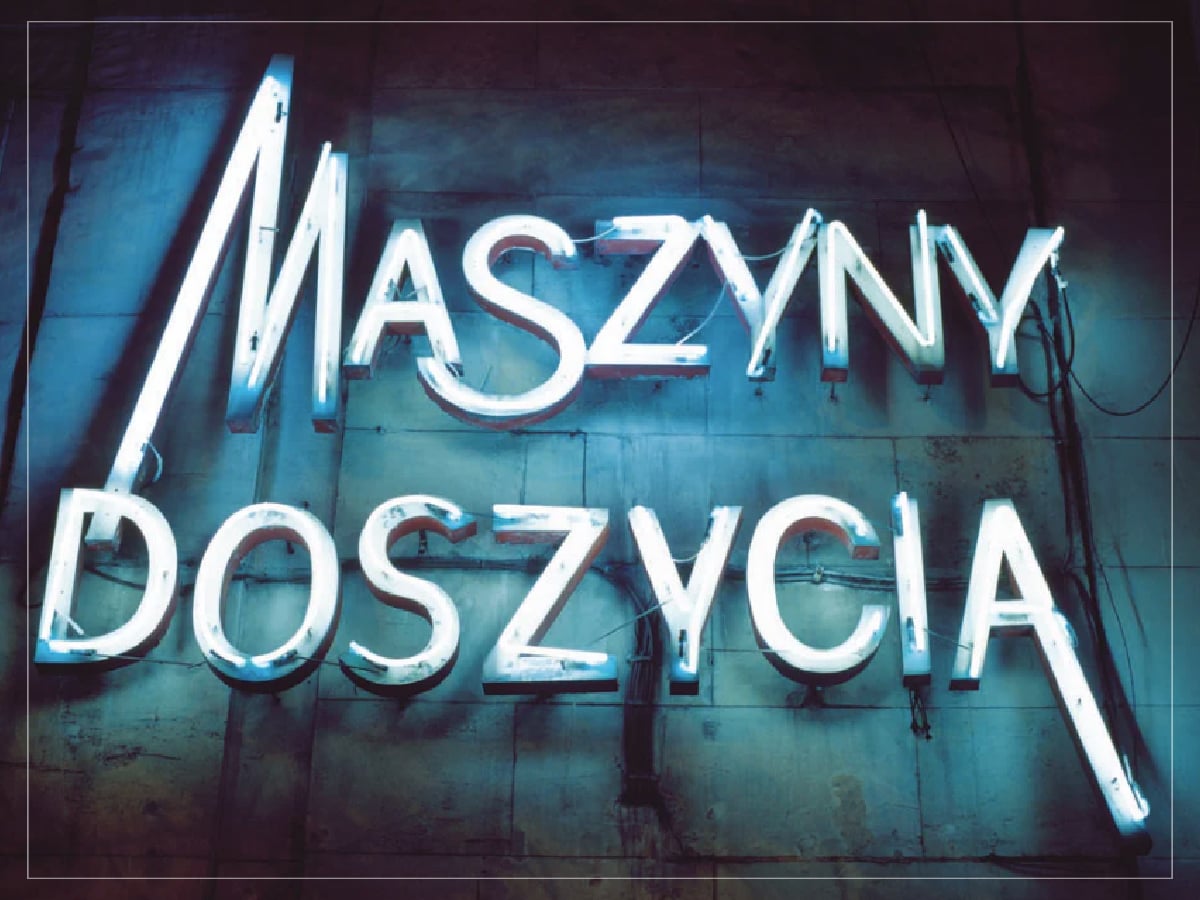
While the city was being rebuilt, adhering to Socialist Realist principles, the Polish government decided to illuminate the capital with bright, neon lighting. Warsaw had seen neon lights before, and pre-war they were associated, much like everywhere else, with private business, but this was to be different. The thinking was that bright, colourful, warm lighting would help animate streets that were bleak and monotonous, and in many cases, still unfinished.
 (Credits: Far Out / Ilona Karwińska / Culture.Pl / Tvp Kultura / Pado Studio Film)
The authorities designed and produced neon lighting themselves, developing them with the state-run Reklama. Much like you see in modern China, there’s an implied link between bright, lit-up cities and being forward-thinking and technologically advanced. Warsaw’s neon lights took a rebuilt socialist city into a modern European capital, with a future-driven society.
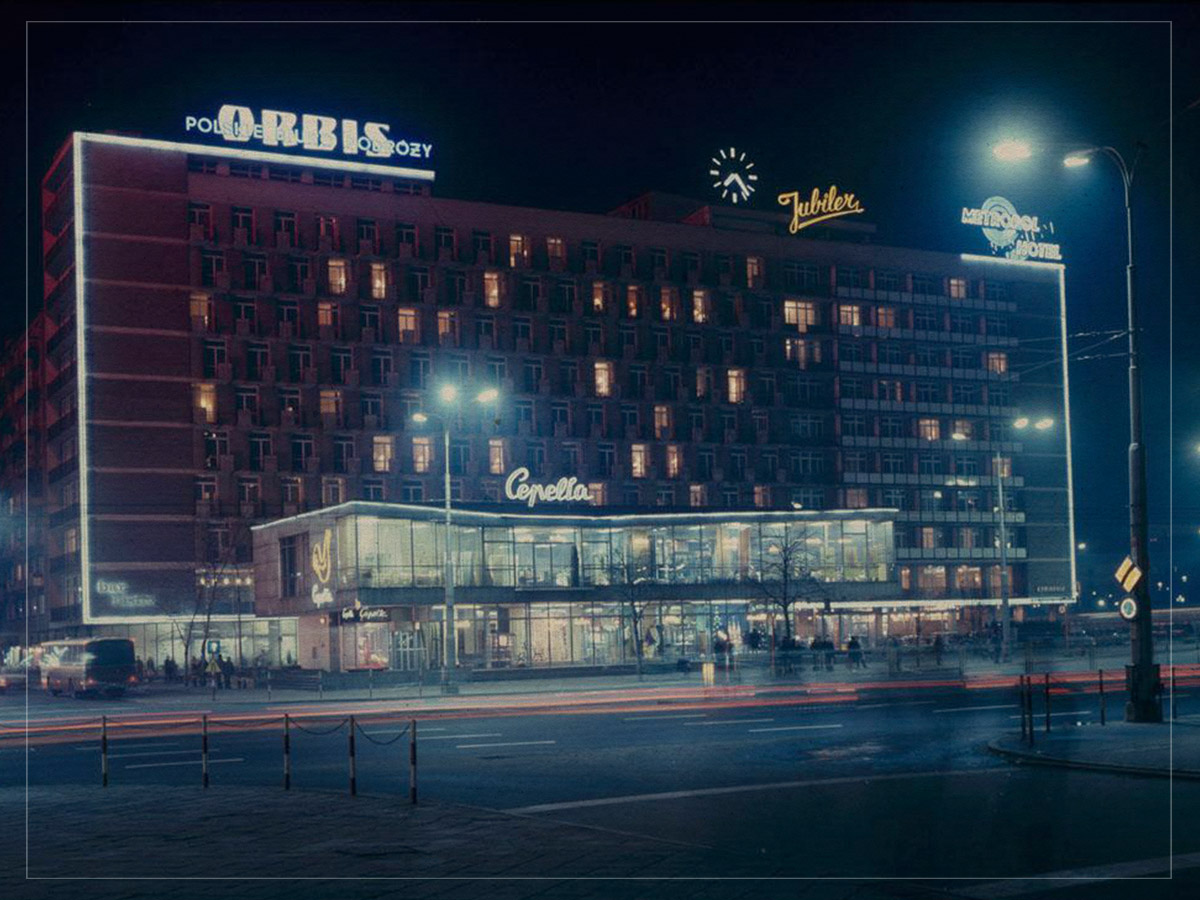
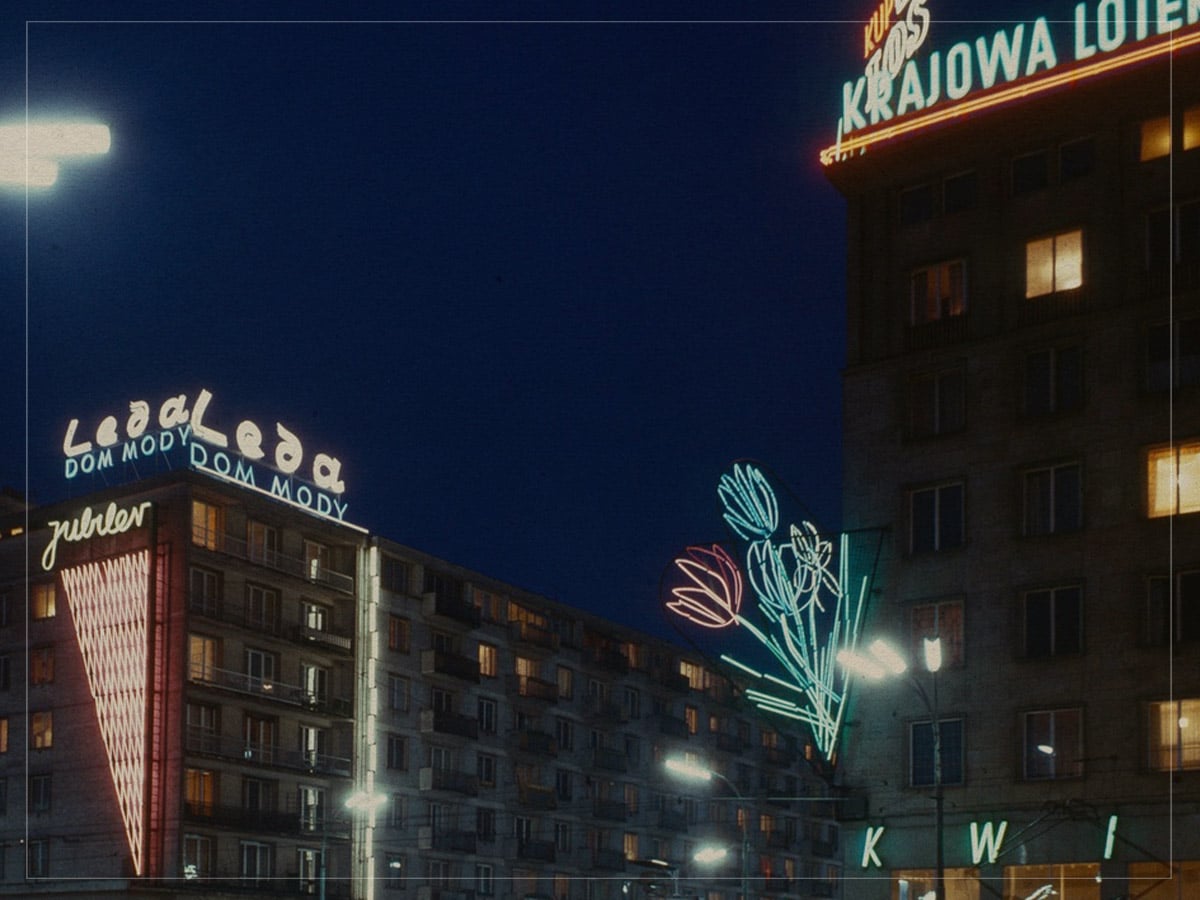
Whether the signs were illuminating cinema or café names, or bookshops, hotels or state offices, the idea was to create a unique aesthetic, being modern and creative, and thus prominent artists and designers were involved, including Jan Mucharski, Zygmunt Stępiński, and Jerzy Jarnuszkiewicz.
By the turn of the decade, the bright lights of Warsaw at night had become famous in the Eastern Bloc. It was part of the city’s identity and visual language, and something that attracted visitors, as well as placing the city at the forefront of this new world. Then in 1989, communism fell, and everything changed once again. State enterprises were privatised, buildings either fell into disrepair or were renovated, and the signs were seen as outdated and a sign of the past, rather than of a forward-thinking society.
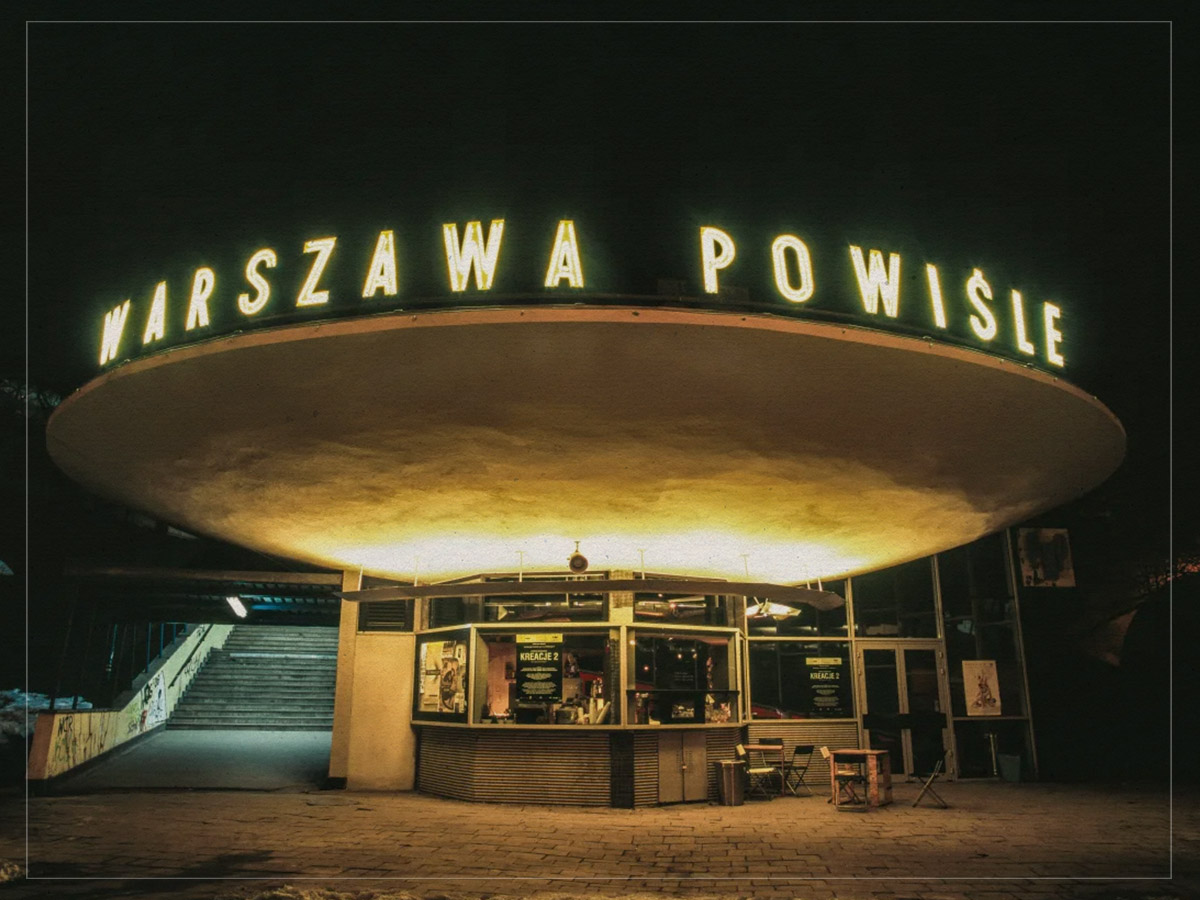
In the following years, the bright lights were largely dismantled or left to decay and only in recent years have historians and designers really recognised the value in these signs, which now act as monuments. The 2012 opening of the Neon Museum has done a lot to remember this era by salvaging and restoring a lot of old signs, allowing them to be displayed for future generations. They might have lost their geographical context, but they can at least be seen as what they once stood for.
There are still some original pieces enduring, with others reconstructed. The most famous is Siatkarka, which sits on Konstytucji Square and shows a female volleyball player, emphasising the communist government’s connection to sports. On Marszałkowska Street, the Bajka neon has been reconstructed and is a great example of how the signage was designed to fit the fabric of the city in which it stood.
Elsewhere, other signs like Cepelia and Relax stand, as well as many modern signs which have been designed to replicate the style of the 1950s originals. There’s a growing nostalgia for this period of design in the city, but it’s important to remember that the original neonisation wasn’t about decoration, or even art. It was about humanising the cold, modernist design of the city and promoting the ideology of the governing party. While the ideology can happily be left in the past, there’s a wider yearning to have art, design and planning align so closely once again, in a modern world that seems to value low costs ahead of everything.
 Credits: Far Out / Ilona Karwińska / Culture.Pl / Tvp Kultura / Pado Studio Film)
 Credits: Far Out / Ilona Karwińska / Culture.Pl / Tvp Kultura / Pado Studio Film)
 (Credits: Far Out / Neon Museum