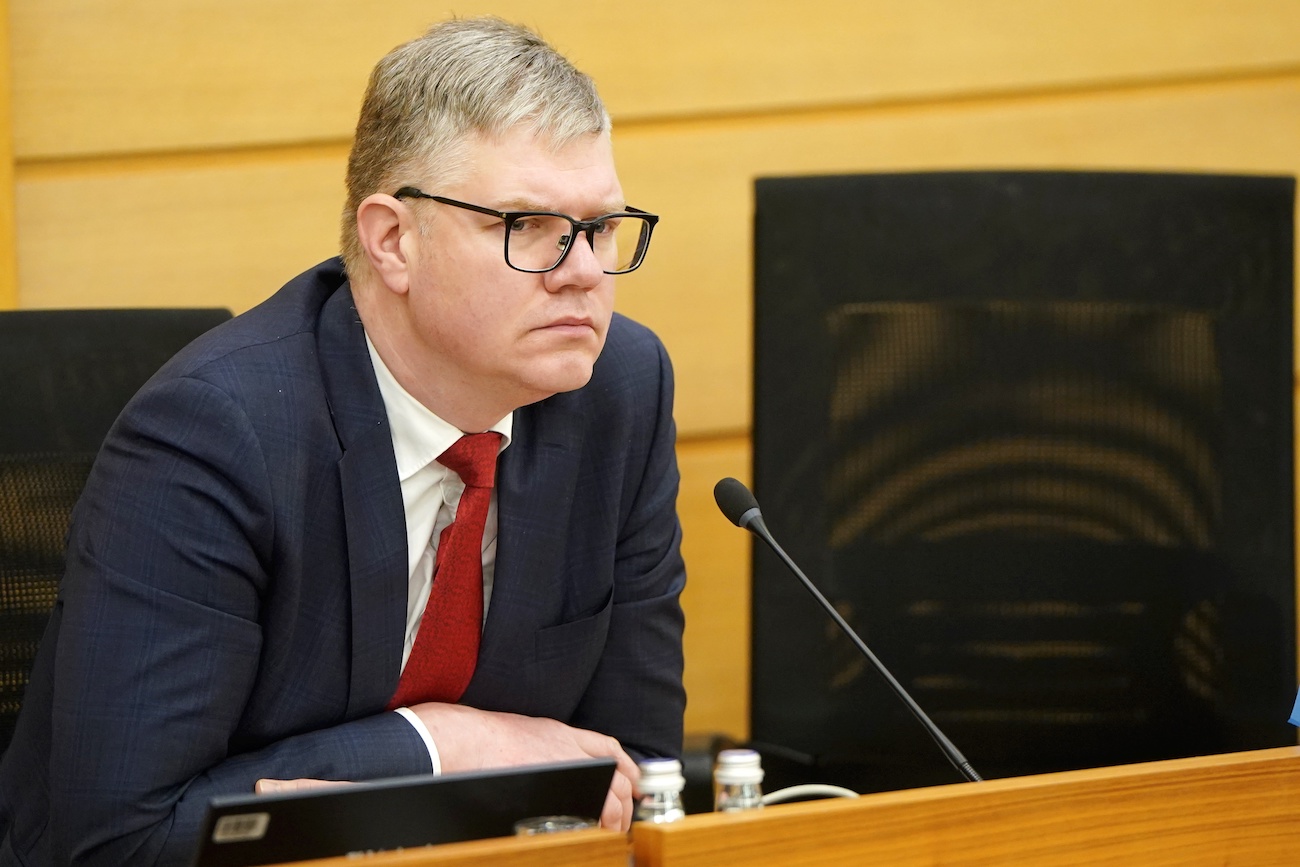
Given the shortage of teachers in Riga, educators who wish to continue working will not lose their jobs following the planned changes to the municipal preschool education network, Vice Mayor Vilnis Ķirsis (New Unity) told journalists on Friday.
Ķirsis explained that discussions about changes to the education network have been ongoing for some time, and that the main driver is demographic trends. In recent years, the number of newborns declared in Riga has significantly decreased, inevitably affecting the structure of educational institutions.
He argued that the planned changes will allow resources—including teaching staff—to be used more rationally, as schools and preschools often face staff shortages. “Everyone will benefit,” Ķirsis said, adding that “saved resources will not be taken out of the system” but instead used to improve working conditions and increase teachers’ salaries.
He also noted that Riga is not a regional town where closing an institution would require travelling long distances. “Any inconvenience will mean crossing the street, taking public transport one stop further, or walking a few extra minutes,” he said.
According to the vice mayor,
the plan primarily foresees administrative consolidation, such as streamlining documentation systems.
He suggested that some of the signature-collection campaigns aimed at preserving the current system may be driven by vested interests. “I urge parents not to worry—we will explain and address concerns,” he added.
“We currently lack teachers—we will find a role for everyone. No one who wants to work will be left without a job,” Ķirsis emphasised.
Chair of the Riga City Council’s Education, Culture and Sports Committee, Laima Geikina (New Unity), acknowledged that change is never easy and that public concern is understandable. She stressed that the city’s main goal is to ensure high-quality education. “We do not want anyone to end up in difficulty—we want to provide quality education,” she said, reiterating that no willing teacher will lose their job.
Under a decision adopted by the Riga City Council on the 19th of February 2025, several general education institutions will be merged in the 2026/2027 academic year, including: Riga 74th Primary School with Riga 64th Secondary School, Riga Rīnūži Secondary School with Riga 31st Secondary School.
In Purvciems, Riga 64th Secondary School will operate in three buildings located within one block.
In Vecmīlgrāvis, the newly formed secondary school will function in two buildings, with one eventually being phased out.
In Grīziņkalns, Riga 1st Christian Primary School will be merged with Riga 6th Secondary School. In the Avoti and Centre neighbourhoods, changes are planned in the organisation of Riga Raiņis Secondary School, consolidating its operations into one building and freeing up premises on Avotu Street 44.
Further optimisation measures are planned for the 2027/2028 academic year, including possible mergers of: Riga Broce Lyceum with Riga Sarkandaugava Primary School, Riga Gaiļezers Primary School with Riga Mežciems Primary School
The situation will also be assessed in Bolderāja, Daugavgrīva, and Ķengarags.
The reform includes both institutional mergers and the closure of certain buildings.
In Āgenskalns, three preschools—“Ieviņa,” “Sprīdītis,” and “Pumpuriņi”—will be merged while retaining both service locations. A similar approach is planned in Ziepniekkalns and Grīziņkalns, where institutions will be legally merged but continue operating in their existing buildings.
However, in some areas the number of buildings will be reduced. In Bolderāja, the building at Stūrmaņu Street 7 will close; in Iļģuciems, Lidoņu Street 10A; and in Purvciems, Marsa gatve 16. Services will continue in other available buildings.
More extensive reorganisations are planned in Imanta, where several preschools—including Riga 104th Preschool and institutions “Kurzeme,” “Imanta,” “Margrietiņa,” and “Kamenīte”—will be merged. In Ķengarags, preschools “Zilbīte” and “Dzintariņš” will be combined.
Overall, seven buildings will be freed up in neighbourhoods such as Daugavgrīva, Vecmīlgrāvis, Dzirciems, Ķengarags, Latgale suburb, and Sarkandaugava.
The municipality plans to repurpose them for other pressing needs.
Ķirsis previously stated that the most affected neighbourhoods will include Vecmīlgrāvis, Iļģuciems, and Ķengarags. Around ten kindergarten buildings are planned to be physically closed, while others will be legally consolidated to reduce administrative costs.
He emphasised that where service locations remain physically open, parents should have no reason to worry. Even in cases where kindergartens are fully closed, alternative preschools are typically located just a few blocks away.
The reforms are driven by what officials describe as a “demographic dip,” as declining pupil numbers have left some institutions operating at only 50% to 60% of capacity.
Read also: Latvian police open criminal proceedings over latest Epstein case materials