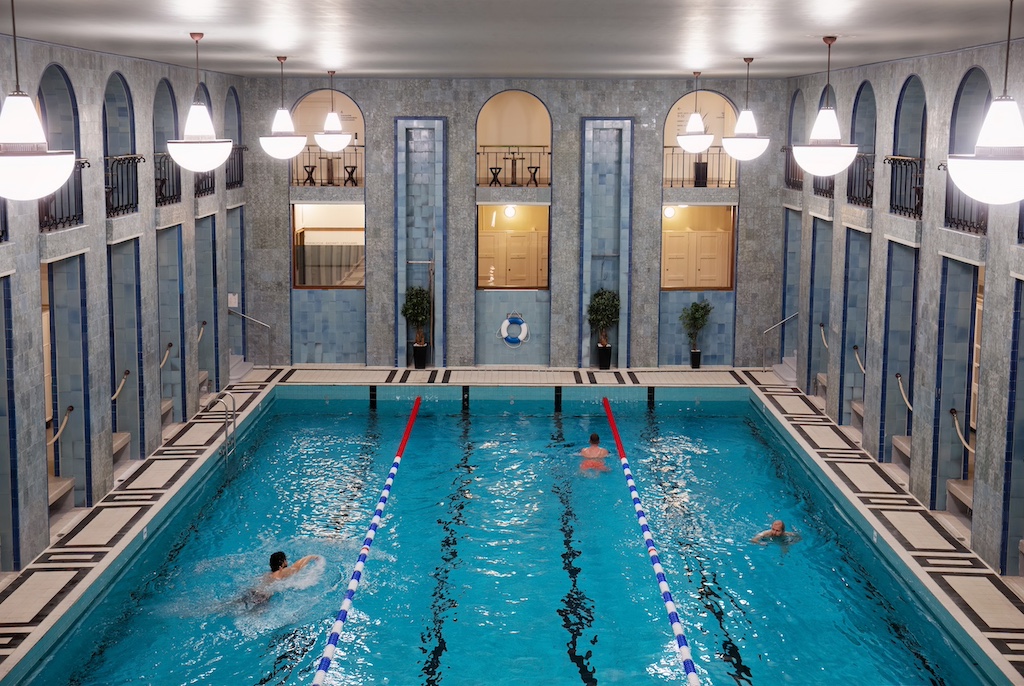
Hidden inside a city-centre block and cherished by generations of bathers, Yrjönkatu Swimming Hall will reopen to the public on 2 February 2026 following a comprehensive renovation. Opened in 1928, it is one of the oldest indoor swimming halls in the Nordics and a living piece of Helsinki’s bathing heritage.
While sauna culture has recently gained international popularity, it has been central to Finnish life for centuries. In Helsinki, this tradition developed into a spa culture in the 19th century, when the city became known for its seaside baths and health resorts. Yrjönkatu Swimming Hall continues this story as Finland’s first indoor swimming hall designed for year-round bathing, exercise, and relaxation — and today remains one of the city’s best-kept secrets.
Yrjönkatu Swimming Hall is deeply loved by the people of Helsinki. That became clear in the feedback we received during the renovation planning. The message was simple: do not change its soul. Preserve the atmosphere and character that make it so special, says Paavo Arhinmäki, Deputy Mayor for Culture and Leisure of the City of Helsinki.
Architecture of calm: Nordic Classicism meets Art Deco
Architecturally, Yrjönkatu Swimming Hall represents Nordic Classicism enriched with Art Deco influences. Designed by architect Väinö Vähäkallio and built by contractor Jalo N. Syvähuoko, the building stands apart from Vähäkallio’s more commercial and industrial works through its refined interiors and technically ambitious structure. Constructed within a dense city-centre block on a compact site, the swimming hall was an especially demanding engineering project for its time.
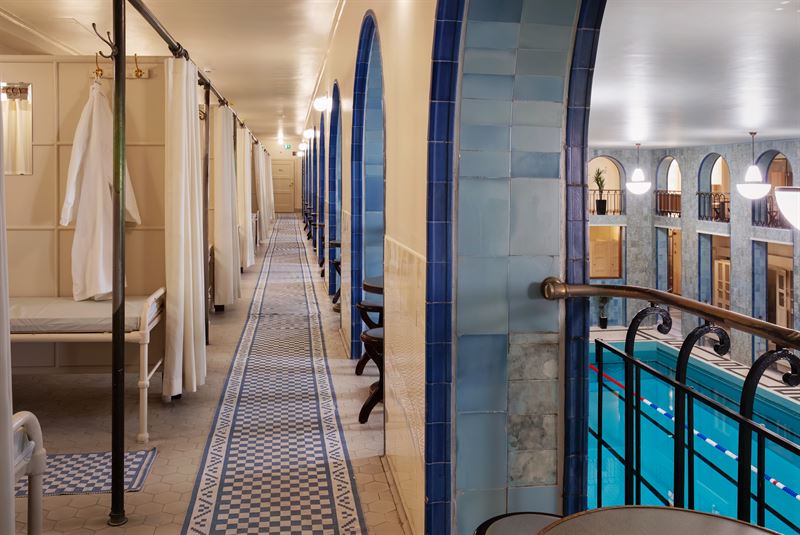
The ground floor houses a large swimming pool, washing facilities, and saunas, forming the hall’s functional core. On the second floor, there are private relaxation booths, and visitors can look down onto the pool from café tables. Here, the experience becomes more spa-like, with several different saunas, including a traditional wood-fired sauna and a steam sauna. A smaller pool and group exercise facilities complete the ensemble.
When it opened, Yrjönkatu Swimming Hall was far more than just a place to swim. In the 1920s and 1930s, visitors could have their shoes polished, clothes pressed, and hair styled before heading directly from the sauna to a dance school or restaurant — a true centre of urban leisure.
 © Katri Lehtola | Keksi Agency
Renovation with respect for heritage
Throughout the renovation, the swimming hall was treated as though it were a protected building. The project was carried out in close cooperation with the City of Helsinki’s cultural environment and building conservation experts, with the aim of safeguarding its historical, architectural, and cultural values.
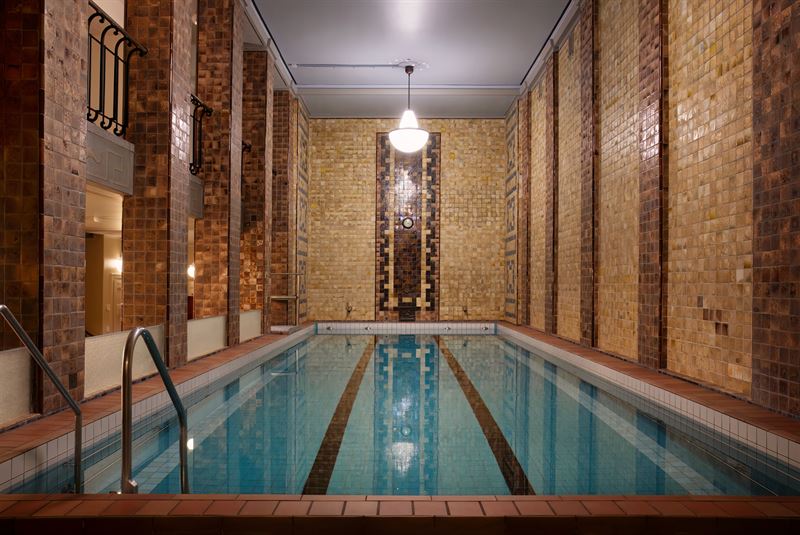
The historic pool hall interiors are of exceptional architectural importance and are also technically unique, with the swimming pools stacked vertically—a rare solution at the time of construction. The renovation focused on preserving the original appearance and proportions of the spaces while improving accessibility and upgrading building services to meet modern standards and environmental goals. In line with public feedback, changes were kept deliberately minimal, with the most visible updates limited to the lifeguards’ control area and the ticket office.
– Yrjönkatu Swimming Hall is not only a sports facility but a nationally significant cultural landmark. Every design decision was carefully weighed to retain original materials, spatial qualities, and details wherever possible — especially the distinctive ceramic tiles dating from the 1920s, says Katri Olli, Project Manager of the Urban Environment Division at the City of Helsinki.
The renovation also introduced a new public artwork commissioned under Helsinki’s Percent for Art principle. Created by photographic artist Noora Sandgren, the work Water Bodies is composed of six glass-printed photographs installed at the entrance of the swimming hall. The piece celebrates water as a life-giving force and highlights the interaction between different organisms. Under the Percent for Art scheme, a portion of the city’s construction and renovation budgets is allocated to new public artworks.
 © Katri Lehtola | Keksi Agency
A bathing experience like no other
Yrjönkatu Swimming Hall is unique among Helsinki’s public swimming facilities in offering visitors the option to swim either nude or wearing swimwear, according to personal preference. Swimming days are scheduled separately for women and men, continuing a long-standing tradition.
The two levels of the building offer contrasting but complementary experiences: the ground floor functions as a traditional swimming hall for exercise and laps, while the second floor invites visitors to linger in a more spa-like setting, with private booths, multiple saunas, and a café overlooking the pool. Together, they form a unique and much-loved combination of a public swimming hall and a historic urban spa.