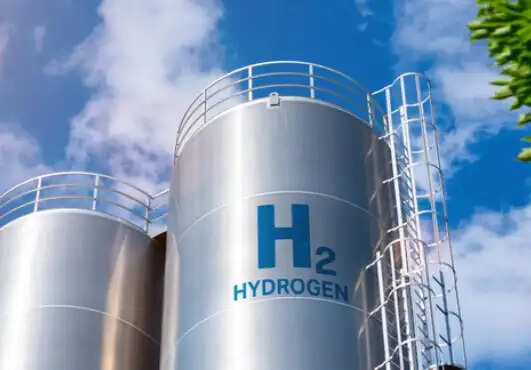
 The European Commission‘s latest green light for a Dutch hydrogen subsidy plan gives fresh momentum to one of Europe’s most closely watched industrial decarbonisation bets. The package, worth €780 million, is designed to help build new electrolysis capacity and lower emissions from hard-to-abate sectors, while keeping the Netherlands in step with the bloc’s renewable hydrogen rules.For policy makers, the approval is another sign that Brussels is using state-aid rules to accelerate clean-tech manufacturing and project deployment. For developers and industrial users, it opens a route to long-term support in a market where renewable hydrogen remains expensive, infrastructure-heavy and dependent on clear regulation.What the Dutch scheme is meant to unlockAccording to Indian Chemical News, the Dutch government says the programme could support as much as 40 kilotonnes of renewable hydrogen output each year and avoid roughly 324 kilotonnes of carbon dioxide emissions annually. The plan is also expected to underpin about 400 megawatts of new electrolysis capacity, a scale that would add to the country’s growing clean-hydrogen pipeline.The support will be allocated through a competitive auction process, with the bidding round expected to conclude by the first quarter of 2027. Winning projects will receive direct grants structured in two parts: an upfront investment grant covering as much as 80 per cent of eligible capital expenditure, followed by a variable premium paid over five to 10 years.That design matters because hydrogen projects often struggle with high initial costs and uncertain operating economics. By combining capex support with a production-linked premium, the Dutch authorities are aiming to bridge the gap between pilot-scale ambition and bankable commercial deployment.Why Brussels said yesThe Commission assessed the plan under Article 107(3)(c) of the Treaty on the Functioning of the European Union and the Clean Industrial Deal State Aid Framework, or CISAF. In its view, the subsidy was necessary and suitable to speed up renewable hydrogen production, while creating only limited distortion to competition and trade inside the EU.Brussels also concluded that the scheme would generate an incentive effect, meaning it should encourage investment that would not otherwise happen at the same pace or scale. The expected climate and industrial benefits, the Commission said, outweigh the possible market distortions.Such approvals have become central to Europe’s industrial policy toolkit. Hydrogen, batteries, carbon capture and other strategic technologies increasingly depend on state support to offset the cost gap versus fossil-based alternatives. The Netherlands’ plan fits that broader pattern, with the Commission treating clean industrial capacity as a competitiveness issue as much as an environmental one.How this fits into the Netherlands’ earlier hydrogen plansThe new approval is not a standalone move. The Commission noted that the programme builds on two earlier Dutch schemes cleared in July 2023 and July 2024, both of which were intended to expand electrolysis capacity in the country. Taken together, the measures suggest a multi-year Dutch effort to create a domestic renewable hydrogen market rather than rely solely on imports or future cross-border supply chains.That approach is significant for heavy industry, which is under pressure to cut emissions without losing access to reliable energy and feedstock. Renewable hydrogen is seen as a candidate fuel and input for sectors such as chemicals, refining, fertilisers and steel, but only if the economics can be made workable at scale.India’s chemical and energy businesses are watching similar policy shifts closely, as Europe’s subsidy architecture often sets the tone for global project finance, technology procurement and offtake contracts. When the EU approves a support mechanism of this size, it can influence how suppliers, electrolyser manufacturers and project developers price risk across markets.Beyond hydrogen, Brussels clears three more dealsOn the same day, the Commission also approved three separate transactions under the EU Merger Regulation, underscoring the pace of corporate restructuring across infrastructure, consumer appliances and travel retail.One clearance involved the acquisition of joint control of MAK Mecsek Autópálya Koncessziós Zártkörűen Működő Részvénytársaság by UK-based abrdn Investments Limited and Austria’s Strabag AG. The asset operates a section of two Hungarian motorways. Brussels said the transaction raised no competition concerns because the parties are not active in the same or vertically related markets, and it was reviewed under the simplified merger procedure.Another approval covered the acquisition of Electrolux de Mexico and the creation of three joint ventures in Mexico and the United States by China’s Midea and Sweden’s Electrolux. The transaction spans the manufacture and supply of refrigeration and laundry appliances in North America. The Commission said the deal would have only a limited effect on the European Economic Area and would not raise competition issues.A third transaction involved Türkiye’s İGA Holding and Unifree Duty Free İşletmeciliği. The approved joint venture will focus mainly on operating travel retail stores outside the European Economic Area. Here too, the Commission found no competition concerns, citing the limited impact on the EEA.What the approval signals for clean industryThe Dutch hydrogen package is part of a wider European effort to translate climate targets into industrial capacity. The challenge is no longer only about setting emissions goals; it is about building the plants, contracts and grid connections that can make those goals commercially viable.For renewable hydrogen, the next hurdle will be execution. Auctions must draw credible bidders, projects must secure equipment and permits, and the resulting plants must prove they can operate reliably under EU sustainability rules. The Netherlands’ scheme gives the sector a stronger financial base, but it does not remove the technology, power supply and offtake risks that still define the market.Even so, the Commission’s approval is a useful marker. It shows that Brussels remains willing to back large-scale clean industrial investment when member states structure support around competition rules and measurable climate gains. For Europe’s hydrogen economy, that combination of policy discipline and public money may prove decisive in moving projects from announcement to steel in the ground.
