I live in Europe, travel here constantly, and have now visited more than 115 countries, so I have been lucky enough to see many of the places that fill American bucket lists year after year. I understand why people dream about drinking wine in Tuscany, watching the sunset in Mykonos, spending a long weekend in Lisbon, or biking through Copenhagen. I love some of these places so much that I actually made one of them my home.
But the more I travel, the less interested I am in simply repeating the trip everyone else is taking.
Some of my favorite experiences in Europe have come from going one step beyond the obvious choice: trading Italy’s most famous wine country for a quieter region farther north, continuing past Lisbon into northern Portugal, or choosing a Greek island whose name doesn’t appear on every influencer’s summer itinerary.
I am not suggesting that anyone should avoid Europe’s famous destinations forever. Most became famous for very good reasons. But if you have already seen them, are planning a second trip, or simply want your European vacation to feel a little less predictable, these are the five swaps I would make.
Instead of Tuscany, I’d go to the Langhe in Piedmont
Tuscany is beautiful, and Florence remains one of those European cities I can happily return to again and again. But if I were planning an Italian wine-country trip tomorrow, I would head north to the Langhe in Piedmont.
The Langhe has many of the things Americans travel to Tuscany hoping to find: vineyard-covered hills, tiny villages, exceptional food, long lunches, beautiful hotels, and landscapes that make you want to forget whatever itinerary you originally planned. The difference is that here you are in the land of Barolo and Barbaresco, surrounded by a wine culture that feels every bit as serious as Tuscany’s without following quite the same well-worn tourist circuit.
I traveled there with my young son and stayed at Casa di Langa, surrounded by vineyards, and what I remember most was how easy the trip felt. We could enjoy the wine country, restaurants, countryside, and villages without the experience feeling designed exclusively for couples on a romantic getaway or people who knew far more about wine than I did.
There is also an entire food culture beyond the wine, from Piedmontese hazelnuts to truffles and some of the richest regional cooking in Italy. Tuscany absolutely deserves a first trip, but if you have already done Florence, Chianti, and the classic Tuscan countryside, the Langhe is the Italy I would book next.
Instead of Lisbon, I’d spend more time in northern Portugal
Lisbon has exploded in popularity, and I understand why. The tiled buildings, viewpoints, food, nightlife, and easy access to Sintra make it one of the easiest city breaks to recommend in Europe.
But Portugal becomes much more interesting to me when you start heading north.
I would begin in Porto and then keep going, using the city as a gateway to smaller places such as Amarante, the Douro Valley, and the towns and wine regions scattered across northern Portugal. Amarante in particular is the kind of place I increasingly want from a European trip: a beautiful riverside town with churches, cafés, traditional pastries, historic streets, and enough to explore without feeling as though you need a spreadsheet of reservations.
From there, you can move into the Douro for wine and vineyard stays or continue through the north for smaller towns, local restaurants, and landscapes that many travelers who fly into Lisbon never see.
I would still recommend Lisbon to a first-time visitor to Portugal, but if someone told me they wanted to return and see a side of the country that felt slower, greener, and less obvious, I would send them north without hesitation.
Instead of Mykonos, I’d choose Amorgos, Ikaria, or Serifos
Mykonos is gorgeous, but Greece is far too interesting to keep sending everyone to the same handful of islands.
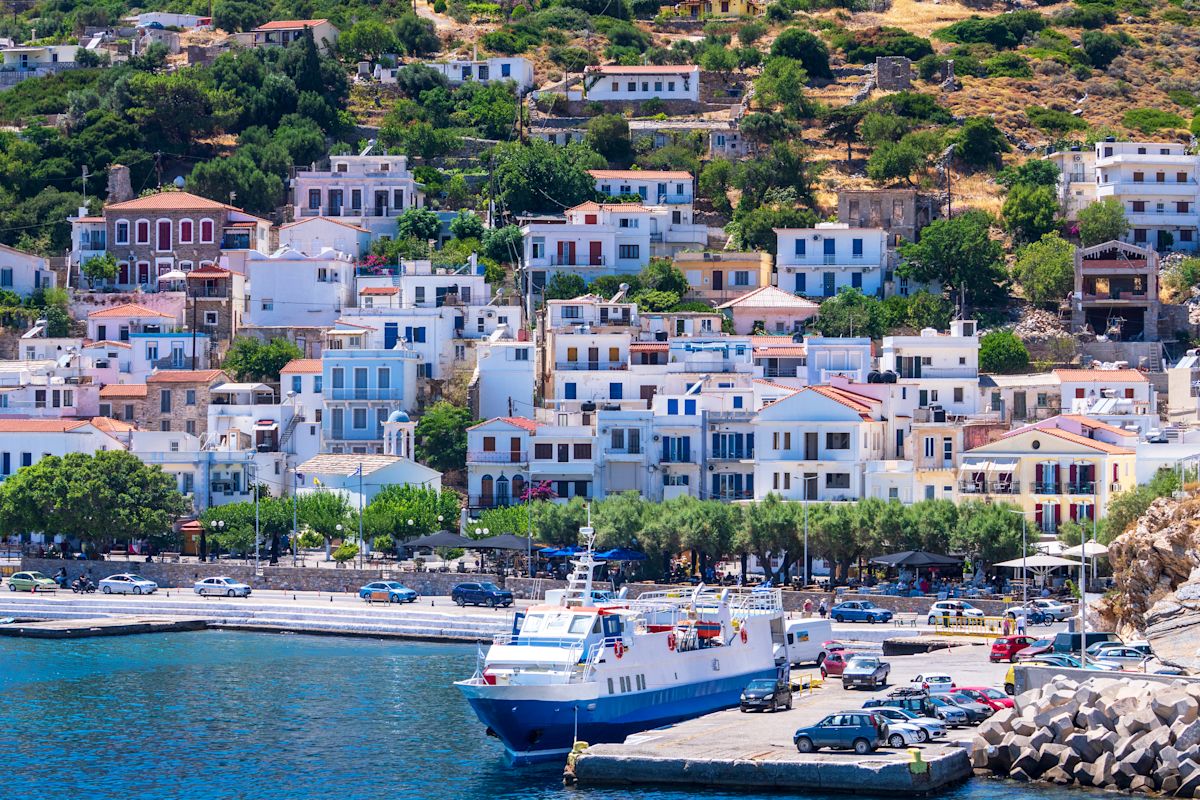
After exploring more of the Aegean, I would choose Amorgos, Ikaria, or Serifos for my next Greek island trip, on a tour like Unexplored Greece, with Variety Cruises. Amorgos offers dramatic Cycladic landscapes and almost impossibly blue waters. Ikaria has beaches and villages, a fascinating food culture, and a famous connection to longevity. Serifos still delivers the whitewashed villages and beautiful beaches travelers associate with the Cyclades, but the experience does not revolve around the beach-club scene that has become so synonymous with Mykonos.
Exploring lesser-visited Greek islands also reminded me how misleading our mental map of Greece can become. There are hundreds of inhabited islands, yet international travelers repeatedly funnel themselves toward the same few.
If nightlife, glamorous restaurants, and the social scene are the point of your trip, Mykonos makes sense. But if what you actually want is swimming in the Aegean, wandering through villages, eating absurdly good Greek food, and feeling like you have discovered a small corner of the country for yourself, I would look elsewhere.
Instead of Reykjavík, I’d go to the Faroe Islands
Iceland changed the way many Americans think about a quick adventure in the North Atlantic, and Reykjavík is still an incredibly convenient jumping-off point for waterfalls, volcanoes, hot springs, and dramatic landscapes.
But if you have already done Iceland — or what you really want is that feeling of arriving somewhere wild and remote — I would choose the Faroe Islands next.
I visited recently, and the scale of the scenery is difficult to explain until you are standing in it. Green cliffs fall almost vertically into the North Atlantic, waterfalls spill toward the ocean, sheep appear everywhere, and tiny villages sit beneath mountains that look almost too dramatic to be real. You can leave Tórshavn and, within a remarkably short amount of time, feel as though you have driven much farther from civilization than you actually have.
The weather can change several times before lunch, and you should expect wind, fog, rain, and sunshine to negotiate with one another throughout the day. That unpredictability is part of the appeal.
Reykjavík has more restaurants, hotels, tours, and tourism infrastructure, which makes Iceland easier for many travelers. The Faroes feel smaller, moodier, and still slightly harder earned, and right now that is exactly why I would choose them.
Instead of another Copenhagen trip, I’d go to Aarhus
This is the one swap where I need to defend myself immediately: I love Copenhagen. I live here.
If you have never been to Denmark, come to Copenhagen. Walk Nyhavn, eat ridiculously good pastries, bike if you are brave enough, spend time in the neighborhoods, and understand why so many of us are happy to call this city home.
But Copenhagen is not all of Denmark, and one mistake I see international travelers make is visiting the capital and assuming they have seen the country.
If you are coming back, take the train to Aarhus.
Denmark’s second-largest city has enough going on to fill several days without ever feeling overwhelming. ARoS is one of the country’s best-known art museums, Den Gamle By turns Danish history into an enormous open-air experience, and the city center combines the cathedral, Latin Quarter, waterfront, restaurants, and cafés within a very manageable area. There are beaches and forests surprisingly close to the city, too.
I recently spent more time traveling through Jutland, and Aarhus reminded me how different Denmark can feel once you leave Copenhagen. It is smaller and slower, but still creative, design-conscious, and culturally ambitious.
So I would never tell someone to skip Copenhagen altogether. I would tell them that, once they have seen it, Denmark gets much more interesting.
The Europe I want to visit now is one step beyond the obvious
After more than 115 countries, I have become less interested in collecting famous places simply because they are famous. What I want now is a trip that still has some element of discovery, even if I am traveling in one of the most visited parts of the world.
That might mean drinking Barolo instead of Chianti, continuing north after everyone else flies home from Lisbon, choosing a Greek island I had barely heard of a few years ago, taking the ferry to another tiny Faroese village, or boarding a train out of the European capital I happen to call home.
Tuscany, Lisbon, Mykonos, Reykjavík, and Copenhagen are not going anywhere, and I would happily return to all of them.
But if you ask me where I am most excited to go next, it is increasingly somewhere just beyond them.