Back to a “normal” separation of powers
In view of the political changes on the world stage, the coalition agreement also addresses the increasing threats to the democratic constitutional state. That is why D66, VVD and CDA want to build a “solid barrier” between the independent judiciary and politics. According to professor of legal philosophy Jonathan Soeharno, this is “really a step in the right direction”. Last autumn, he published his book De mooiweerrechtsstaat (The Fair-Weather Rule of Law), in which he warns of the great vulnerability of the judiciary in the Netherlands.
The coalition is tackling two key issues at once, says Soeharno. The minister will no longer be able to appoint members of the Council for the Judiciary. Nor will he have access to the judiciary’s budgetary controls. Soeharno: “This has a major impact in terms of constitutional law. And in practical terms, because there is currently a relatively heavy emphasis on the financial side of the judiciary. This will bring the Netherlands back to a “normal” separation of powers, as is the case in other Western democracies.
Does this mean we are prepared for American situations, where politics violates the democratic rule of law? Soeharno: “You can never be fully prepared for something like that. Once in power, a malicious political party can change the laws again. But this does buy you time. In the Netherlands, things can go wrong immediately, and you want to prevent that.”
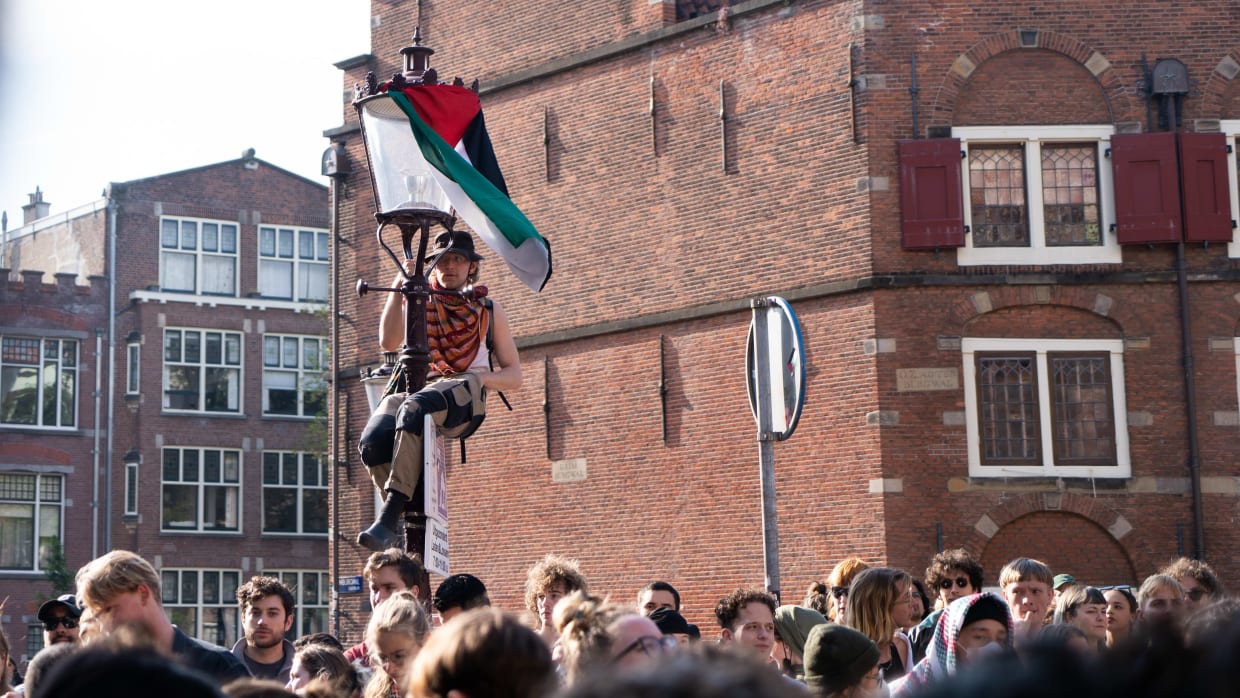
Rozemond explains that the police can also intervene in peaceful demonstrations. When a demonstration takes place on private property or in a building, as is the case at the University of Amsterdam, the demonstrators must take the owner of the building or property into account. If the owner indicates that the demonstrators must leave, the police can also arrest the demonstrators on the grounds of “trespassing”. Rozemond: “This carries a fine or a prison sentence, but criminal judges are now very reluctant to impose these penalties.”
Stricter penalties
Protesters are protected by the right to demonstrate, which means that a judge will weigh the criminal offences less heavily. This may change if D66, VVD and CDA introduce a revision of the law and criminal offences during demonstrations are given greater weight.
According to Rozemond, this does not necessarily mean that protesters will be punished more severely. “It’s a double-edged sword, because amending a law does not mean that judges will apply it. The Dutch parliament can stipulate in law that occupying a building is punishable by five years’ imprisonment, but judges will not simply act on that. This is because it is at odds with the right to demonstrate as laid down in the European Convention on Human Rights.”
“However”, Rozemond argues, “the Netherlands is taking a risk by taking these measures against peaceful demonstrators. If politicians send out a signal to take tougher action against demonstrations, the police and the public prosecutor’s office may well do so. The police and the public prosecutor’s office will then be called to order by the courts, but in the meantime, demonstrators may be wrongfully subjected to criminal proceedings.”