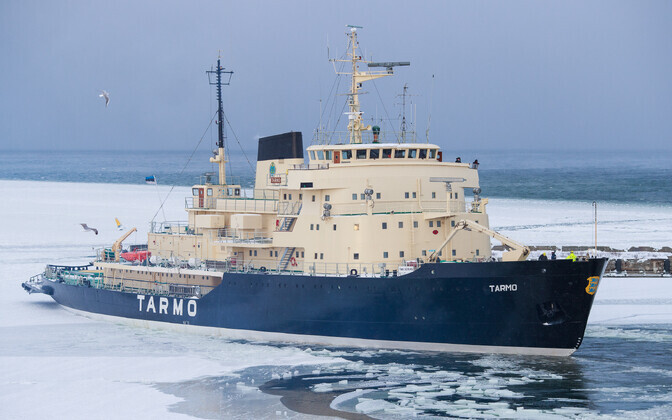
Icebreaking will begin in the Tallinn area February 11, with new rules for ships entering Kopli, Tallinn and Muuga bays. Passenger ferries to Finland remain unaffected.
The Transport Administration said worsening ice conditions have made icebreaking necessary in Tallinn in addition to the ports in Pärnu, Sillamäe and Kunda.
Director general Priit Sauk set February 11 as the start date for the operations around the capital.
The state-chartered icebreaker vessel MSV Botnica, owned by TS Shipping, will provide icebreaking services in the region. The Botnica has already been operating this winter at the ports of Sillamäe and Kunda.
Under temporary restrictions in place from next week, ships entering or leaving Tallinn-area ports must have an ice class of a least 1C under the Lloyd’s Register or equivalent and main engine power of no less than 1,600 kilowatts (kW).
Ferry traffic to Helsinki unhindered
Despite falling water levels and advancing ice in the Gulf of Finland, unlike ferry connections to the western islands, passenger ferries between Estonia and Finland are not yet at risk, port officials said.
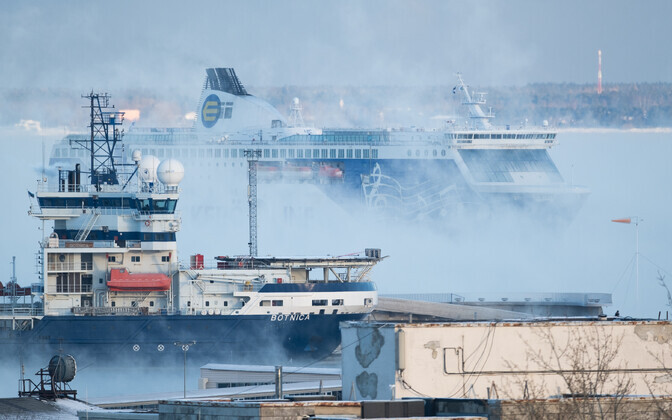 Icebreaker MSV Botnica in port in Tallinn, with a passenger ferry visible in the background. Source: Siim Lõvi/ERR
Port of Tallinn deputy harbormaster Siim Seeman said unusually low water levels could complicate the use of passenger gangways if they fall further, but for now there is sufficient clearance, and multiple berth options remain available if adjustments are needed.
Conditions at Tallinn’s Old City Harbor are being closely monitored.
“For now, things are fine,” Seeman said. “Even with lower water levels, it shouldn’t be anything too bad.”
Ice on the move
A bigger concern is moving ice, which has already reached the Port of Loksa and is approaching Muuga, making access more difficult for cargo ports.
With cold weather continuing and winds pushing ice toward harbors, authorities expect conditions around Muuga to worsen over the next week.
“The Environment Agency is issuing us daily ice charts, and [ports] are closely tracking when the ice will reach us and start affecting operations,” Seeman said. With the cold spell dragging on, ice growth along the coast has been substantial.
While new restrictions to go into effect next week were just announced for ports in the Tallinn area, the deputy harbormaster said similar requirements are actually already in place for Sillamäe and Kunda.
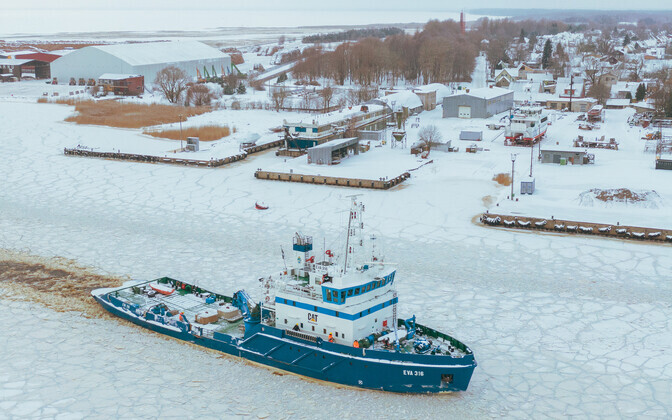 Icebreaker EVA-316 in the Port of Pärnu. Source: Jaanus Lepalaan/Transport Administration
Forecasts hopeful
Even so, Estonia has been relatively fortunate so far, as ice in the Gulf of Finland typically spreads westward from the St. Petersburg area, with the northern shore closest to the city freezing over first. Last winter, icebreaking services weren’t needed on the Estonian coast at all, despite extended subzero temperatures.
Seeman also had more encouraging news for those closely monitoring transport links to the Western Estonian islands.
Sea levels are currently at a critical low, he said, but forecasts from the Department of Marine Systems at Tallinn University of Technology (TalTech) suggest they should begin to rise gradually starting Monday.
“Winds are expected to ease and won’t push as much water out through the Danish Straits anymore,” the harbor official said. “Ice remains a concern and the cold is set to continue, but nothing drastic has happened yet.”
—