
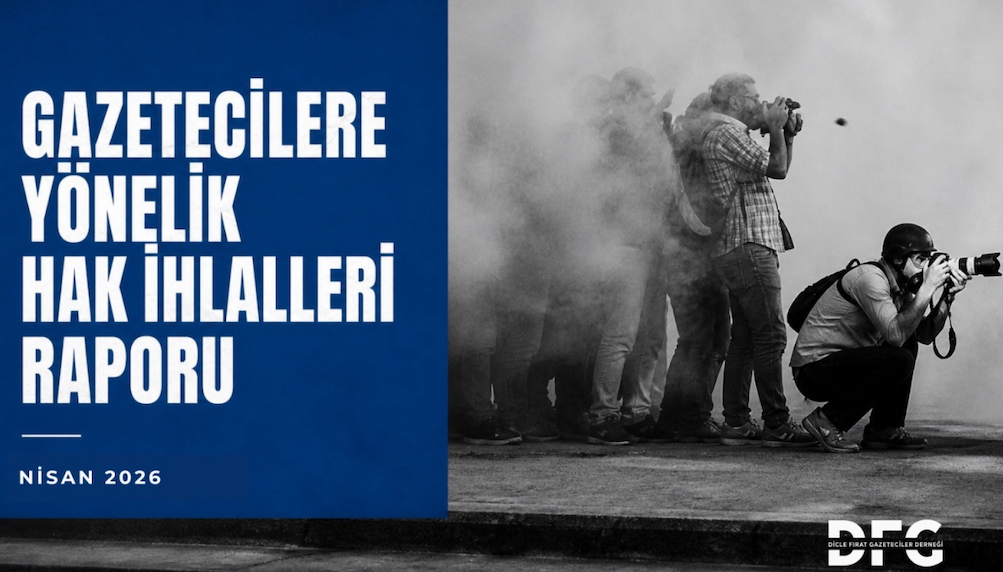
Systematic violations of the rights of journalists continued in Turkey in April, with judicial harassment and punitive practices becoming increasingly widespread, according to a monthly report by the Dicle Fırat Journalists Association (DFG), a press freedom watchdog based in southeastern Turkey.
The report found that one journalist was arrested, 118 faced ongoing trials and 10 received suspended sentences totaling more than 17 years. During the month investigations were launched into nine journalists, while four others were indicted.
One journalist reported ill-treatment in custody and another said he had been threatened. Two media outlets also faced attacks or obstruction, according to the report.
The arrest of local journalist Mehmet Yetim in the southeastern province of Şanlıurfa on charges of publicly disseminating misleading information in a social media post about a knife attack at a school demonstrated the serious threat Article 217/A of the Turkish Penal Code poses for journalists, the DFG said.
Introduced in late 2022, the article, known as the disinformation law, requires prison sentences of one to three years for those found guilty of publicly spreading false information in a way that causes concern, fear or panic among the public.
Turkey’s broadcasting regulator, the Radio and Television Supreme Council (RTÜK), imposed fines on seven TV stations, issued 13 broadcast bans and suspended one program. Authorities also blocked access to 29 news reports and 18 social media posts during April.
Thirty-one journalists were imprisoned in Turkey as of May 3, according to the report.
The country’s deteriorating media landscape was further pointed out in the 2026 World Press Freedom Index published by Reporters Without Borders (RSF), where it was ranked 163rd out of 180 nations.