
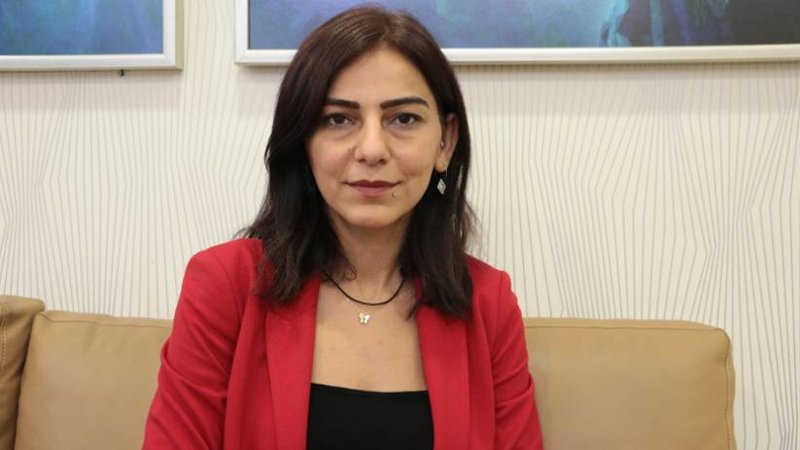
Turkish prosecutors have launched a criminal investigation into a jailed left-wing party leader over allegations that she insulted the justice minister in a newspaper article, the Etkin News Agency (ETHA) reported.
Prosecutors accused Sezin Uçar, deputy co-chair of the Socialist Party of the Oppressed (ESP), of insulting Justice Minister Akın Gürlek through remarks in her February 27 article published in the Atılım newspaper criticizing Gürlek’s appointment as justice minister.
In her article Uçar described the appointment of Gürlek — a former judge known for overseeing high-profile political cases — as “one of the important stages of a strategic plan aimed at eliminating democratic institutions,” saying the “crimes he committed against the people reached the heavens.”
The İstanbul 5th Magistrate Court of Peace ordered the arrest of Uçar on April 15 as part of ongoing operations targeting the ESP in which 107 people were detained and 85 were arrested. Authorities accused the suspects of membership in and disseminating propaganda for a terrorist organization.
Prosecutors also cited her criticism of a parliamentary commission established to oversee peace efforts with the outlawed Kurdistan Workers’ Party (PKK), which has waged a decades-long insurgency against the Turkish state and is designated as a terrorist organization by Turkey and its Western allies.
Uçar criticized the parliamentary commission for allegedly conditioning the implementation of rulings by Turkey’s Constitutional Court and the European Court of Human Rights (ECtHR) on assessments by intelligence authorities.
The National Solidarity, Brotherhood and Democracy Commission was established in August 2025 after the PKK announced in May that it would lay down its arms to pursue a democratic struggle, in line with a call by its leader Abdullah Öcalan.
Politicians, journalists, and ordinary citizens in Turkey who are critical of the government have faced investigations and prosecutions under laws criminalizing “insulting public officials,” “disinformation” and “terrorist propaganda,” amid what rights groups describe as increasing pressure to curb dissent and limit human rights advocacy.
International organizations and human rights groups, including the Council of Europe (CoE), the European Union and Amnesty International, have repeatedly raised concerns over restrictions on freedom of expression in Turkey.