
 Ariel Efraim Ashbel and Rachel Libeskind, photo credit: Anton Tal
Weaving together herstorical voices through a tapestry of text, imagery and sound, for (Regina, Rosa, Ruth and Rachel) is the new performance by Ariel Efraim Ashbel and Rachel Libeskind. Premiering at Sophiensæle, the work returns to Ashbel’s and Libeskind’s ongoing exploration of Yiddish theatre and Jewish traditions. Sophiensæle sits in the heart of Mitte’s Scheunenviertel neighbourhood, which was a thriving hub for Jewish communities arriving from eastern Europe in the early 1900s. The histories embedded within its walls and the surrounding streets provide a rich source of material for the group’s latest work. While the work centres on four names – Regina, Rosa, Ruth and Rachel – their presence on stage extends far beyond fixed identities. Instead, the piece connects the different elements of story, artistic production, music and tradition, attempting to connect past, present and future through a spatial, sensory experience. In doing so, fRRRR seeks to reanimate fragments of a culture that has long been obscured or erased. We spoke to Ariel as preparations were underway.
Your new work for (Regina, Rosa, Ruth and Rachel) is part of Sophiensaele’s 30-year anniversary programme. What does it mean to be included in this moment?
It’s wonderful to be included! It’s really a combination of research and happenstance: the project grew organically for several years and luckily coincided with the anniversary year. Also, my artistic partner Rachel Libeskind has her studio in Mitte, which means that between work and pleasure, we’ve been spending a lot of time in the kiez, so it all feels really serendipitous.
 Rabbi Regina Jones, image credit: Centrum Judaicum Berlin
Were you already familiar with the history of the Scheunenviertel and its Jewish cultural past, and did anything new emerge during your research?
I knew that the Scheunenviertel was historically Jewish, but was unaware of the specifics – that it was mostly East European Jews [Ostjuden] that lived there, and that for several decades the whole place was basically a very lively shtetl [Yiddish for ‘little town’]. I gained that knowledge in 2024, when Rachel and I made the second walk in our series Dialectics of Departure for the Sophiensaele. Doing that research, we learned that there was a rich Yiddish performance scene in the whole area, including the theatre itself. That’s where the idea to make fRRRR came from. It’s really a direct continuation of that work.
What kinds of archives or source materials shaped the work? How did you arrive at these four names as your focal point?
We looked at early 20th-century Berlin: ads, magazines, letters, postcards, censorship reports from the theatre police. Our research style is dynamic and slightly hectic: we go back and forth from the street to the screen, more intuitively than methodically. While walking, we came across the house where Regina Jonas, the world’s first woman rabbi, was born, and the dedication idea came up. Then it was clear we needed four names, because in Jewish tradition we have four foremothers. So we looked at other iconic Jewish women who made an impact on German cultural life. We loved that Rachel can refer to many, including one of us. Ruth Klinger is a lesser known performer who ran her own Yiddish cabaret in the 1920s. Rosa is not only the celebrated Rosa Luxemburg, but also Rosa Klauber who owned a successful lace business in the late 19th century.
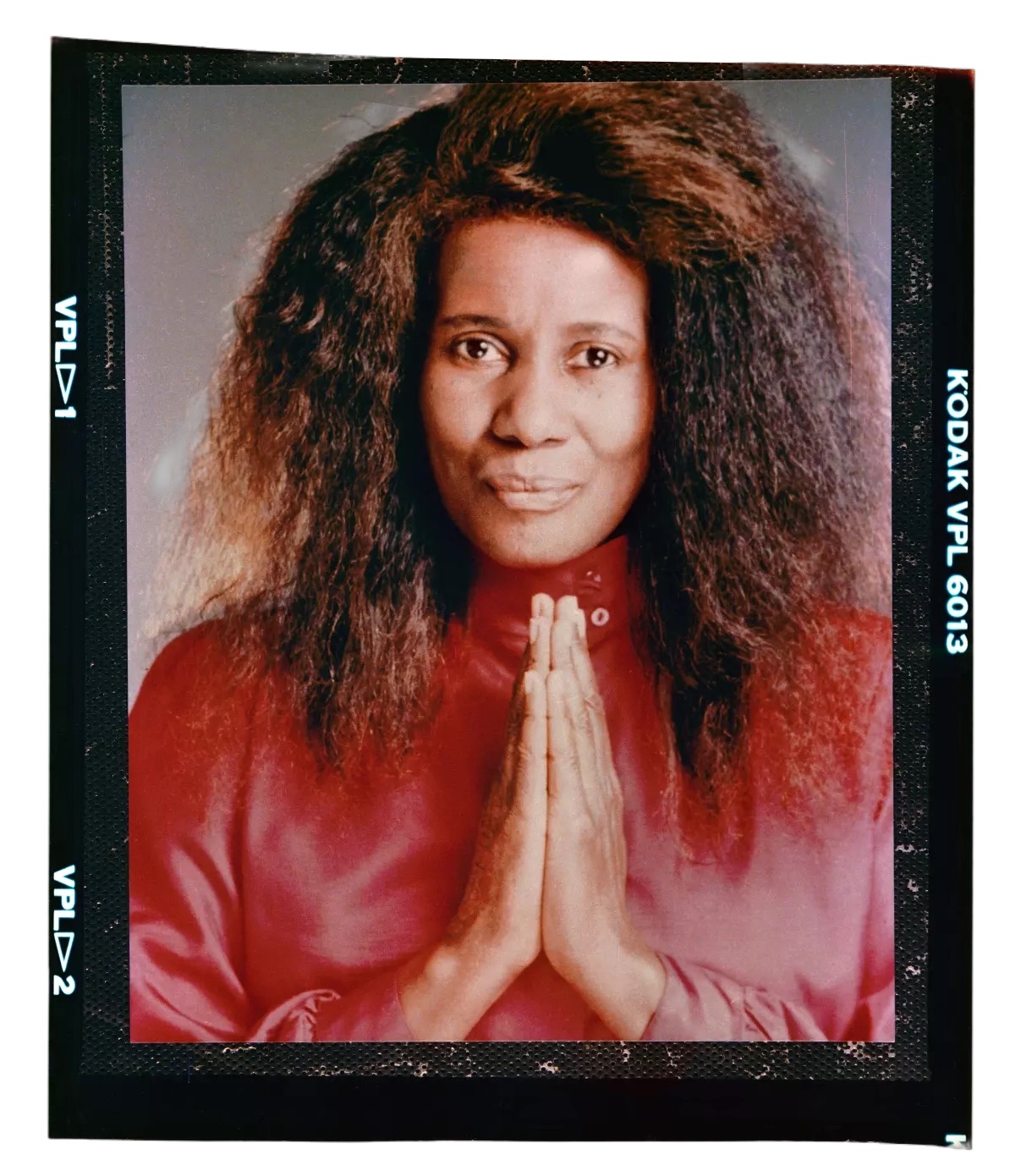 Courtesy of the John & Alice Coltrane Home, 1995
Without giving too much away, how does this research translate into the performance itself?
The last point about Rosa Klauber is a perfect example. Digging more into her visual archives, we realized that lace will be a material we really want to work with in the show. References that we came across – visual, musical, textual – will be woven into the texture of the show. And just like the process, the composition itself will be collagey and abstract, intuitive and sensual. And fun!
Your work often engages with Yiddish theatre and Jewish traditions. What’s the relationship between you, your work and these traditions?
I feel very close to Yiddish traditions, as they’re experimental in nature. They belonged to a marginalised group that never had access to the realm of art, and interdisciplinarity just naturally existed in that realm: cabaret, folktales, stand-up and drag all happened hand in hand without being defined as experimental. And beyond the love I have for the material, it’s important to say that I’m not at all a Yiddish expert. Far from it. It’s a rich and mysterious world I have this uncanny relation to – like a weird faded memory of a dream. So my invitation to the audience is not so much to learn from us, but more an invitation to explore, and maybe get lost in this material together.
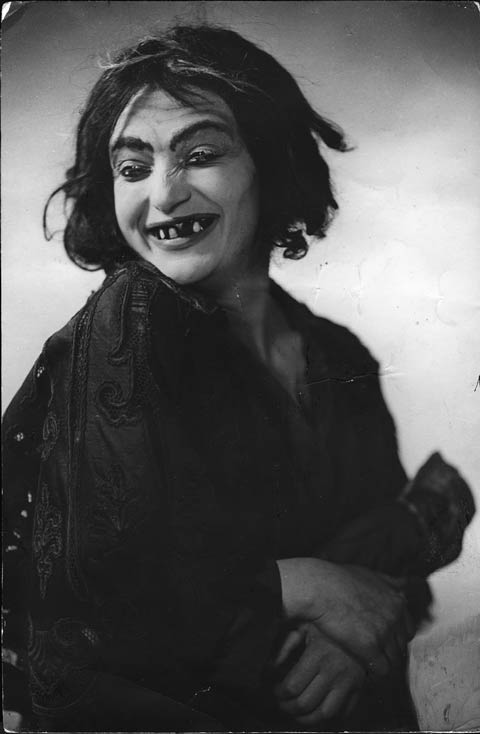 Nick Fletcher, courtesy of Paula Boltman
How did you approach bringing collaborators on board? What kinds of practices or disciplines felt essential to this piece?
I always work with my friends! In addition to Rachel, who is my co-director, our musical director is my dear friend Maya Dunietz, an incredible composer and performer with whom I started working more than 20 years ago. A newer friend is the visual artist Ella Ponizovsky-Bergelson, who will create a huge new text-painting on stage. There’s a wide range of audio-visual experimentation that I felt was urgent for this piece.
Your works often bring together artists with strong, distinct practices. I remember watching how seamlessly Peaches performed in Fiddler! A Musical. How do you build a cohesive language across such a range of artists and voices?
I’m constantly asking myself that throughout my 20 plus years of making stage work. In a way, I see the director’s role as a kind of curator: I offer a direction for us to look at together, and I’m much more interested in shaping the frame than to intervene with people’s practice or the content they’re invested in. The more I let go of the world I’m shaping and invite people to be themselves in it, the more I find my cohesive artistic voice. It’s a bit counterintuitive or might sound like a paradox, but I truly feel like that’s the magic of making theatre. Rather than saying things, it allows things to emerge.
 Image from Liebende Frauen
You’ve shared some of your source images. What role do they play in shaping the emotional or conceptual world of the piece?
They’re photos of Rabbi Regina Jonas, musician and spiritual teacher Alice Coltrane Swami Turiyasangitananda, Yiddish performer Rokhl Holzer and the cover of Liebende Frauen, a 1920s lesbian magazine. They give a taste of the attitudes that inspire us: weird, sexy, silly, devoted, always looking back.
for (Regina, Rosa, Ruth and Rachel) is on from May 8-10 at Sophiensæle. You can find more details here.