
 NextSource welcomes German team to Molo Mine as Berlin targets critical mineral security Proactive uses images sourced from Shutterstock
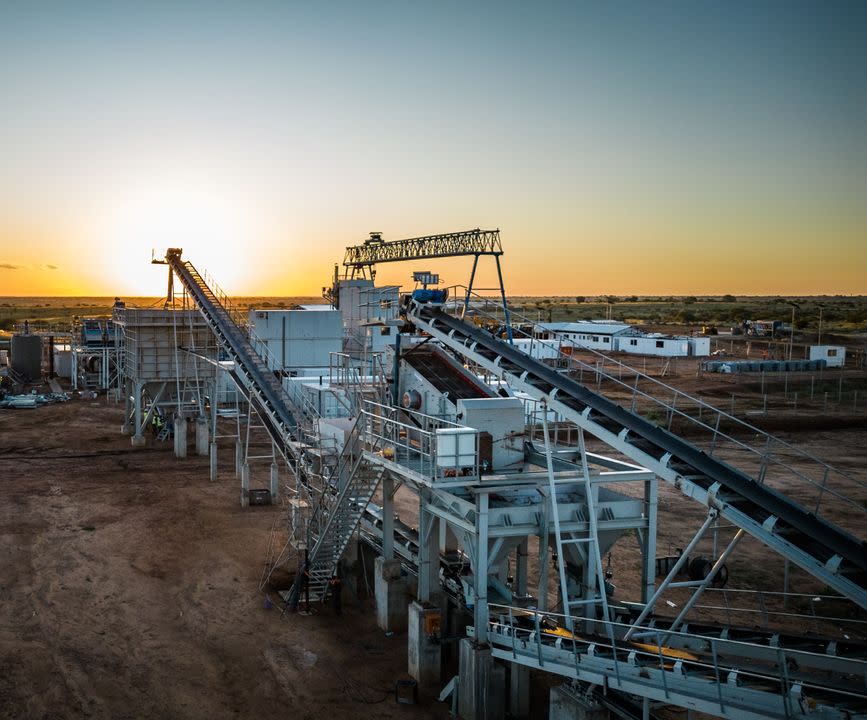
NextSource Materials Inc. (TSX:NEXT, OTCQB:NSRCF) received a delegation from Germany’s Federal Institute for Geosciences and Natural Resources this week at its Molo Graphite Mine in southern Madagascar.
The BGR, as the institute is known, assessed Molo as part of an independent study on Madagascar’s graphite production sector funded by Germany’s Federal Ministry for Economic Cooperation and Development, NextSource said in a statement.
Researchers evaluated the mine alongside conventional graphite operations elsewhere in the country, with Molo identified as a benchmark asset and potential supplier of natural graphite and anode material to Germany.
The study is being conducted with the support of Madagascar’s Ministry of Mines, with findings to be reported back to the German government.
Germany has placed critical raw materials at the centre of its industrial and energy policy, and natural graphite sits on the European Union’s Critical Raw Materials List. Berlin has committed significant capital to its diversification agenda, including a 1 billion euro raw materials fund that provides minority equity investments of up to 150 million euro in qualifying upstream mining and processing projects, alongside a broader 2.5 billion euro critical minerals investment framework developed with France and Italy.
NextSource is already commercially linked to German industry. In May 2021, the company signed a 10-year sales agreement with thyssenkrupp Materials Trading GmbH, a division of industrial conglomerate Thyssenkrupp AG, guaranteeing a minimum of 7,300 tonnes per year of SuperFlake graphite concentrate from Molo’s Phase 1 operations, with supply rising to as much as 35,000 tonnes annually if the mine expands to Phase 2.