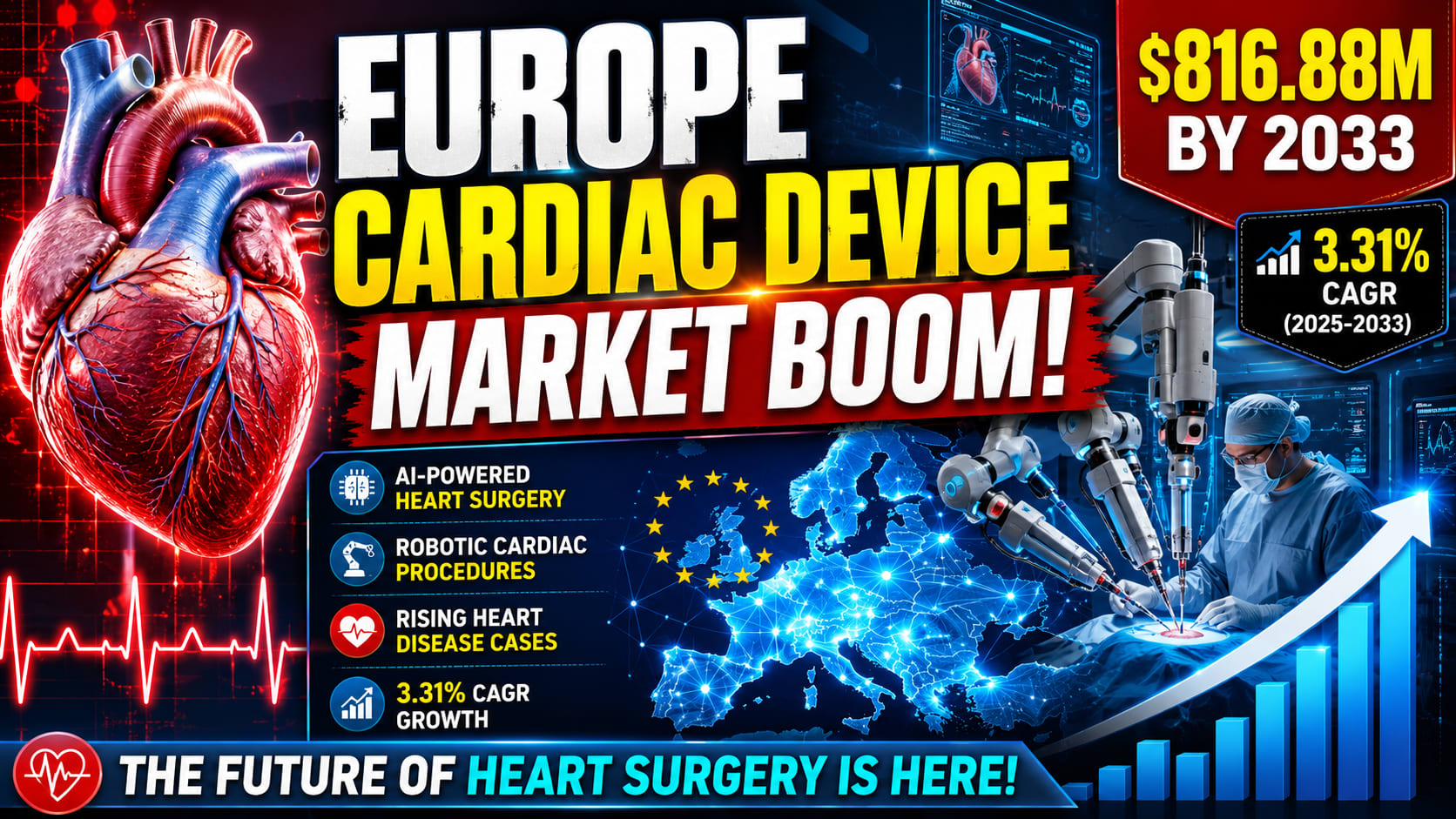
Cardiovascular diseases remain one of the leading causes of mortality worldwide, creating a persistent need for innovative treatment options and advanced medical technologies. Across Europe, healthcare providers are increasingly investing in sophisticated cardiac surgical devices to improve patient outcomes, reduce surgical risks, and support the growing number of individuals suffering from heart-related conditions.
According to Renub Research, the Europe Cardiac Surgical Device Market is projected to increase from US$ 609.37 million in 2024 to US$ 816.88 million by 2033, expanding at a CAGR of 3.31% during 2025–2033. This growth reflects rising healthcare investments, technological innovations, and increasing awareness regarding cardiovascular health.
Why Cardiac Surgical Devices Matter More Than Ever
Heart disease continues to place a significant burden on healthcare systems across Europe. Conditions such as coronary artery disease, heart failure, congenital heart defects, and cardiac arrhythmias require highly specialized interventions that often depend on advanced surgical devices.
Cardiac surgical devices encompass a broad range of technologies including:
Heart-lung machines
Cardiopulmonary bypass equipment
Cardiac ablation systems
Surgical valves
Catheters
Ventricular assist devices
Perfusion disposables
These devices play a critical role during procedures such as coronary artery bypass grafting (CABG), heart valve replacement, cardiac transplantation, and minimally invasive cardiac surgeries.
As surgical techniques evolve, these technologies are becoming increasingly precise, efficient, and patient-friendly.
The Growing Burden of Cardiovascular Disease
One of the strongest drivers behind market growth is the rising prevalence of cardiovascular disorders across Europe.
Aging populations throughout countries such as Germany, France, Italy, Spain, and the United Kingdom are contributing to a higher incidence of chronic heart conditions. Older adults are more susceptible to coronary artery disease, heart failure, and arrhythmias, creating sustained demand for cardiac surgical procedures.
Healthcare systems are responding by investing heavily in modern surgical technologies capable of handling increasingly complex cardiovascular cases. As patient volumes continue to rise, hospitals and cardiac centers require advanced equipment that can improve procedural success rates while reducing recovery times.
The increasing prevalence of vascular dementia and other cardiovascular-related complications further highlights the growing need for comprehensive cardiac care infrastructure.
Technology Is Revolutionizing Cardiac Surgery
The European cardiac surgical device industry is experiencing a technological transformation unlike any seen before.
Artificial intelligence, robotic-assisted surgery, machine learning, and advanced imaging systems are rapidly changing how surgeons diagnose and treat cardiovascular diseases.
Modern surgical devices now offer:
Enhanced precision
Better visualization
Reduced surgical complications
Faster patient recovery
Improved clinical outcomes
AI-powered monitoring systems are helping physicians detect abnormalities earlier than ever before. Advanced imaging platforms provide detailed anatomical insights, enabling surgeons to make better-informed decisions during procedures.
These technological improvements not only benefit patients but also help healthcare providers improve efficiency and reduce long-term treatment costs.
The Rise of Minimally Invasive Cardiac Procedures
Traditional open-heart surgeries often require lengthy hospital stays and extended recovery periods. Today, minimally invasive cardiac procedures are becoming the preferred option whenever clinically appropriate.
Patients increasingly seek treatments that offer:
Smaller incisions
Reduced pain
Lower infection risks
Shorter hospitalization
Faster return to normal activities
This shift has created strong demand for specialized surgical devices designed specifically for minimally invasive interventions.
Technologies such as catheter-based systems, robotic surgical platforms, and advanced ablation devices are helping physicians perform complex cardiac procedures with greater precision and reduced trauma.
As healthcare providers continue embracing minimally invasive techniques, the demand for next-generation cardiac surgical equipment is expected to rise significantly.
Healthcare Spending Continues to Expand
Europe’s well-developed healthcare infrastructure provides a strong foundation for market growth.
Governments and healthcare organizations across the region continue to allocate substantial resources toward modernizing hospitals, expanding cardiac treatment facilities, and adopting advanced medical technologies.
Increased healthcare expenditure supports:
Equipment upgrades
Clinical research
Specialized cardiac centers
Physician training
Advanced surgical programs
These investments enable healthcare providers to deliver higher-quality cardiac care while improving patient access to life-saving treatments.
As healthcare budgets continue to prioritize cardiovascular disease management, cardiac surgical device manufacturers stand to benefit from sustained demand.
Artificial Intelligence Creates New Opportunities
Artificial intelligence is emerging as one of the most influential trends in cardiac surgery.
AI technologies are being integrated into monitoring devices, imaging platforms, diagnostic systems, and procedural planning tools.
The advantages of AI include:
Faster diagnosis
Improved risk assessment
Enhanced treatment planning
Real-time monitoring
Predictive analytics
AI-assisted solutions help physicians identify potential complications before they become critical, improving overall patient outcomes.
As hospitals increasingly adopt AI-powered technologies, demand for advanced cardiac surgical devices equipped with intelligent capabilities will continue growing throughout Europe.
Country Spotlight: Germany Leads Innovation
Germany remains one of Europe’s most influential healthcare markets.
The country benefits from:
Advanced healthcare infrastructure
Strong reimbursement systems
High adoption of innovative technologies
Significant healthcare expenditure
German hospitals are among the earliest adopters of robotic-assisted surgery, AI-powered diagnostics, and minimally invasive cardiac interventions.
The country’s aging population and increasing cardiovascular disease burden further strengthen demand for advanced cardiac surgical devices.
Germany is expected to remain a key contributor to overall market growth during the forecast period.
France Strengthens Its Position
France continues to invest heavily in cardiovascular healthcare and surgical innovation.
The country’s healthcare system supports widespread access to advanced cardiac treatments while encouraging adoption of emerging medical technologies.
French hospitals increasingly utilize:
Robotic surgical systems
Bioresorbable stents
AI-enhanced imaging tools
Advanced monitoring devices
These innovations are helping improve treatment outcomes while supporting the country’s growing population of cardiovascular patients.
Strong government support and healthcare funding continue to create favorable conditions for market expansion.
United Kingdom Accelerates Adoption
The United Kingdom remains an important market for cardiac surgical devices.
Rising cardiovascular disease prevalence and an aging population continue to drive demand for advanced treatment options.
Healthcare providers throughout the UK are embracing:
Minimally invasive surgery
Robotic-assisted procedures
Advanced diagnostic technologies
Digital health integration
The National Health Service’s ongoing focus on improving cardiovascular care is expected to support continued market growth over the coming years.
Spain Emerges as a Growth Opportunity
Spain is increasingly becoming an attractive market for cardiac surgical device manufacturers.
The country has witnessed growing adoption of advanced cardiac procedures, including:
Transcatheter Aortic Valve Replacement (TAVR)
Percutaneous Coronary Intervention (PCI)
Catheter-based interventions
Improved healthcare infrastructure and favorable reimbursement policies are encouraging hospitals to invest in modern cardiac technologies.
As awareness of cardiovascular health increases, Spain is expected to contribute significantly to regional market expansion.
Challenges Facing the Industry
Despite strong growth prospects, several challenges remain.
High Equipment Costs
Advanced cardiac surgical devices often involve significant acquisition and maintenance expenses.
Smaller healthcare facilities may struggle to justify investments in:
Robotic surgical systems
AI-powered platforms
Advanced imaging technologies
Budget limitations can slow adoption, particularly in regions facing economic pressures.
Complex Regulatory Requirements
Medical device manufacturers must navigate strict European regulatory frameworks before bringing new products to market.
Compliance with certification standards, clinical evaluations, and ongoing monitoring requirements can increase development costs and delay commercialization timelines.
While these regulations help ensure patient safety, they also create barriers for smaller innovators entering the market.
Competitive Landscape
The Europe cardiac surgical device market features a combination of established multinational corporations and specialized medical technology providers.
Key market participants include:
Abbott Laboratories
Boston Scientific Corporation
Edwards Lifesciences
Cardinal Health Inc.
Medtronic PLC
GE Healthcare
LivaNova PLC
Terumo Corporation
These companies continue investing heavily in research and development to strengthen their competitive positions and introduce innovative cardiac solutions.
10 Recent Developments Shaping the Industry
1. Medtronic Expands AI Integration
Medtronic enhanced its Reveal LINQ cardiac monitoring platform with advanced AI-driven capabilities to improve diagnostic accuracy.
2. GE HealthCare Introduces Revolution Vibe CT
The company launched an AI-enabled imaging platform designed to improve cardiac visualization and diagnostic efficiency.
3. Increased Adoption of Robotic-Assisted Surgery
European hospitals are accelerating investments in robotic cardiac surgery systems.
4. Expansion of Minimally Invasive Procedures
Healthcare providers continue shifting away from traditional open-heart surgery when possible.
5. Growth of Remote Patient Monitoring
Connected cardiac monitoring solutions are improving post-operative care.
6. Advances in Cardiac Ablation Technologies
Manufacturers are introducing more precise ablation systems for arrhythmia treatment.
7. Enhanced Surgical Imaging Platforms
New imaging technologies are providing better procedural guidance.
8. Development of Patient-Specific Solutions
Companies are investing in personalized cardiac treatment approaches.
9. Increased Investment in Digital Healthcare
Digital transformation initiatives are accelerating throughout European hospitals.
10. Strong Focus on Clinical Research
Leading manufacturers continue funding clinical trials to validate new technologies and expand treatment options.
Future Outlook
The future of Europe’s cardiac surgical device market appears highly promising.
Several long-term trends are expected to support continued growth:
Population aging
Increasing cardiovascular disease prevalence
Technological innovation
AI adoption
Expansion of minimally invasive procedures
Greater healthcare spending
Improved patient awareness
Manufacturers that successfully combine advanced technology with affordability and regulatory compliance will be best positioned to capture future opportunities.
As healthcare systems focus on delivering safer, faster, and more effective cardiovascular care, cardiac surgical devices will remain central to modern medical practice.
Final Thoughts
Heart disease continues to challenge healthcare systems across Europe, but innovation is creating new opportunities to improve patient outcomes. Advanced cardiac surgical devices are enabling surgeons to perform increasingly complex procedures with greater precision, efficiency, and safety.
With the Europe Cardiac Surgical Device Market projected to reach US$ 816.88 million by 2033, the sector is poised for sustained growth. From artificial intelligence and robotic-assisted surgery to minimally invasive interventions and personalized treatment solutions, the next decade promises significant advancements in cardiovascular care.